Shulph Ink
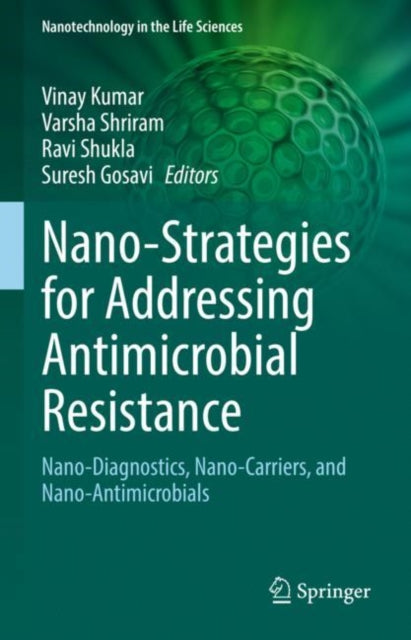
Nano-Strategies for Addressing Antimicrobial Resistance: Nano-Diagnostics, Nano-Carriers, and Nano-Antimicrobials
Nano-Strategies for Addressing Antimicrobial Resistance: Nano-Diagnostics, Nano-Carriers, and Nano-Antimicrobials
💎 Earn 619 Points (£6.19) on this item.
We can order this item for you. Delivery usually takes about 4 to 6 weeks.
This item is not held in our immediate stock. We will order it for you after checkout.
Estimated delivery: About 4 to 6 weeks
YOU SAVE £26.10
- Condition: Brand new
- UK Delivery times: Usually arrives within 2 - 3 working days
- UK Shipping: Fee starts at £2.39. Subject to product weight & dimension
Bulk ordering. Want 15 or more copies? Get a personalised quote and bigger discounts. Learn more about bulk orders.
Couldn't load pickup availability
- More about Nano-Strategies for Addressing Antimicrobial Resistance: Nano-Diagnostics, Nano-Carriers, and Nano-Antimicrobials
Antibiotic resistance (AMR) is a growing threat to human health, and nanotechnology and advanced nanomaterials are being hailed as a potent solution to contain it. This book provides an integrated blend of basic and advanced information on the potential use of nano-approaches for diagnosis, detection, drug-delivery, and as antimicrobial agents against drug-resistant pathogenic microbes.
Format: Hardback
Length: 415 pages
Publication date: 19 December 2022
Publisher: Springer International Publishing AG
Antibiotics, the cornerstone of modern clinical medicine, are facing severe challenges from the emerging phenomenon of antimicrobial resistance (AMR), a complex issue that is spreading across bacterial species, from nosocomial to community origins. Microbes have become resistant to a wide range of commonly used antibiotics, rendering treatment ineffective. AMR has surged in recent years, posing a significant threat to human health and survival. This necessitates innovative and effective approaches for diagnosis, drug delivery, and treatment. Nanotechnology and advanced nanomaterials are seen as a promising solution to combat AMR.
The primary focus of this volume is to explore the latest research on the potential use of nano-approaches for diagnosis, detection, drug delivery, and as antimicrobial agents against drug-resistant pathogenic microbes. This book offers an comprehensive blend of basic and advanced information, catering to students, scholars, scientists, and practitioners interested in or already engaged in research in these fields. We have assembled a team of renowned international authors to present and highlight various aspects of nanotechnology in combating AMR in World Health Organization (WHO) prioritized microbes. The topics covered range from advancements in nanomaterial synthesis, characterization, functionalization, and improvisation, to applications in sensing, diagnosis of AMR, and their therapeutic and drug-delivery potential against multi-drug resistant (MDR) and extensively drug-resistant (XDR) microbial phenotypes.
AMR is a complex and multifaceted problem that requires a multi-faceted approach. One promising solution is the use of nanotechnology and advanced nanomaterials. Nanoparticles, for example, can be designed to target specific bacteria and disrupt their metabolic pathways, making them more susceptible to antibiotics. Nanomaterials can also be used to enhance drug delivery, allowing drugs to reach their target more effectively and reducing side effects.
Another approach to combating AMR is the development of new antibiotics. However, the development of new antibiotics is a slow and challenging process, and there is a growing concern that the emergence of AMR may render existing antibiotics obsolete. In response, researchers are exploring alternative therapies, such as bacteriophages, which are viruses that infect and kill bacteria. Bacteriophages have been used successfully in treating infections in the past, and there is ongoing research to develop new and more effective bacteriophage therapies.
In addition to these approaches, it is important to improve infection control practices and promote public awareness of AMR. This includes proper hand hygiene, vaccination, and responsible use of antibiotics. Education and training programs can also help healthcare professionals and the public understand the risks and benefits of antibiotic use and the importance of preventing the spread of AMR.
In conclusion, AMR is a serious threat to human health and survival. Nanotechnology and advanced nanomaterials offer promising solutions to combat AMR, but it is essential to approach the problem from multiple angles and to work collaboratively to find sustainable solutions. By improving diagnosis, drug delivery, and treatment strategies, as well as developing new antibiotics and alternative therapies, we can mitigate the impact of AMR and ensure that patients receive the care they need.
Weight: 805g
Dimension: 235 x 155 (mm)
ISBN-13: 9783031102196
Edition number: 1st ed. 2022
This item can be found in:
UK and International shipping information
UK and International shipping information
UK Delivery and returns information:
- Delivery within 2 - 3 days when ordering in the UK.
- Shipping fee for UK customers from £2.39. Fully tracked shipping service available.
- Returns policy: Return within 30 days of receipt for full refund.
International deliveries:
Shulph Ink now ships to Australia, Belgium, Canada, France, Germany, Ireland, Italy, India, Luxembourg Saudi Arabia, Singapore, Spain, Netherlands, New Zealand, United Arab Emirates, United States of America.
- Delivery times: within 5 - 10 days for international orders.
- Shipping fee: charges vary for overseas orders. Only tracked services are available for most international orders. Some countries have untracked shipping options.
- Customs charges: If ordering to addresses outside the United Kingdom, you may or may not incur additional customs and duties fees during local delivery.