Shulph Ink
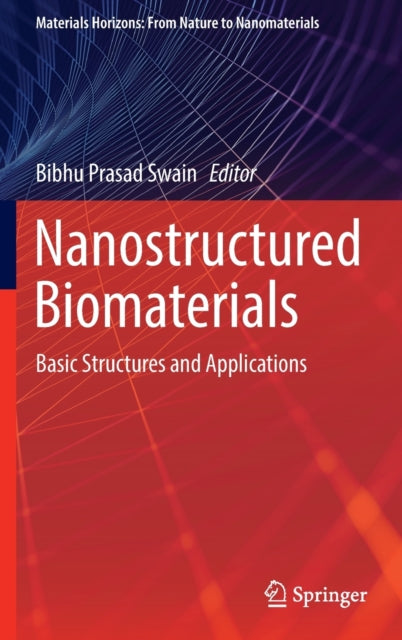
Nanostructured Biomaterials: Basic Structures and Applications
Nanostructured Biomaterials: Basic Structures and Applications
💎 Earn 374 Points (£3.74) on this item.
YOU SAVE £65.02
- Condition: Brand new
- UK Delivery times: Usually arrives within 2 - 3 working days
- UK Shipping: Fee starts at £2.39. Subject to product weight & dimension
Bulk ordering. Want 15 or more copies? Get a personalised quote and bigger discounts. Learn more about bulk orders.
Couldn't load pickup availability
- More about Nanostructured Biomaterials: Basic Structures and Applications
This book provides an overview of advanced nanostructured biomaterials, including their structures, biological activities, and applications as drug delivery vectors. It is useful for students, researchers, and professionals in the field of biomaterials and nanomaterials.
Format: Hardback
Length: 454 pages
Publication date: 09 March 2022
Publisher: Springer Verlag, Singapore
This comprehensive book delves into the latest advancements in nanostructured biomaterials, providing a comprehensive exploration of their structures and diverse applications. It encompasses a wide range of topics, including an overview of the biological activities of various thiazole, imidazole, pyrazole, tetrazole, benzimidazole, oxazole, and isoxazole derivatives. Furthermore, the book delves into the realm of nanocarriers as effective drug delivery vectors, highlighting their significance in modern medicine. With its extensive coverage and valuable insights, this book is an essential resource for students, researchers, and professionals engaged in the fields of biomaterials and nanomaterials.
Introduction:
Nanostructured biomaterials have gained significant attention in recent years due to their remarkable properties and potential applications in various fields, including medicine, biotechnology, and materials science. These materials, characterized by their small size and unique chemical and physical properties, offer unprecedented opportunities for improving healthcare outcomes and developing innovative technologies.
Chapter 1:
In this chapter, the book provides an overview of the biological activities of thiazole derivatives, imidazole derivatives, pyrazole derivatives, tetrazole derivatives, benzimidazole derivatives, oxazole, and isoxazole derivatives. These compounds have been extensively studied for their anticancer, antimicrobial, and anti-inflammatory properties, among others. The chapter discusses the synthesis, characterization, and biological evaluation of these compounds, highlighting their potential as therapeutic agents.
Chapter 2:
The second chapter focuses on the topic of nanocarriers as drug delivery vectors. Nanocarriers are materials that can be used to deliver drugs to target cells or tissues in the body. They are designed to overcome the challenges associated with traditional drug delivery methods, such as poor bioavailability and drug resistance. The chapter discusses the various types of nanocarriers, including liposomes, nanoparticles, and nanospheres, as well as their synthesis, characterization, and drug loading techniques.
Chapter 3:
In the third chapter, the book explores the applications of nanostructured biomaterials in tissue engineering and regenerative medicine. Nanostructured materials can be used to create scaffolds that support cell growth and tissue regeneration, which can be used in the treatment of various diseases, such as burns, wounds, and spinal cord injuries. The chapter discusses the synthesis, characterization, and evaluation of nanostructured biomaterials in tissue engineering, highlighting their potential for promoting wound healing and tissue repair.
Chapter 4:
The fourth chapter delves into the use of nanostructured biomaterials in drug delivery systems. Nanoparticles, in particular, have shown great promise as drug delivery vehicles due to their small size, high surface area, and ability to encapsulate drugs. The chapter discusses the synthesis, characterization, and evaluation of nanoparticle-based drug delivery systems, highlighting their potential for improving drug targeting and efficacy.
Conclusion:
In conclusion, this book presents a comprehensive and up-to-date overview of the latest advancements in nanostructured biomaterials. It covers a wide range of topics, from the biological activities of various derivatives to the use of nanocarriers as drug delivery vectors. With its extensive coverage and valuable insights, this book is an essential resource for students, researchers, and professionals engaged in the fields of biomaterials and nanomaterials.
Weight: 863g
Dimension: 235 x 155 (mm)
ISBN-13: 9789811683985
Edition number: 1st ed. 2022
This item can be found in:
UK and International shipping information
UK and International shipping information
UK Delivery and returns information:
- Delivery within 2 - 3 days when ordering in the UK.
- Shipping fee for UK customers from £2.39. Fully tracked shipping service available.
- Returns policy: Return within 30 days of receipt for full refund.
International deliveries:
Shulph Ink now ships to Australia, Belgium, Canada, France, Germany, Ireland, Italy, India, Luxembourg Saudi Arabia, Singapore, Spain, Netherlands, New Zealand, United Arab Emirates, United States of America.
- Delivery times: within 5 - 10 days for international orders.
- Shipping fee: charges vary for overseas orders. Only tracked services are available for most international orders. Some countries have untracked shipping options.
- Customs charges: If ordering to addresses outside the United Kingdom, you may or may not incur additional customs and duties fees during local delivery.