Shulph Ink
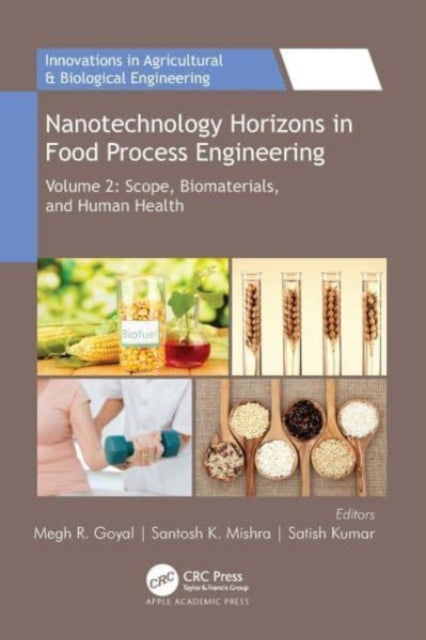
Nanotechnology Horizons in Food Process Engineering: Volume 2: Scope, Biomaterials, and Human Health
Nanotechnology Horizons in Food Process Engineering: Volume 2: Scope, Biomaterials, and Human Health
💎 Earn 656 Points (£6.56) on this item.
We can order this item for you. Delivery usually takes about 4 to 6 weeks.
This item is not held in our immediate stock. We will order it for you after checkout.
Estimated delivery: About 4 to 6 weeks
YOU SAVE £7.78
- Condition: Brand new
- UK Delivery times: Usually arrives within 2 - 3 working days
- UK Shipping: Fee starts at £2.39. Subject to product weight & dimension
Bulk ordering. Want 15 or more copies? Get a personalised quote and bigger discounts. Learn more about bulk orders.
Couldn't load pickup availability
- More about Nanotechnology Horizons in Food Process Engineering: Volume 2: Scope, Biomaterials, and Human Health
Nanotechnology is being used in the food industry to create new flavors, extend shelf life, improve food protection and nutritional value, and develop intelligent nutrient delivery systems. Three volumes have been published that cover food preservation, packaging, and sustainable agriculture, nanotechnology in food process engineering, biomaterials in food products, and the latest trends in nanotechnology for food applications. Non-thermal techniques such as HPP, PEFs, pulsed light, UV, microwave, ohmic heating, electrospinning, and nano- and microencapsulation are also discussed, as well as computer-aided techniques such as robotics, RFID, 3D food printing, and artificial intelligence.
Format: Hardback
Length: 414 pages
Publication date: 10 March 2023
Publisher: Apple Academic Press Inc.
Nanotechnology has brought about significant advancements in various fields, including medicine, genetics, biology, bioengineering, mechanics, and chemistry. However, its application in the food industry is relatively recent, with significant potential for innovation and growth. In recent years, researchers have explored the use of nanotechnology in the food industry to create new flavors, extend food shelf life, improve food protection and nutritional value, develop intelligent nutrient delivery systems, create "smart" foods, detect contaminants, and develop nanosensors.
This three-volume set, published by Elsevier Science, aims to provide a comprehensive and up-to-date overview of the emerging status of nanotechnology in the food processing industry. Volume 1 focuses on food preservation, food packaging, and sustainable agriculture, while Volume 2 delves into nanotechnology in food process engineering, applications of biomaterials in food products, and the use of modern nanotechnology for human health. The third volume explores the latest trends in nanotechnology for food applications and their potential for improving food delivery systems.
In Volume 1, authors explore various methods for food preservation, including thermal and non-thermal techniques such as pasteurization, sterilization, and drying. They also discuss the use of nanotechnology in food packaging, such as the development of edible films and coatings to improve food safety and shelf life. Sustainable agriculture is another key area of focus, with authors discussing the use of nanotechnology to enhance crop yields, reduce water and energy consumption, and minimize the environmental impact of farming.
Volume 2 focuses on the application of nanotechnology in food process engineering. It discusses the use of nanomaterials in food products, such as nanoparticles, nanofibers, and nanocomposites, to improve their texture, flavor, and nutritional value. The chapter on nanotechnology in food process engineering also explores the use of non-thermal techniques such as high-pressure processing (HPP), pulsed electric fields (PEFs), pulsed light, ultraviolet, microwave, ohmic heating, electrospinning, and nano- and microencapsulation. These techniques offer significant advantages in terms of food preservation, flavor enhancement, and nutrient delivery.
The third volume explores the newest trends in nanotechnology for food applications and their potential for improving food delivery systems. It discusses the development of intelligent nutrient delivery systems, "smart" foods that monitor health and nutrition, and the use of nanotechnology in food packaging and labeling. The chapter on antimicrobial chemicals and nanosensors also highlights the potential of nanotechnology in combating foodborne pathogens and improving food safety.
Overall, this three-volume set provides a comprehensive and in-depth look at the emerging status of nanotechnology in the food processing industry. It offers valuable insights into the benefits and drawbacks of various methodologies and techniques, and will be of interest to researchers, scientists, and professionals in the field. The use of nanotechnology in the food industry has the potential to revolutionize the way we produce, process, and consume food, leading to improved food safety, nutrition, and sustainability.
Weight: 988g
Dimension: 234 x 156 (mm)
ISBN-13: 9781774910627
UK and International shipping information
UK and International shipping information
UK Delivery and returns information:
- Delivery within 2 - 3 days when ordering in the UK.
- Shipping fee for UK customers from £2.39. Fully tracked shipping service available.
- Returns policy: Return within 30 days of receipt for full refund.
International deliveries:
Shulph Ink now ships to Australia, Belgium, Canada, France, Germany, Ireland, Italy, India, Luxembourg Saudi Arabia, Singapore, Spain, Netherlands, New Zealand, United Arab Emirates, United States of America.
- Delivery times: within 5 - 10 days for international orders.
- Shipping fee: charges vary for overseas orders. Only tracked services are available for most international orders. Some countries have untracked shipping options.
- Customs charges: If ordering to addresses outside the United Kingdom, you may or may not incur additional customs and duties fees during local delivery.