Claudine Kuradusenge-McLeod
Narratives of Victimhood and Perpetration: The Struggle of Bosnian and Rwandan Diaspora Communities in the United States
Narratives of Victimhood and Perpetration: The Struggle of Bosnian and Rwandan Diaspora Communities in the United States
We can order this item for you. Delivery usually takes about 4 to 6 weeks.
This item is not held in our immediate stock. We will order it for you after checkout.
Estimated delivery: About 4 to 6 weeks
YOU SAVE £10.79
- Condition: Brand new
- UK Delivery times: Usually arrives within 2 - 3 working days
- UK Shipping: Fee starts at £3.89. Subject to product weight & dimension
Bulk ordering. Want 15 or more copies? Get a personalised quote and bigger discounts. Learn more about bulk orders.
Couldn't load pickup availability
- More about Narratives of Victimhood and Perpetration: The Struggle of Bosnian and Rwandan Diaspora Communities in the United States
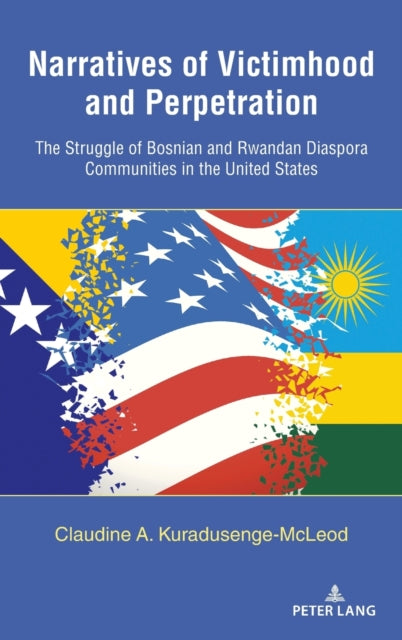
The book explores the construction of trans-generational understanding of victim and perpetrator labels in contemporary society, impacting diasporic consciousness and political participation of Rwandan and Bosnian communities in the US. It challenges the assumption of trauma belonging exclusively to the victim and emphasizes the need to address the impact of trauma across generations.
Format: Hardback
Length: 250 pages
Publication date: 29 October 2021
Publisher: Peter Lang Publishing Inc
The book delves into the intricate process of constructing a transgenerational understanding of the labels of victim and perpetrator in contemporary society, exploring their profound impact on the diasporic consciousness of Rwandan and Bosnian communities residing in the United States. It also examines their political participation and involvement, challenging the prevailing notion that trauma solely belongs to the victim, often disregarding and blaming descendants of the perpetrator across multiple generations. This comprehensive analysis is firmly grounded in the author's personal experience as a survivor of genocide and her extensive knowledge of the complex social and political factors that shape the lives of immigrant communities.
The book begins by examining the historical context of genocide and its enduring effects on the survivors and their descendants. It highlights the challenges faced by these communities in reconciling their identities and navigating the complexities of their dual heritage. The authors argue that the labels of victim and perpetrator are not static but are constantly evolving and shaped by a range of social, cultural, and political factors.
The authors then delve into the specific impact of these labels on the diasporic consciousness of Rwandan and Bosnian communities in the United States. They explore how these communities perceive themselves and their place in the broader society, as well as how they negotiate the tensions between their cultural heritage and the dominant American culture. The book highlights the ways in which the trauma of genocide has been passed down through generations, leading to intergenerational conflicts and a sense of dislocation.
To address these challenges, the book proposes a multifaceted approach that involves education, awareness, and social activism. It advocates for a more inclusive and nuanced understanding of the history of genocide, which recognizes the roles of both victims and perpetrators. The authors suggest that this understanding can help to foster empathy and compassion among individuals and communities, promoting healing and reconciliation.
Furthermore, the book emphasizes the importance of political participation and involvement in the lives of Rwandan and Bosnian communities in the United States. It highlights the role that these communities can play in shaping policy and advocating for their rights and interests. The authors argue that political engagement can help to build resilience and empower these communities, enabling them to contribute to the broader society in meaningful ways.
In conclusion, the book offers a valuable contribution to the field of genocide studies and beyond. It provides a comprehensive analysis of the transgenerational impact of the labels of victim and perpetrator on Rwandan and Bosnian communities in the United States. By challenging the dominant narratives and promoting a more inclusive understanding of the past, the book aims to foster healing, reconciliation, and social change.
Weight: 452g
Dimension: 225 x 150 (mm)
ISBN-13: 9781433183850
Edition number: New ed
UK and International shipping information
UK and International shipping information
We deliver throughout the United Kingdom and to 128 countries and territories worldwide, including the United States, Australia, Canada, Germany, Spain and France.