Augustus J. Veenendaal
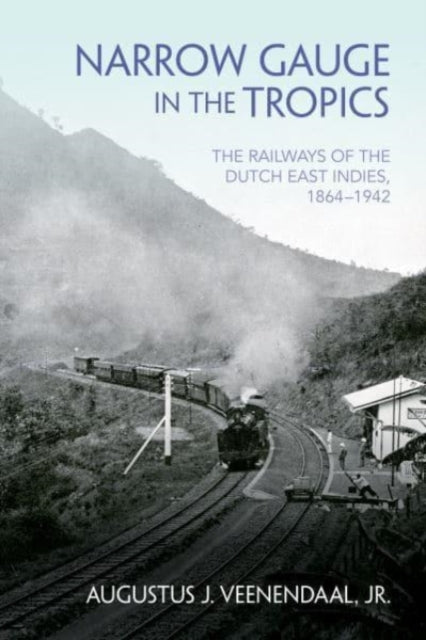
Narrow Gauge in the Tropics: The Railways of the Dutch East Indies, 1864-1942
Narrow Gauge in the Tropics: The Railways of the Dutch East Indies, 1864-1942
💎 Earn 160 Points (£1.60) on this item.
YOU SAVE £3.87
- Condition: Brand new
- UK Delivery times: Usually arrives within 2 - 3 working days
- UK Shipping: Fee starts at £2.39. Subject to product weight & dimension
Bulk ordering. Want 15 or more copies? Get a personalised quote and bigger discounts. Learn more about bulk orders.
Couldn't load pickup availability
- More about Narrow Gauge in the Tropics: The Railways of the Dutch East Indies, 1864-1942
Narrow Gauge in the Tropics is the first comprehensive history of railways and tramways in the Dutch East Indies, covering the period from 1864 to World War II. It explores the technical aspects of railway construction, the origin of the technicians, and the social impact on the indigenous population.
Format: Hardback
Length: 322 pages
Publication date: 17 May 2022
Publisher: Indiana University Press
Narrow Gauge in the Tropics: A Comprehensive History of Railways and Tramways in the Dutch East Indies (Modern Indonesia)
The Dutch East Indies, now modern Indonesia, witnessed a remarkable transformation during the mid-19th century under colonial rule. The region experienced a surge in the production of sugar, coffee, and other commodities, leading to a pressing question: How would these goods be transported to the ports, given the limited transportation options available at the time? The answer was to build a railway network through some of the most challenging terrain on the planet.
Narrow Gauge in the Tropics: A Comprehensive History of Railways and Tramways in the Dutch East Indies (Modern Indonesia) is a lavishly illustrated book that delves into the technical aspects of constructing railways over difficult terrain, the origin of the technicians who made the seemingly impossible happen, and the social impact of the railways on the indigenous population.
The book begins by tracing the origins of railways in the Dutch East Indies, which began with the construction of a short railway line in 1864. This line was built to connect the port of Batavia with the city of Semarang, and it was a significant milestone in the development of the region's transportation infrastructure. However, the construction of the railway was not without its challenges. The terrain was rugged, with steep hills, dense forests, and swamps, and the construction of the railway required a significant amount of labor and resources.
The book then explores the technical aspects of constructing the railways over difficult terrain. The engineers and technicians who worked on the project faced numerous challenges, including the need to build bridges and tunnels over deep rivers and the need to navigate through dense forests and swamps. They also had to deal with the effects of tropical weather, which included high temperatures, humidity, and rainfall.
Despite these challenges, the construction of the railways in the Dutch East Indies was a remarkable achievement. The railways provided a reliable and efficient means of transportation for goods and people, and they helped to open up the region to trade and development. The railways also had a significant impact on the indigenous population, providing them with access to new markets and opportunities.
However, the railways also had a negative impact on the environment. The construction of the railways required the clearing of large tracts of land, which led to deforestation and the loss of biodiversity. The railways also contributed to the pollution of the environment, with the burning of coal and the release of pollutants into the air and water.
In conclusion, Narrow Gauge in the Tropics: A Comprehensive History of Railways and Tramways in the Dutch East Indies (Modern Indonesia) is a fascinating book that explores the technical aspects of constructing railways over difficult terrain, the origin of the technicians who made the seemingly impossible happen, and the social impact of the railways on the indigenous population. The book is lavishly illustrated and provides a detailed account of the development of the region's transportation infrastructure. While the railways had a significant impact on the region's development, they also had a negative impact on the environment. It is important to consider the environmental impact of any development project and to work towards finding sustainable solutions.
Weight: 910g
Dimension: 186 x 263 x 33 (mm)
ISBN-13: 9780253060297
This item can be found in:
UK and International shipping information
UK and International shipping information
UK Delivery and returns information:
- Delivery within 2 - 3 days when ordering in the UK.
- Shipping fee for UK customers from £2.39. Fully tracked shipping service available.
- Returns policy: Return within 30 days of receipt for full refund.
International deliveries:
Shulph Ink now ships to Australia, Belgium, Canada, France, Germany, Ireland, Italy, India, Luxembourg Saudi Arabia, Singapore, Spain, Netherlands, New Zealand, United Arab Emirates, United States of America.
- Delivery times: within 5 - 10 days for international orders.
- Shipping fee: charges vary for overseas orders. Only tracked services are available for most international orders. Some countries have untracked shipping options.
- Customs charges: If ordering to addresses outside the United Kingdom, you may or may not incur additional customs and duties fees during local delivery.