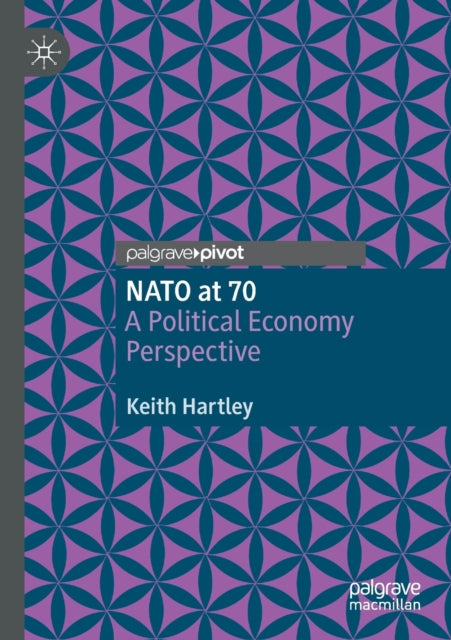
Keith Hartley
NATO at 70: A Political Economy Perspective
NATO at 70: A Political Economy Perspective
💎 Earn 185 Points (£1.85) on this item.
We can order this item for you. Delivery usually takes about 4 to 6 weeks.
This item is not held in our immediate stock. We will order it for you after checkout.
Estimated delivery: About 4 to 6 weeks
YOU SAVE £7.83
- Condition: Brand new
- UK Delivery times: Usually arrives within 2 - 3 working days
- UK Shipping: Fee starts at £3.89. Subject to product weight & dimension
Bulk ordering. Want 15 or more copies? Get a personalised quote and bigger discounts. Learn more about bulk orders.
Couldn't load pickup availability
- More about NATO at 70: A Political Economy Perspective
NATO is facing a crisis and this book provides an economic and critical analysis of its issues, considering its future and potential shape 70 years ahead. It explores the contentiousness of economic and financial burden-sharing and the expanded scope and roles of the Alliance in the 21st century.
Format: Paperback / softback
Length: 104 pages
Publication date: 11 October 2021
Publisher: Springer Nature Switzerland AG
NATO is currently facing a crisis that is challenging its very existence and future. This book offers a comprehensive and in-depth analysis of the various issues at hand, delving into the question of whether NATO has a viable future and what it might look like 70 years down the line. NATO is currently undergoing a significant transformation, restructuring its functions, funding, and strategic responsibilities to address the growing threats posed by regional and global adversaries. This book goes beyond the contentiousness of economic and financial burden-sharing and the associated political and diplomatic tensions involved in pursuing common strategic objectives. It also contributes to the ongoing debate about the expanded scope and roles of the Alliance in the 21st century. By combining NATO's political controversies, complexities, and conflicts with a treatment of the underlying theoretical economic frameworks, this book provides a valuable resource for students enrolled in military staff colleges, university International Relations and Strategic Affairs Departments, as well as those working in government defence establishments, independent think tanks, and political and economic institutions.
Introduction:
The North Atlantic Treaty Organization (NATO) has been a cornerstone of European security and stability for over 70 years. However, in recent years, the Alliance has faced a series of challenges that have put its existence and future into question. These challenges include the rise of authoritarianism, the proliferation of weapons of mass destruction, and the increasing complexity of regional and global security threats.
Economic and Financial Burden-Sharing:
One of the key challenges facing NATO is the issue of economic and financial burden-sharing. The Alliance is composed of 30 member states, each of which contributes to its funding through contributions of military personnel, equipment, and financial resources. However, there are ongoing debates about the fairness and adequacy of the current burden-sharing arrangement, with some member states arguing that they are shouldering a disproportionate share of the costs.
Political and Diplomatic Stresses:
In addition to economic and financial challenges, NATO also faces political and diplomatic stresses. These stresses arise from the complex nature of the Alliance's decision-making process, which involves consensus building among all member states. The Alliance's decision-making process can be slow and cumbersome, which can lead to tensions and disagreements among member states.
Expanded Scope and Roles:
Another challenge facing NATO is the question of its expanded scope and roles. As the world becomes increasingly interconnected and complex, NATO is being called upon to play a more active role in addressing global security threats. This includes the deployment of military forces to conflict zones, the provision of humanitarian aid, and the development of new security initiatives.
The Future of NATO:
Despite these challenges, NATO remains a vital organization for European security and stability. However, it is clear that the Alliance will need to adapt and evolve to meet the changing security landscape. This will require a commitment to reform and modernization, as well as a willingness to address the underlying economic and financial burden-sharing issues.
Conclusion:
In conclusion, NATO is facing a unique crisis that is challenging its very existence and future. However, by combining a detailed economic and critical analysis of the issues with a consideration of the Alliance's expanded scope and roles, this book provides a valuable resource for understanding the challenges facing NATO and the potential for its continued success. NATO is facing a crisis that is challenging its very existence and future. This book offers a comprehensive and in-depth analysis of the various issues at hand, delving into the question of whether NATO has a viable future and what it might look like 70 years down the line. NATO is currently undergoing a significant transformation, restructuring its functions, funding, and strategic responsibilities to address the growing threats posed by regional and global adversaries. This book goes beyond the contentiousness of economic and financial burden-sharing and the associated political and diplomatic tensions involved in pursuing common strategic objectives. It also contributes to the ongoing debate about the expanded scope and roles of the Alliance in the 21st century. By combining NATO's political controversies, complexities, and conflicts with a treatment of the underlying theoretical economic frameworks, this book provides a valuable resource for students enrolled in military staff colleges, university International Relations and Strategic Affairs Departments, as well as those working in government defence establishments, independent think tanks, and political and economic institutions.
Weight: 166g
Dimension: 210 x 148 (mm)
ISBN-13: 9783030543976
Edition number: 1st ed. 2020
UK and International shipping information
UK and International shipping information
We deliver throughout the United Kingdom and to 128 countries and territories worldwide, including the United States, Australia, Canada, Germany, Spain and France.