Shulph Ink
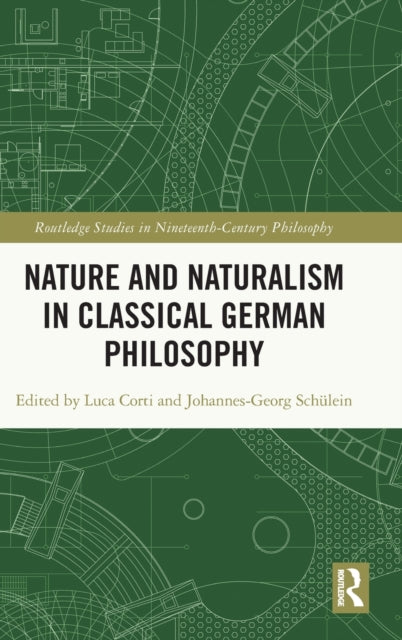
Nature and Naturalism in Classical German Philosophy
Nature and Naturalism in Classical German Philosophy
💎 Earn 811 Points (£8.11) on this item.
YOU SAVE £9.63
- Condition: Brand new
- UK Delivery times: Usually arrives within 2 - 3 working days
- UK Shipping: Fee starts at £2.39. Subject to product weight & dimension
Bulk ordering. Want 15 or more copies? Get a personalised quote and bigger discounts. Learn more about bulk orders.
Couldn't load pickup availability
- More about Nature and Naturalism in Classical German Philosophy
This book explores the relevance of naturalism and theories of nature to Classical German Philosophy, highlighting the importance of these concepts for contemporary concerns.
Format: Hardback
Length: 286 pages
Publication date: 19 August 2022
Publisher: Taylor & Francis Ltd
This book delves into the profound significance of naturalism and nature theories in Classical German Philosophy. It offers fresh interpretations of renowned thinkers such as Kant, Jacobi, Goethe, the Romantic tradition, Fichte, Schelling, Hegel, and Marx, shedding light on the enduring relevance of Classical German Philosophys exploration of nature and naturalism for contemporary issues and concerns.
The study of nature has always been a central theme in German philosophy, dating back to the ancient Greeks and continuing through the Enlightenment and beyond. In the 18th and 19th centuries, German philosophers such as Kant, Hegel, and Marx developed complex theories of nature that sought to explain the underlying structure of the natural world and its relationship to human consciousness.
Kant, in his Critique of Pure Reason, argued that the human mind is capable of understanding the natural world through the use of reason alone, without the aid of sensory experience. He believed that the natural world is governed by universal laws that apply to all objects, regardless of their location or history. Hegel, on the other hand, developed a more holistic theory of nature that saw the natural world as a dynamic system of interrelated forces and processes. He believed that the natural world is constantly evolving and changing, and that human consciousness is an integral part of this process.
Hegel's philosophy of nature was influenced by the work of Kant, but he took it in a different direction. He believed that the natural world is not just a static object to be studied, but a living organism that is constantly growing and changing. He saw human consciousness as an expression of the universal spirit of nature, and that the goal of human life is to realize this spirit in oneself and in the world around us.
Marx, in his The Communist Manifesto, argued that the natural world is shaped by the economic and social structures of human society. He believed that the ruling class controls the means of production, and that this control leads to the exploitation of the working class and the oppression of the poor. He called for the overthrow of the ruling class and the creation of a socialist society that would be based on the common ownership of the means of production.
Today, German philosophy continues to be influenced by the ideas of Kant, Hegel, and Marx. Philosophers such as Jürgen Habermas, Friedrich Nietzsche, and Martin Heidegger have explored the relationship between nature and human consciousness, and have argued that the natural world is not just a physical object to be studied, but a complex system of interrelated forces and processes that shape our understanding of the world.
In conclusion, the study of nature has played a central role human history, and German philosophy has contributed significantly to this field. The ideas of Kant, Hegel, and Marx have shaped our understanding of the natural world and have had a profound impact on contemporary issues and concerns. As we continue to grapple with the challenges of climate change, environmental degradation, and social inequality, the insights of German philosophers will continue to be valuable in our search for a more sustainable and just world.
The study of nature has always been a central theme in German philosophy, dating back to the ancient Greeks and continuing through the Enlightenment and beyond. In the 18th and 19th centuries, German philosophers such as Kant, Hegel, and Marx developed complex theories of nature that sought to explain the underlying structure of the natural world and its relationship to human consciousness.
Kant, in his Critique of Pure Reason, argued that the human mind.mind is capable of understanding the natural world through the use of reason alone, without the aid of sensory experience. He believed that the natural world is governed by universal laws that apply to all objects, regardless of their location or history. Hegel, on the other hand, developed a more holistic theory of nature that saw the natural world as a dynamic system of interrelated forces. He believed that the natural world is constantly evolving and changing, and that human consciousness is an integral part of this process.
Hegel's philosophy of nature was influenced by the work of Kant, but he took it in a different direction. He believed that the natural world is not just a static object to be studied, but a living organism that is constantly growing and changing. He saw human consciousness as an expression of the universal spirit of nature, and that the goal of human life is to realize this spirit in oneself and in the world around us.
Marx, in his The Communist Manifesto, argued that the natural world is shaped by the economic and social structures of human society. He believed that the ruling class controls the means of production, and that this control leads to the exploitation of the working class and the oppression of the poor. He called for the overthrow of the ruling class and the creation of a socialist society that would be based on the common ownership of the means of production.
Today, German philosophy continues to be influenced by the ideas of Kant, Hegel, and Marx. Philosophers such as Jürgen Habermas, Friedrich Nietzsche, and Martin Heidegger have explored the relationship between nature and human consciousness, and have argued that the natural world is not just a physical object to be studied, but a complex system of interrelated forces and processes that shape our understanding of the world.
In conclusion, the study of nature has played a central human history, and German philosophy has contributed significantly to this field. The ideas of Kant, Hegel, and Marx have shaped our understanding of the natural world and have had a profound impact on contemporary issues and concerns. As we continue to grapple with the challenges of climate change, environmental degradation, and social inequality, the insights of German philosophers will continue to be valuable in our search for a more sustainable and just world.
Weight: 710g
Dimension: 229 x 152 (mm)
ISBN-13: 9780367541729
This item can be found in:
UK and International shipping information
UK and International shipping information
UK Delivery and returns information:
- Delivery within 2 - 3 days when ordering in the UK.
- Shipping fee for UK customers from £2.39. Fully tracked shipping service available.
- Returns policy: Return within 30 days of receipt for full refund.
International deliveries:
Shulph Ink now ships to Australia, Belgium, Canada, France, Germany, Ireland, Italy, India, Luxembourg Saudi Arabia, Singapore, Spain, Netherlands, New Zealand, United Arab Emirates, United States of America.
- Delivery times: within 5 - 10 days for international orders.
- Shipping fee: charges vary for overseas orders. Only tracked services are available for most international orders. Some countries have untracked shipping options.
- Customs charges: If ordering to addresses outside the United Kingdom, you may or may not incur additional customs and duties fees during local delivery.