Claudia Martin
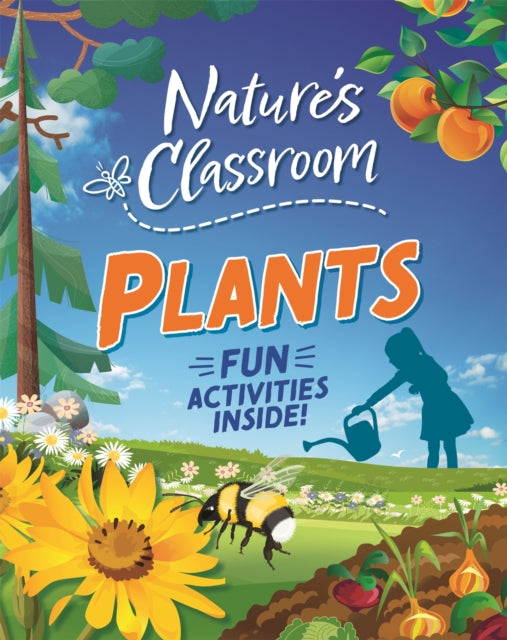
Nature's Classroom: Plants
Nature's Classroom: Plants
💎 Earn 53 Points (£0.53) on this item.
YOU SAVE £2.26
- Condition: Brand new
- UK Delivery times: Usually arrives within 2 - 3 working days
- UK Shipping: Fee starts at £2.39. Subject to product weight & dimension
Bulk ordering. Want 15 or more copies? Get a personalised quote and bigger discounts. Learn more about bulk orders.
Couldn't load pickup availability
- More about Nature's Classroom: Plants
Plants eat insects to survive and make their food through a process called photosynthesis. Photosynthesis is what makes plants green.
Format: Hardback
Length: 32 pages
Publication date: 13 April 2023
Publisher: Hachette Children's Group
Why do some plants eat insects?
Plants are amazing creatures that have evolved over millions of years to survive in a variety of environments. One of the most fascinating aspects of plants is their ability to eat insects.
There are several reasons why plants eat insects. First, insects are a rich source of nutrients that plants need to grow and thrive. Insects contain essential vitamins, minerals, and proteins that plants cannot produce on their own. By eating insects, plants can obtain these vital nutrients and ensure their own survival.
Second, insects are a natural pest control for plants. Many insects feed on plants, causing damage and reducing crop yields. By eating insects, plants can control the population of these pests and protect their own crops.
Third, some plants have evolved to specifically eat insects. These plants have developed specialized structures, such as mouthparts or digestive systems, that allow them to extract nutrients from insects. These plants are often found in habitats where insects are abundant, such as forests or grasslands.
Finally, plants that eat insects can help to maintain the balance of ecosystems. Insects play a critical role in many ecosystems, including pollination, seed dispersal, and pest control. By eating insects, plants can help to maintain the balance of these ecosystems and ensure the survival of other species.
In conclusion, plants eat insects for a variety of reasons, including their need for nutrients, their role as a natural pest control, their evolution to specifically eat insects, and their contribution to maintaining the balance of ecosystems. These fascinating adaptations have allowed plants to thrive in a wide range of environments and play a critical role in the health of our planet.
What makes plants green?
Plants are the foundation of our planet's ecosystems, providing us with oxygen, food, and shelter. One of the most striking features of plants is their ability to produce chlorophyll, which gives them their green color.
Chlorophyll is a pigment that absorbs light energy from the sun and converts it into chemical energy. This energy is used by plants to produce glucose, which is their primary source of energy. In addition to chlorophyll, plants also contain other pigments, such as carotenoids and xanthophylls, which give them their different colors.
The production of chlorophyll is a complex process that involves several steps. First, plants need to absorb carbon dioxide from the air and water from the soil. These carbon dioxide and water molecules are used by plants to produce glucose, which is stored in the leaves and stems of the plant.
Once glucose is produced, it is used by plants to produce chlorophyll. Chlorophyll is produced in the chloroplasts of plant cells, which are located in the leaves and stems of the plant. Chloroplasts contain a green pigment called chlorophyll a, which is responsible for the green color of plants.
In addition to chlorophyll, plants also contain other pigments, such as carotenoids and xanthophylls, which give them their different colors. Carotenoids, for example, give plants their orange, yellow, and red colors, while xanthophylls give plants their blue and purple colors.
The production of these pigments is also a complex process that involves several steps. Carotenoids are produced in the chloroplasts of plant cells, while xanthophylls are produced in the stroma of plant cells.
In addition to their green color, plants also have several other important functions. Plants are used to produce oxygen, which is essential for the survival of all living organisms. They also produce food for animals and humans, and they play a critical role in the carbon cycle, which helps to regulate the Earth's climate.
In conclusion, plants are amazing creatures that have evolved over millions of years to survive in a variety of environments. Their ability to produce chlorophyll, which gives them their green color, is a key factor
component of their survival. Chlorophyll is produced in the chloroplasts of plant cells, which contain a green pigment called chlorophyll a. In addition to chlorophyll, plants also contain other pigments, such as carotenoids and xanthophylls, which give them their different colors. The production of these pigments is also a complex process that involves several steps. Plants are used to produce oxygen, which is essential for the survival of all living organisms. They also produce food for animals and humans, and they play a critical role in the carbon cycle, which helps to regulate the Earth's climate.
Weight: 342g
Dimension: 272 x 215 x 9 (mm)
ISBN-13: 9781526322555
UK and International shipping information
UK and International shipping information
UK Delivery and returns information:
- Delivery within 2 - 3 days when ordering in the UK.
- Shipping fee for UK customers from £2.39. Fully tracked shipping service available.
- Returns policy: Return within 30 days of receipt for full refund.
International deliveries:
Shulph Ink now ships to Australia, Belgium, Canada, France, Germany, Ireland, Italy, India, Luxembourg Saudi Arabia, Singapore, Spain, Netherlands, New Zealand, United Arab Emirates, United States of America.
- Delivery times: within 5 - 10 days for international orders.
- Shipping fee: charges vary for overseas orders. Only tracked services are available for most international orders. Some countries have untracked shipping options.
- Customs charges: If ordering to addresses outside the United Kingdom, you may or may not incur additional customs and duties fees during local delivery.