Shulph Ink
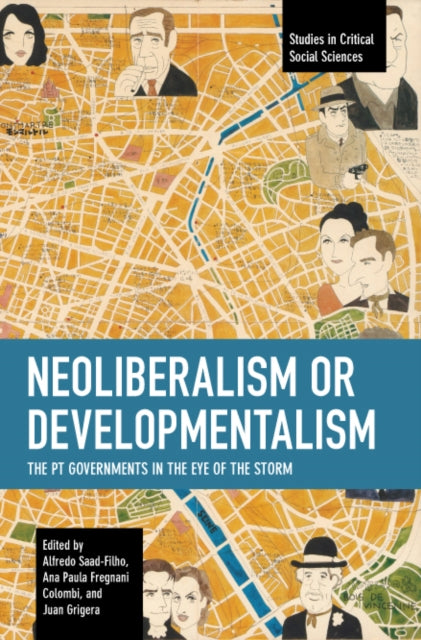
Neoliberalism or Developmentalism: The PT Governments in the Eye of the Storm
Neoliberalism or Developmentalism: The PT Governments in the Eye of the Storm
💎 Earn 96 Points (£0.96) on this item.
YOU SAVE £15.77
- Condition: Brand new
- UK Delivery times: Usually arrives within 2 - 3 working days
- UK Shipping: Fee starts at £2.39. Subject to product weight & dimension
Bulk ordering. Want 15 or more copies? Get a personalised quote and bigger discounts. Learn more about bulk orders.
Couldn't load pickup availability
- More about Neoliberalism or Developmentalism: The PT Governments in the Eye of the Storm
The book explores the political economy of Brazil under the Workers Party (PT) administrations of Presidents Lula and Dilma Rousseff, examining economic, political, and social aspects and policies implemented between 2003 and 2016. It challenges the notion that these governments were neoliberal and highlights their similarities and differences. Contributors include academics and researchers from various institutions.
Format: Paperback / softback
Length: 466 pages
Publication date: 23 March 2023
Publisher: Haymarket Books
The book "The Political Economy of Brazil: Federal Administrations Led by the Workers' Party (PT) under Presidents Lula and Dilma Rousseff" is a comprehensive and timely collection of essays that delves into the political economy of Brazil during the administrations of Presidents Lula and Dilma Rousseff. The essays explore the economic, political, and social aspects of these governments, as well as the policies implemented between 2003 and 2016, with implications for the subsequent period up to and including the administration led by Jair Bolsonaro. The contributors to the book include Adalmir Antonio Marquetti, Alessandro Miebach, Alfredo Saad-Filho, Ana Paula Colombi, Andre Singer, Andreia Galvao, Armando Boito Jr., Barbara Fritz, Cecilia Hoff, Celio Hiratuka, Claudio Castelo Branco Puty, Cristhiane Falchetti, Daniela Magalhaes Prates, Denise Gentil, Eduardo Fagnani, Fabiano Santos, Fabio Luis Barbosa dos Santos, Glaison Augusto Guerrero, Guilherme Mello, Gustavo Codas Friedmann, Humberto Martins, Jose Dari Krein, Lena Lavinas, Lucas Salvador, Andrietta, Luiz Fernando de Paula, Luiz Filgueiras, Marcelo Arend, Patricia Rocha Lemos, Paula Marcelino, Pedro Cezar Dutra Fonseca, Pedro Mendes Loureiro, Pedro Paulo Zuluth Bastos, Pedro Rossi, Rafael Moura, Ruy Braga, and Soraia Aparecida Cardozo.
The book highlights the fact that the left-leaning governments during this period were neoliberal, but they differed in their approach compared to other administrations in Brazil's history. The essays examine the similarities and differences between these governments, providing a detailed analysis of their policies and their impact on the country.
The book is divided into several sections, each focusing on a specific aspect of the political economy of Brazil. The first section, "The Political Economy of Brazil: Historical and Theoretical Perspectives," provides a historical overview of the country's political economy, tracing its development from colonialism to the present day. It also discusses the theoretical frameworks that have been used to analyze the political economy of Brazil, including Marxism, dependency theory, and neoliberalism.
The second section, "The Political Economy of Brazil: Federal Administrations Led by the Workers' Party (PT) under Presidents Lula and Dilma Rousseff," examines the economic, political, and social policies implemented by these governments during their respective terms. It covers topics such as economic growth, poverty reduction, social welfare, labor market policies, and foreign policy. The essays highlight the successes and failures of these policies, as well as their impact on different segments of the population.
The third section, "The Political Economy of Brazil: Challenges and Opportunities in the Post-PT Era," explores the challenges and opportunities that Brazil faces in the post-PT era. It discusses the political and economic challenges that the country is facing, such as the rise of right-wing populism, the economic crisis, and the need for structural reforms. The essays also provide suggestions for how Brazil can address these challenges and seize the opportunities that lie ahead.
One of the key themes of the book is the role of the state in the political economy of Brazil. The essays argue that the state has played a crucial role in shaping the country's economic and social policies, and that it has been both a source of progress and a source of resistance. The essays highlight the importance of state intervention in the economy, particularly in the areas of social welfare, labor market policies, and infrastructure development.
However, the essays also point out the limitations of state intervention. They argue that state intervention can be inefficient, bureaucratic, and prone to corruption. They suggest that a more market-oriented approach to economic development may be more effective in addressing the country's economic challenges.
Another important theme of the book is the role of social movements in the political economy of Brazil. The essays argue that social movements have played a crucial role in shaping the country's political and economic policies, and that they have been a source of resistance to neoliberalism. The essays highlight the importance of social movements in promoting social justice, economic equality, and environmental sustainability.
However, the essays also point out the challenges that social movements face in Brazil. They argue that social movements are often fragmented, and that they face resistance from the state and the private sector. They suggest that social movements need to be more organized and strategic in their efforts to achieve their goals.
In conclusion, the book "The Political Economy of Brazil: Federal Administrations Led by the Workers' Party (PT) under Presidents Lula and Dilma Rousseff" is a comprehensive and timely collection of essays that delves into the political economy of Brazil during the administrations of Presidents Lula and Dilma Rousseff. The essays explore the economic, political, and social aspects of these governments, as well as the policies implemented between 2003 and 2016, with implications for the subsequent period up to and including the administration led by Jair Bolsonaro. The book highlights the fact that the left-leaning governments during this period were neoliberal, but they differed in their approach compared to other administrations in Brazil's history. The essays examine the similarities and differences between these governments, providing a detailed analysis of their policies and their impact on the country. The book is divided into several sections, each focusing on a specific aspect of the political economy of Brazil. The first section, "The Political Economy of Brazil: Historical and Theoretical Perspectives," provides a historical overview of the country's political economy, tracing its development from colonialism to the present day. The second section, "The Political Economy of Brazil: Federal Administrations Led by the Workers' Party (PT) under Presidents Lula and Dilma Rousseff," examines the economic, political, and social policies implemented by these governments during their respective terms. The third section, "The Political Economy of Brazil: Challenges and Opportunities in the Post-PT Era," explores the challenges and opportunities that Brazil faces in the post-PT era. The essays argue that the state has played a crucial role in shaping the country's economic and social policies, but that it has been both a source of progress and a source of resistance. The essays also highlight the importance of social movements in the political economy of Brazil, but point out the challenges that social movements face in achieving their goals. In conclusion, the book is a valuable resource for anyone interested in the political economy of Brazil, and it will be of interest to scholars, policymakers, and anyone else who is interested in understanding the country's economic and social development.
Weight: 684g
Dimension: 153 x 229 x 26 (mm)
ISBN-13: 9781642598100
This item can be found in:
UK and International shipping information
UK and International shipping information
UK Delivery and returns information:
- Delivery within 2 - 3 days when ordering in the UK.
- Shipping fee for UK customers from £2.39. Fully tracked shipping service available.
- Returns policy: Return within 30 days of receipt for full refund.
International deliveries:
Shulph Ink now ships to Australia, Belgium, Canada, France, Germany, Ireland, Italy, India, Luxembourg Saudi Arabia, Singapore, Spain, Netherlands, New Zealand, United Arab Emirates, United States of America.
- Delivery times: within 5 - 10 days for international orders.
- Shipping fee: charges vary for overseas orders. Only tracked services are available for most international orders. Some countries have untracked shipping options.
- Customs charges: If ordering to addresses outside the United Kingdom, you may or may not incur additional customs and duties fees during local delivery.