KeithRay,JulianThomas
Neolithic Britain: The Transformation of Social Worlds
Neolithic Britain: The Transformation of Social Worlds
💎 Earn 212 Points (£2.12) on this item.
We can order this item for you. Delivery usually takes about 4 to 6 weeks.
This item is not held in our immediate stock. We will order it for you after checkout.
Estimated delivery: About 4 to 6 weeks
YOU SAVE £2.52
- Condition: Brand new
- UK Delivery times: Usually arrives within 2 - 3 working days
- UK Shipping: Fee starts at £3.89. Subject to product weight & dimension
Bulk ordering. Want 15 or more copies? Get a personalised quote and bigger discounts. Learn more about bulk orders.
Couldn't load pickup availability
- More about Neolithic Britain: The Transformation of Social Worlds
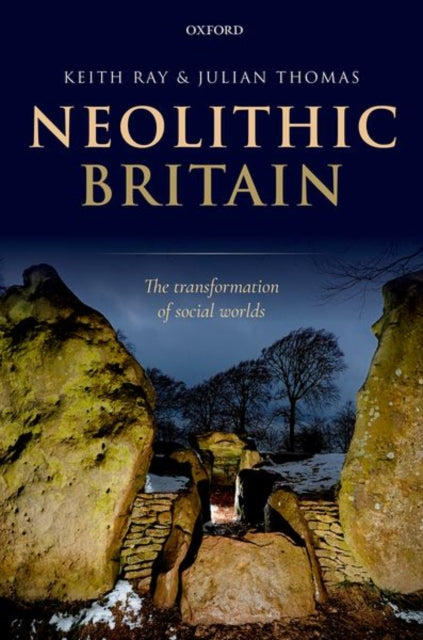
The Neolithic in Britain was a period of transformation, with human communities owning domesticated plants and animals, inhabiting a richer world of material things, and developing new social practices. This led to the construction of Stonehenge, the most remarkable surviving structure from prehistoric Europe. Recent developments have resulted in a dual realization of precise and particular time narratives and original insights about the fabric of Neolithic society. This volume offers a new perspective on Neolithic Britain, covering key material and social developments and reflecting on the nature of cultural practices, tradition, genealogy, and society across nearly two millennia.
Format: Hardback
Length: 416 pages
Publication date: 14 June 2018
Publisher: Oxford University Press
The Neolithic period in Britain marked a significant transformation, as human communities underwent a profound shift. They embraced collective ownership of domesticated plants and animals, leading to a more prosperous world characterized by the presence of timber houses and halls, pottery vessels, polished flint and stone axes, and monumental earth and stone structures. Alongside this material transformation, a range of new social practices emerged, placing great emphasis on descent, continuity, and inheritance. These innovative developments set in motion social processes that ultimately culminated in the construction of Stonehenge, a remarkable surviving structure from prehistoric Europe.
Neolithic Britain serves as a contemporary and concise introduction to the period of British prehistory, spanning from approximately 4000 to 2200 BCE. Authored with a fresh understanding of the chronology of this era, the book reflects both on the manner in which archaeologists narrate the Neolithic and how Neolithic people themselves constructed their histories. By incorporating recent insights gained from the remarkable pace of archaeological discoveries in recent years, a complex and multifaceted world emerges, one that played a pivotal role in shaping the landscape of contemporary Britain.
A significant recent development has led to a dual realization. Firstly, meticulous research into the chronologies of individual sites has revealed precise and specific time narratives. Secondly, this heightened awareness of time has yielded original insights into the fabric of Neolithic society, encompassing aspects such as inheritance, kinship, and social ties, as well as the descent of cultural practices. Moreover, individual discoveries and investigative projects, whether in the vicinity of Stonehenge, on the mainland of Orkney, or in less well-known localities, have had a profound impact on our understanding of Neolithic society.
The Neolithic period in Britain marked a transformative era, as human communities underwent a profound shift toward collective ownership of domesticated plants and animals, leading to a more prosperous world characterized by material abundance. Alongside this material transformation, a range of new social practices emerged, placing great emphasis on descent, continuity, and inheritance. These innovative developments set in motion social processes that ultimately culminated in the construction of Stonehenge, a remarkable surviving structure from prehistoric Europe.
Neolithic Britain serves as a contemporary and concise introduction to the period of British prehistory, spanning from approximately 4000 to 2200 BCE. Authored with a fresh understanding of the chronology of this era, the book reflects both on the manner in which archaeologists narrate the Neolithic and how Neolithic people themselves constructed their histories. By incorporating recent insights gained from the remarkable pace of archaeological discoveries in recent years, a complex and multifaceted world emerges, one that played a pivotal role in shaping the landscape of contemporary Britain.
A significant recent development has led to a dual realization. Firstly, meticulous research into the chronologies of individual sites has revealed precise and specific time narratives. Secondly, this heightened awareness of time has yielded original insights into the fabric of Neolithic society, encompassing aspects such as inheritance, kinship, and social ties, as well as the descent of cultural practices. Moreover, individual discoveries and investigative projects, whether in the vicinity of Stonehenge, on the mainland of Orkney, or in less well-known localities, have had a profound impact on our understanding of Neolithic society.
The Neolithic period in Britain marked a transformative era, as human communities underwent a profound shift toward collective ownership of domesticated plants and animals, leading to a more prosperous world characterized by material abundance. Alongside this material transformation, a range of new social practices emerged, placing great emphasis on descent, continuity, and inheritance. These innovative developments set in motion social processes that ultimately culminated in the construction of Stonehenge, a remarkable surviving structure from prehistoric Europe.
Neolithic Britain serves as a contemporary and concise introduction to the period of British prehistory, spanning from approximately 4000 to 2200 BCE. Authored with a fresh understanding of the chronology of this era, the book reflects both on the manner in which archaeologists narrate the Neolithic and how Neolithic people themselves constructed their histories. By incorporating recent insights gained from the remarkable pace of archaeological discoveries in recent years, a complex and multifaceted world emerges, one that played a pivotal role in shaping the landscape of contemporary Britain.
A significant recent development has led to a dual realization. Firstly, meticulous research into the chronologies of individual sites has revealed precise and specific time narratives. Secondly, this heightened awareness of time has yielded original insights into the fabric of Neolithic society, encompassing aspects such as inheritance, kinship, and social ties, as well as the descent of cultural practices. Moreover, individual discoveries and investigative projects, whether in the vicinity of Stonehenge, on the mainland of Orkney, or in less well-known localities, have had a profound impact on our understanding of Neolithic society.
Weight: 848g
Dimension: 166 x 240 x 26 (mm)
ISBN-13: 9780198823896
UK and International shipping information
UK and International shipping information
We deliver throughout the United Kingdom and to 128 countries and territories worldwide, including the United States, Australia, Canada, Germany, Spain and France.