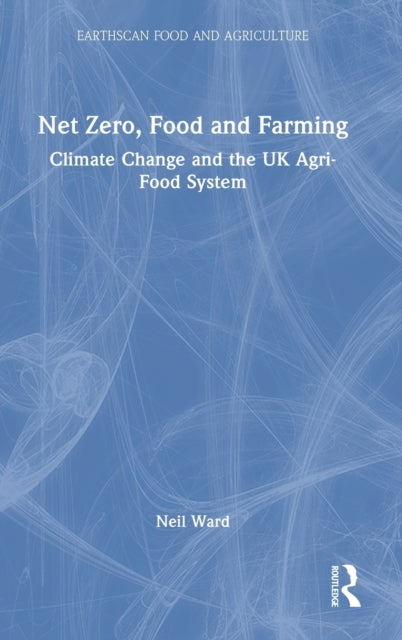
Neil Ward
Net Zero, Food and Farming: Climate Change and the UK Agri-Food System
Net Zero, Food and Farming: Climate Change and the UK Agri-Food System
💎 Earn 811 Points (£8.11) on this item.
We can order this item for you. Delivery usually takes about 4 to 6 weeks.
This item is not held in our immediate stock. We will order it for you after checkout.
Estimated delivery: About 4 to 6 weeks
YOU SAVE £9.63
- Condition: Brand new
- UK Delivery times: Usually arrives within 2 - 3 working days
- UK Shipping: Fee starts at £3.89. Subject to product weight & dimension
Bulk ordering. Want 15 or more copies? Get a personalised quote and bigger discounts. Learn more about bulk orders.
Couldn't load pickup availability
- More about Net Zero, Food and Farming: Climate Change and the UK Agri-Food System
This book explores the implications of the UK's net zero transition for food and farming,including dietary change,afforestation,energy crops,and low-emission farming practices,and provides a historical perspective to understand how the agri-food system has evolved and how it can evolve further to support the transition.
Format: Hardback
Length: 250 pages
Publication date: 04 August 2022
Publisher: Taylor & Francis Ltd
The UK's food and farming sectors face significant challenges in the transition to a net-zero economy, which is essential to mitigate the catastrophic consequences of climate change. This book examines the implications of this transition and explores strategies to manage them effectively.
The UK's agricultural sector has a long history of contributing to greenhouse gas emissions, primarily through livestock production and land use. However, the country also has significant potential to reduce its carbon footprint through sustainable farming practices.
One of the key challenges in the transition to net zero is the need to reduce food waste. According to the Food and Agriculture Organization of the United Nations (FAO), around one-third of all food produced globally is wasted, with the majority of this waste occurring in the retail and consumer sectors. This waste not only contributes to greenhouse gas emissions but also wastes valuable resources and increases food insecurity.
Another challenge is the need to shift towards more sustainable farming practices. This includes reducing the use of pesticides and fertilizers, improving soil health, and adopting renewable energy sources such as solar and wind power. However, these practices can also be expensive and require significant investment.
Afforestation and energy crops are also potential solutions to the challenges facing the UK's food and farming sectors. Afforestation can help to capture carbon dioxide from the atmosphere and store it in trees and plants, while energy crops can be used to produce renewable energy. However, these solutions also have their own environmental impacts and require careful consideration.
Low-emission farming practices, such as precision agriculture and vertical farming, can also help to reduce greenhouse gas emissions and improve soil health. These practices use technology to optimize crop yields and reduce waste, while also reducing the use of fossil fuels and other inputs.
The book also examines the role of government policies and incentives in driving the transition to net zero. Governments can provide financial support for sustainable farming practices, promote research and development, and set emissions targets for the agriculture and food industry. However, policymakers must also consider the social and economic impacts of these policies, particularly on small-scale farmers and rural communities.
In conclusion, the transition to a net-zero economy is essential to mitigate the catastrophic consequences of climate change. The UK's food and farming sectors face significant challenges, but there are also opportunities to adopt sustainable practices and reduce their carbon footprint. This book provides a comprehensive analysis of the implications of the transition and explores strategies to manage them effectively.
The UK's food and farming sectors face significant challenges in the transition to a net-zero economy, which is essential to mitigate the catastrophic consequences of climate change. This book examines the implications of this transition and explores strategies to manage them effectively.
The UK's agricultural sector has a long history of contributing to greenhouse gas emissions, primarily through livestock production and land use. However, the country also has significant potential to reduce its carbon footprint through sustainable farming practices.
One of the key challenges in the transition to net zero is the need to reduce food waste. According to the Food and Agriculture Organization of the United Nations (FAO), around one-third of all food produced globally is wasted, with the majority of this waste occurring in the retail and consumer sectors. This waste not only contributes to greenhouse gas emissions but also wastes valuable resources and increases food insecurity.
Another challenge is the need to shift towards more sustainable farming practices. This includes reducing the use of pesticides and fertilizers, improving soil health, and adopting renewable energy sources such as solar and wind power. However, these practices can also be expensive and require significant investment.
Afforestation and energy crops are also potential solutions to the challenges facing the UK's food and farming sectors. Afforestation can help to capture carbon dioxide from the atmosphere and store it in trees and plants, while energy crops can be used to produce renewable energy. However, these solutions also have their own environmental impacts and require careful consideration.
Low-emission farming practices, such as precision agriculture and vertical farming, can also help to reduce greenhouse gas emissions and improve soil health. These practices use technology to optimize crop yields and reduce waste, while also reducing the use of fossil fuels and other inputs.
The book also examines the role of government policies and incentives in driving the transition to net zero. Governments can provide financial support for sustainable farming practices, promote research and development, and set emissions targets for the agriculture and food industry. However, policymakers must also consider the social and economic impacts of these policies, particularly on small-scale farmers and rural communities.
In conclusion, the transition to a net-zero economy is essential to mitigate the catastrophic consequences of climate change. The UK's food and farming sectors face significant challenges, but there are also opportunities to adopt sustainable practices and reduce their carbon footprint. This book provides a comprehensive analysis of the implications of the transition and explores strategies to manage them effectively.
Weight: 660g
Dimension: 234 x 156 (mm)
ISBN-13: 9781032244266
UK and International shipping information
UK and International shipping information
We deliver throughout the United Kingdom and to 128 countries and territories worldwide, including the United States, Australia, Canada, Germany, Spain and France.