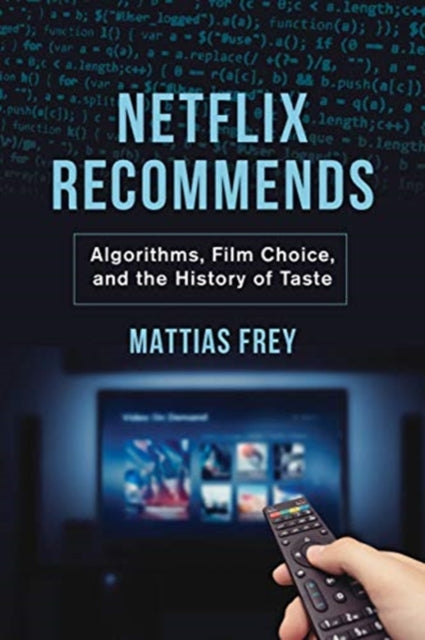
Mattias Frey
Netflix Recommends: Algorithms, Film Choice, and the History of Taste
Netflix Recommends: Algorithms, Film Choice, and the History of Taste
💎 Earn 100 Points (£1.00) on this item.
YOU SAVE £4.94
- Condition: Brand new
- UK Delivery times: Usually arrives within 2 - 3 working days
- UK Shipping: Fee starts at £2.39. Subject to product weight & dimension
Bulk ordering. Want 15 or more copies? Get a personalised quote and bigger discounts. Learn more about bulk orders.
Couldn't load pickup availability
- More about Netflix Recommends: Algorithms, Film Choice, and the History of Taste
Algorithmic recommender systems have been both praised and criticized for their ability to personalize and curate media content. This book challenges the consensus that these systems are novel, effective, and widely used, arguing that they are neither as revolutionary nor as alarming as their celebrants and critics maintain. It investigates real-life users, marketing rhetoric, technical processes, business models, and historical antecedents to demonstrate that these choice aids are neither as trusted nor as widely used as assumed.
Format: Paperback / softback
Length: 282 pages
Publication date: 05 October 2021
Publisher: University of California Press
Algorithmic recommender systems, employed by media companies to suggest content based on users' viewing histories, have sparked both hopes for personalized, curated media and dire warnings of filter bubbles and media homogeneity. Interestingly, both proponents and detractors assume that recommender systems for choosing films and series are novel, effective, and widely used. In his book, "Netflix Recommends," Mattias Frey challenges this consensus by scrutinizing the world's most subscribed streaming service. Through an investigation of real-life users, marketing rhetoric, technical processes, business models, and historical antecedents, Frey demonstrates that these choice aids are neither as revolutionary nor as alarming as their celebrants and critics maintain—and neither as trusted nor as widely used.
"Netflix Recommends" sheds light on the constellation of sources that real viewers use to choose films and series in the digital age. Frey argues that although some lament AIs' hostile takeover of humanistic cultures, the thirst for filters, curators, and critics is stronger than ever. The book explores the various factors that influence viewers' choices, including personal preferences, social influences, and the influence of algorithms. It also examines the role of recommendation systems in shaping media consumption and the potential consequences of their dominance.
One of the key findings of "Netflix Recommends" is that recommender systems are not as novel or effective as their proponents claim. Frey demonstrates that similar systems have been in use for decades, in various forms, such as movie rental stores and music recommendation services. The rise of Netflix, however, has led to a renewed interest in these systems and their potential impact on media consumption.
Despite the concerns raised by critics, Frey argues that recommender systems have some benefits. They can help users discover new content that they may not have otherwise encountered, and they can personalize the viewing experience by suggesting content based on users' preferences. However, the book also highlights the potential risks associated with these systems. Filter bubbles, where users are only exposed to content that reinforces their existing beliefs, can lead to a narrow worldview and a lack of exposure to diverse perspectives. Media homogeneity, where users are only exposed to a limited range of content, can also limit their creativity and cultural exploration.
"Netflix Recommends" is a thought-provoking and informative book that challenges the consensus surrounding algorithmic recommender systems. It provides a comprehensive analysis of the world of Netflix and its recommendation systems, and it raises important questions about the future of media consumption. Whether you are a media industry professional, a consumer, or simply interested in the impact of technology on society, this book is a must-read.
Weight: 392g
Dimension: 153 x 228 x 19 (mm)
ISBN-13: 9780520382046
This item can be found in:
UK and International shipping information
UK and International shipping information
UK Delivery and returns information:
- Delivery within 2 - 3 days when ordering in the UK.
- Shipping fee for UK customers from £2.39. Fully tracked shipping service available.
- Returns policy: Return within 30 days of receipt for full refund.
International deliveries:
Shulph Ink now ships to Australia, Belgium, Canada, France, Germany, Ireland, Italy, India, Luxembourg Saudi Arabia, Singapore, Spain, Netherlands, New Zealand, United Arab Emirates, United States of America.
- Delivery times: within 5 - 10 days for international orders.
- Shipping fee: charges vary for overseas orders. Only tracked services are available for most international orders. Some countries have untracked shipping options.
- Customs charges: If ordering to addresses outside the United Kingdom, you may or may not incur additional customs and duties fees during local delivery.