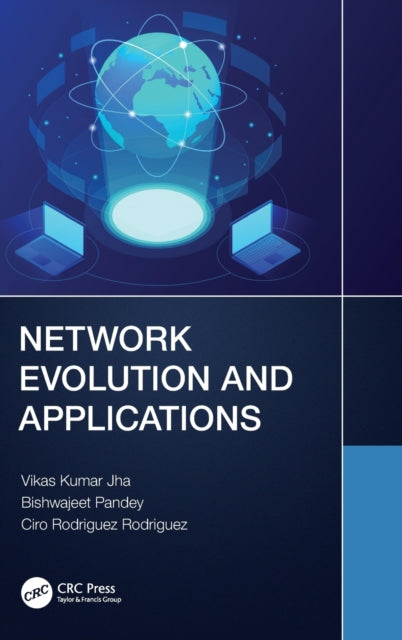
CiroRodriguez,Vikas KumarJha,Bishwajeet KumarPandey
Network Evolution and Applications
Network Evolution and Applications
💎 Earn 396 Points (£3.96) on this item.
YOU SAVE £4.71
- Condition: Brand new
- UK Delivery times: Usually arrives within 2 - 3 working days
- UK Shipping: Fee starts at £2.39. Subject to product weight & dimension
Bulk ordering. Want 15 or more copies? Get a personalised quote and bigger discounts. Learn more about bulk orders.
Couldn't load pickup availability
- More about Network Evolution and Applications
Network Evolution and Applications provides an overview of the technologies, concepts, and milestones in the history of networking, including core technologies, past revolutionary concepts, and popular concepts like Artificial Intelligence, Software Defined Networking, Cloud Computing, and Internet of Things. The COVID-19 pandemic has highlighted the importance of digital networks and work from home, with industries exploring WFH to extend it in the future.
Format: Hardback
Length: 240 pages
Publication date: 14 November 2022
Publisher: Taylor & Francis Ltd
The evolution of networks and their applications has been a fascinating journey,spanning several decades and revolutionizing the way we communicate and access information. From the early days of dial-up connections to the lightning-fast speeds of today's broadband networks,the landscape of networking has undergone a remarkable transformation. In this comprehensive guide, we will explore the key milestones and technologies that have shaped the evolution of networks,from the advent of the internet to the rise of cloud computing and the Internet of Things.
The history of networking is a testament to the continuous innovation and adaptability of human technology. From the humble beginnings of telegraphy and telephone systems to the complex web of digital networks that we rely on today,the evolution of networks has been driven by a relentless pursuit of better communication and more efficient information sharing.
One of the most significant milestones in the evolution of networks was the advent of the internet. In the late 1980s and early 1990s,the development of the World Wide Web by Tim Berners-Lee and the introduction of the first web browser, Netscape Navigator,marked the beginning of a new era of digital communication. The internet allowed people to connect and share information in ways that had never been possible before,transforming the way we work,learn,and interact with each other.
Since then,the internet has continued to evolve and expand,giving rise to a vast array of applications and services that have revolutionized our lives. From social media and e-commerce to cloud computing and artificial intelligence,the internet has become an integral part of our daily routine.
Another key milestone in the evolution of networks was the rise of cloud computing. Cloud computing is a model in which computing resources,such as servers,storage,and software,are provided over the internet. This allows users to access these resources from anywhere in the world,at any time,and on any device. Cloud computing has opened up new opportunities for businesses and individuals alike,by providing cost-effective and scalable solutions for storing,processing,and analyzing large amounts of data.
In addition to cloud computing,the Internet of Things (IoT) has also emerged as a major disruptor in the networking industry. IoT refers to the network of physical devices,such as sensors,actuators,and appliances,that are connected to the internet and can communicate with each other. The IoT has the potential to transform a wide range of industries,from healthcare and transportation to agriculture and manufacturing,by enabling the automation of processes,improved efficiency,and better decision-making.
As networks continue to evolve and expand,new challenges and opportunities arise. One of the biggest challenges facing the networking industry is the increasing demand for bandwidth. With the rise
The evolution of networks and their applications has been a fascinating journey,spanning several decades and revolutionizing the way
The history of networking is a testament to the continuous innovation and adaptability of human technology. From the humble beginnings of telegraphy and telephone systems to the complex web of digital networks that we rely on today,the evolution of networks has been driven by a relentless pursuit of better communication and more efficient information sharing.
One of the most significant milestones in the evolution of networks was the advent of the internet. In the late 1980s and early 1990s,the development of the World Wide Web by Tim Berners-Lee and the introduction of the first web browser, Netscape Navigator,marked the beginning of a new era of digital communication. The internet allowed people to connect and share information in ways that had never been possible before,transforming the way,we work,learn,and interact with each other.
Since then,the internet has continued to evolve and expand,giving rise another rise to a vast array of applications and services that have revolutionized our lives. From social media and e-commerce to cloud computing and artificial intelligence,the internet has become an integral part of our daily routine.
Another key milestone in the evolution of networks was the rise of cloud computing. Cloud computing is a model in which computing resources,such as servers,storage,and software,are provided over the internet. This allows users to access these resources from anywhere in the world,at any time,and on any device. Cloud computing has opened up new opportunities for businesses and individuals alike.
In addition to cloud computing,the Internet of Things (IoT) has also emerged as a major disruptor in the networking industry. IoT refers to the network of physical devices,such as sensors,actuators,and appliances,that are connected to the internet and can communicate with each other. The IoT has the potential to transform a wide range of industries,from healthcare and transportation to agriculture and manufacturing,by enabling the automation of processes,improved efficiency,and better decision-making.
As networks continue to evolve and expand,new challenges and opportunities arise. One of the biggest challenges facing the networking industry is the increasing demand for bandwidth. With the advent of the COVID-19 pandemic,the demand for bandwidth has increased significantly,as people around the world have relied on digital networks to stay connected and work remotely. This has put a strain on network infrastructure,leading the need for more efficient and scalable solutions to meet the growing demand.
Another challenge facing the networking industry is the increasing demand for security. With the rise the increasing number of devices connected to the internet,the risk of cyberattacks has also increased significantly. Cyberattacks can take many forms,from malware and viruses to phishing and social engineering attacks. Network administrators must be aware of these threats and take steps.
To address these challenges,the networking industry is constantly innovating and developing new technologies and solutions. One of the most promising solutions is the use of artificial intelligence (AI) and machine learning (ML) to automate network management and security. AI and ML algorithms can analyze network traffic and identify potential threats,and can respond to them in real-time. This can help reduce the risk of cyberattacks and improve the efficiency of network management.
Another promising solution is the use of software-defined networking (SDN) and network function virtualization (NFV). SDN and NFV allow network administrators to virtualize network functions,such as routing and switching,firewalls,and security,and can automate the provisioning and management of network resources. This can help reduce the cost of network infrastructure and improve the flexibility and scalability of networks.
In addition to these solutions,the networking industry is also exploring the use of 5G networks. 5G networks are the fifth-generation mobile networks that offer faster download and upload speeds,low latency,and higher capacity. 5G networks can support a large number of connected devices and can provide reliable and efficient communication.
Finally,the networking industry is also exploring the use of edge computing. Edge computing is a distributed computing architecture that brings computing and storage closer to the end-users. This can help reduce the latency and improve the performance of applications.
In conclusion,the evolution of networks and their applications has been a fascinating journey,spanning several decades and revolutionizing the way
The history of networking is a testament to the continuous innovation and adaptability of human technology. From the humble beginnings of telegraphy and telephone systems to the complex web of digital networks that we rely on today,the evolution of networks has been driven by a relentless pursuit of better communication and more efficient information sharing.
One of the most significant milestones in the evolution of networks was the advent of the internet. In the late 1980s and early 1990s,the development of the World Wide Web by Tim Berners-Lee and the introduction of the first web browser, Netscape Navigator,marked the beginning of a new era of digital communication. The internet allowed people to connect and share information in ways that had never been possible before,transforming the way,we work,learn,and interact with each other.
Since then,the internet has continued to evolve and expand,giving rise to a vast array of applications and services that have revolutionized our lives. From social media and e-commerce to cloud computing and artificial intelligence,the internet has become an integral part of our daily routine.
Another key milestone in the evolution of networks was the rise of cloud computing. Cloud computing is a model in which computing resources,such as servers,storage,and software,are provided over the internet. This allows users to access these resources from anywhere in the world,at any time,and on any device. Cloud computing has opened up new opportunities for businesses and individuals alike,by providing cost-effective and scalable solutions for storing,processing,and analyzing large amounts of data.
In addition to cloud computing,the Internet of Things (IoT) has also emerged as a major disruptor in the networking industry. IoT refers to the network of physical devices,such as sensors,actuators,and appliances,that are connected to the internet and can communicate with each other. The IoT has the potential to transform a wide range of industries,from healthcare and transportation to agriculture and manufacturing,by enabling the automation of processes,improved efficiency,and better decision-making.
In addition to these solutions,the networking industry is also exploring the use of 5G networks. 5G networks are the fifth-generation mobile networks that offer faster download and upload speeds,low latency,and higher capacity. 5G networks can support a large number of connected devices and can provide reliable and efficient communication.
Finally,the networking industry is also exploring the use of edge computing. Edge computing is a distributed computing architecture that brings computing and storage closer to the end-users. This can help reduce the latency and improve the performance of applications.
In conclusion,the evolution of networks and their applications has been a fascinating journey,spanning several decades and revolutionizing the way
The history of networking is a testament to the continuous innovation and adaptability of human technology. From the humble beginnings of telegraphy and telephone systems to the complex web of digital networks that we rely on today,the evolution of networks has been driven by a relentless pursuit of better communication and more efficient information sharing.
One of the most significant milestones in the evolution of networks was the advent of the internet. In the late 1980s and early 1990s,the development of the World Wide Web by Tim Berners-Lee and the introduction of the first web browser, Netscape Navigator,marked the beginning of a new era of digital communication. The internet allowed people to connect and share information in ways that had never been possible before,transforming the way,we work,learn,and interact with each other.
Since then,the internet has continued to evolve and expand,giving rise to a vast array of applications and services that have revolutionized our lives. From social media and e-commerce to cloud computing and artificial intelligence,the internet has become an integral part of our daily routine.
Another key milestone in the evolution of networks was the rise of cloud computing. Cloud computing is a model in which computing resources,such as servers,storage,and software,are provided over the internet. This allows users to access these resources from anywhere in the world,at any time,and on any device. Cloud computing has opened up new opportunities for businesses and individuals alike,by providing cost-effective and scalable solutions for storing,processing,and analyzing large amounts of data.
In addition to cloud computing,the Internet of Things (IoT) has also emerged as a major disruptor in the networking industry. IoT refers to the network of physical devices,such as sensors,actuators,and appliances,that are connected to the internet and can communicate with each other. The IoT has the potential to transform a wide range of industries,from healthcare and transportation to agriculture and manufacturing,by enabling the automation of processes,improved efficiency,and better decision-making.
In addition to these solutions,the networking industry is also exploring the use of 5G networks. 5G networks are the fifth-generation mobile networks that offer faster download and upload speeds,low latency,and higher capacity. 5G networks can support a large number of connected devices and can provide reliable and efficient communication.
Finally,the networking industry is also exploring the use of edge computing. Edge computing is a distributed computing architecture that brings computing and storage closer to the end-users. This can help reduce the latency and improve the performance of applications.
In conclusion,the evolution of networks and their applications has been a fascinating journey,spanning several decades and revolutionizing the way
Weight: 498g
Dimension: 163 x 241 x 19 (mm)
ISBN-13: 9781032299563
UK and International shipping information
UK and International shipping information
UK Delivery and returns information:
- Delivery within 2 - 3 days when ordering in the UK.
- Shipping fee for UK customers from £2.39. Fully tracked shipping service available.
- Returns policy: Return within 30 days of receipt for full refund.
International deliveries:
Shulph Ink now ships to Australia, Belgium, Canada, France, Germany, Ireland, Italy, India, Luxembourg Saudi Arabia, Singapore, Spain, Netherlands, New Zealand, United Arab Emirates, United States of America.
- Delivery times: within 5 - 10 days for international orders.
- Shipping fee: charges vary for overseas orders. Only tracked services are available for most international orders. Some countries have untracked shipping options.
- Customs charges: If ordering to addresses outside the United Kingdom, you may or may not incur additional customs and duties fees during local delivery.