Shulph Ink
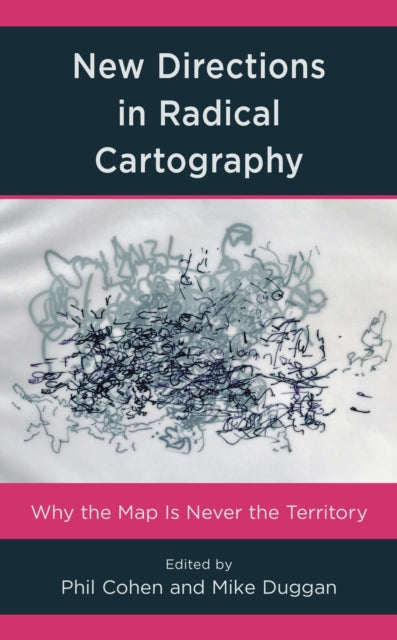
New Directions in Radical Cartography: Why the Map is Never the Territory
New Directions in Radical Cartography: Why the Map is Never the Territory
We can order this item for you. Delivery usually takes about 4 to 6 weeks.
This item is not held in our immediate stock. We will order it for you after checkout.
Estimated delivery: About 4 to 6 weeks
- Condition: Brand new
- UK Delivery times: Usually arrives within 2 - 3 working days
- UK Shipping: Fee starts at £3.89. Subject to product weight & dimension
Bulk ordering. Want 15 or more copies? Get a personalised quote and bigger discounts. Learn more about bulk orders.
Couldn't load pickup availability
- More about New Directions in Radical Cartography: Why the Map is Never the Territory
New Directions in Radical Cartography examines the role of maps in society, explores counter-mapping, and the impact of digital mapping technologies, featuring original research, mapping projects, and detailed readings of maps. It highlights the continued vitality of analogue maps in the hands of artists and activists.
Format: Hardback
Length: 392 pages
Publication date: 17 December 2021
Publisher: Rowman & Littlefield
New Directions in Radical Cartography is a comprehensive exploration of the contemporary debates surrounding the role of maps in society. It delves into the emergence of counter-mapping as a distinct field of practice and the profound impact of digital mapping technologies on cartographic practice and theory. The book features original research, detailed accounts of mapping projects, and critical readings of maps. The contributors examine how digital mapping technologies have facilitated a new wave of practices that aim to challenge the perceived power of maps. They highlight the continued relevance of analogue maps in the hands of artists and activists who are pushing the boundaries of what can be mapped. New Directions in Radical Cartography draws upon a rich body of mapping work that has emerged from various fields, including community action, urban ethnography, environmental activism, humanitarianism, and public engagement.
The book begins by examining the historical and philosophical foundations of maps, highlighting their role in shaping our understanding of the world. It then explores the emergence of counter-mapping as a response to the dominant cartographic practices that often reinforce power structures and marginalize certain groups. Counter-mapping seeks to create alternative maps that challenge these power dynamics and provide a more inclusive and accurate representation of the world.
One of the key themes of the book is the impact of digital mapping technologies on cartographic practice and theory. The authors discuss the ways in which digital mapping has revolutionized the way maps are created, accessed, and used. They highlight the advantages of digital mapping, such as its ability to provide real-time data, interactive features, and the ability to create maps at a global scale. However, they also point out the challenges associated with digital mapping, such as the potential for data manipulation, the loss of cultural heritage, and the potential for surveillance.
The book also includes detailed accounts of mapping projects that have been undertaken using digital mapping technologies. These projects range from small-scale community mapping projects to large-scale global mapping initiatives. The authors provide insights into the challenges faced during these projects, as well as the successes that have been achieved. They also discuss the ethical implications of digital mapping, such as the need to ensure that the data collected is used in a responsible and ethical manner.
In addition to the research and accounts of mapping projects, the book also includes critical readings of maps. The authors examine the ways in which maps are used to represent and communicate information, and they highlight the ways in which maps can be used to perpetuate harmful stereotypes and ideologies. They also discuss the ways in which maps can be used to promote social justice and environmental sustainability.
One of the most significant contributions of New Directions in Radical Cartography is its emphasis on the importance of community engagement in mapping. The authors argue that maps should be created by and for the communities that they represent, and that they should be used to promote social and environmental justice. They provide examples of community mapping projects that have been successful in achieving these goals, and they discuss the challenges that have been faced in creating these projects.
Another important theme of the book is the role of maps in environmental activism. The authors discuss the ways in which maps can be used to track environmental change, identify environmental threats, and promote environmental sustainability. They provide examples of mapping projects that have been successful in achieving these goals, and they discuss the challenges that have been faced in creating these projects.
In conclusion, New Directions in Radical Cartography is a comprehensive and thought-provoking exploration of the contemporary debates surrounding the role of maps in society. It explores the emergence of counter-mapping as a distinct field of practice and the profound impact of digital mapping technologies on cartographic practice and theory. The book features original research, detailed accounts of mapping projects, and critical readings of maps. It emphasizes the importance of community engagement in mapping and the role of maps in environmental activism. By drawing on a rich body of mapping work that exists as part of community action, urban ethnography, environmental activism, humanitarianism, and public engagement, the book provides a valuable resource for anyone interested in the field of cartography.
Weight: 726g
Dimension: 158 x 235 x 31 (mm)
ISBN-13: 9781538147191
UK and International shipping information
UK and International shipping information
We deliver throughout the United Kingdom and to 128 countries and territories worldwide, including the United States, Australia, Canada, Germany, Spain and France.