AlexanderBaturo,JosElkink
New Kremlinology: Understanding Regime Personalization in Russia
New Kremlinology: Understanding Regime Personalization in Russia
💎 Earn 493 Points (£4.93) on this item.
We can order this item for you. Delivery usually takes about 4 to 6 weeks.
This item is not held in our immediate stock. We will order it for you after checkout.
Estimated delivery: About 4 to 6 weeks
- Condition: Brand new
- UK Delivery times: Usually arrives within 2 - 3 working days
- UK Shipping: Fee starts at £2.39. Subject to product weight & dimension
Bulk ordering. Want 15 or more copies? Get a personalised quote and bigger discounts. Learn more about bulk orders.
Couldn't load pickup availability
- More about New Kremlinology: Understanding Regime Personalization in Russia
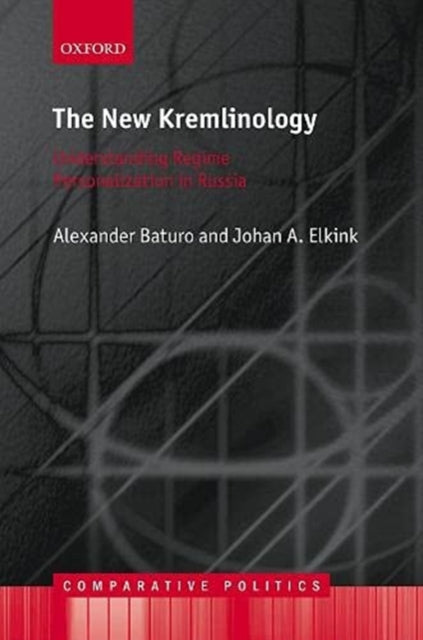
The New Kremlinology is the first in-depth examination of the development of regime personalization in Russia. It argues that the political regime of Vladimir Putin is a personalist regime in the making and describes the process of regime personalization through four components: patronage networks, deinstitutionalization, media personalization, and establishing permanency in office. The book's lessons extend beyond Russia and illuminate how other personalist and personalizing regimes emerge and develop.
Format: Hardback
Length: 240 pages
Publication date: 27 September 2021
Publisher: Oxford University Press
The New Kremlinology is a groundbreaking exploration of the evolution of regime personalization in Russia, offering a comprehensive analysis of this significant political phenomenon. In the post-Cold War era, a number of previously democratizing countries witnessed authoritarian reversals, where incumbent leaders assumed power and embraced personalist rule. While scholars have extensively studied the authoritarian turn, this book takes a different approach by focusing on the type of authoritarian rule that emerges from it.
The argument presented in The New Kremlinology begins with the assumption that the political regime of Vladimir Putin is in the process of becoming a personalist regime. This perspective sets it apart from previous accounts that emphasize the failure of democratization in Russia. By examining the politics within the Russian ruling coalition since 1999, the book delves into the process of regime personalization, which involves the acquisition of personal power by a leader.
The investigation is structured around four key components of regime personalization: patronage networks, deinstitutionalization, media personalization, and establishing permanency in office. These components are drawn from comparative evidence and theories of personalist rule, providing a rich framework for analyzing the dynamics of regime change in Russia.
One of the key findings of The New Kremlinology is that Russia has gradually acquired many, but not all, of the characteristics associated with a personalist regime. This complexity highlights the multifaceted nature of political change and the need to unpack the concept of personalism. The book offers valuable insights into how other personalist and personalizing regimes emerge and develop, extending its lessons beyond the Russian context.
The title of The New Kremlinology is carefully chosen to emphasize both the subject matter and the innovative methods employed to study the enigmatic realm of non-democratic politics. The book employs a range of cutting-edge research techniques, including qualitative analysis, statistical analysis, and case studies, to unravel the complexities of Russian politics. By employing a multidisciplinary approach, The New Kremlinology provides a comprehensive and nuanced understanding of the evolving political landscape in Russia.
Comparative Politics is a series designed for researchers, teachers, and students of political science. It offers a platform for exploring contemporary government and politics, presenting cutting-edge research and analysis that contribute to our understanding of global politics. The New Kremlinology is a valuable addition to this series, offering a fresh perspective on regime personalization and its implications for political change.
In conclusion, The New Kremlinology is a groundbreaking work that offers a comprehensive exploration of the development of regime personalization in Russia. By focusing on the politics within the Russian ruling coalition since 1999, the book provides a fresh perspective on regime change and sheds light on the complex dynamics of political power in the post-Cold War era. The innovative methods employed and the multidisciplinary approach adopted make this book a valuable contribution to the field of political science, offering insights that extend beyond Russia and have implications for understanding the broader
The New Kremlinology is a groundbreaking exploration of the evolution of regime personalization in Russia, offering a comprehensive analysis of this significant political phenomenon. In the post-Cold War era, a number of previously democratizing countries witnessed authoritarian reversals, where incumbent leaders assumed power and embraced personalist rule. While scholars have extensively studied the authoritarian turn, this book takes a different approach by focusing on the type of authoritarian rule that emerges from it.
The argument presented in The New Kremlinology begins with the assumption that the political regime of Vladimir Putin is in the process of becoming a personalist regime. This perspective sets it apart from previous accounts that emphasize the failure of democratization in Russia. By examining the politics within the Russian ruling era since 1999, the book delves into the process of regime personalization, which involves the acquisition of personal power by a leader.
The investigation is structured around four key components of regime personalization: patronage networks, deinstitutionalization, media personalization, and establishing permanency in office. These components are drawn from comparative evidence and theories of personalist rule, providing a rich framework for analyzing the dynamics of regime change in Russia.
One of the key findings of The New Kremlinology is that Russia has gradually acquired many, but not all, of the characteristics associated with a personalist regime. This complexity highlights the multifaceted nature of political change and the need to unpack the concept of personalism. The book offers valuable insights into how other personalist and personalizing regimes emerge and develop, extending its lessons beyond the Russian context.
The title of The New Kremlinology is carefully chosen to emphasize both the subject matter and the innovative methods employed to study the enigmatic realm of non-democratic politics. The book employs a range of cutting-edge research techniques, including qualitative analysis, statistical analysis, and case studies, to unravel the complexities of Russian politics. By employing a multidisciplinary approach, The New Kremlinology provides a comprehensive and nuanced understanding of the evolving political landscape in Russia.
Comparative Politics is a series designed for researchers, teachers, and students of political science. It offers a platform for exploring contemporary government and politics, presenting cutting-edge research and analysis that contribute to our understanding of global politics. The New Kremlinology is a valuable addition to this series, offering a fresh perspective on regime personalization and its implications for political change.
In conclusion, The New Kremlinology is a groundbreaking work that offers a comprehensive exploration of the development of regime personalization in Russia. By focusing on the politics within the Russian ruling coalition since 1999, the book provides a fresh perspective on regime change and sheds light on the complex dynamics of political power in the post-Cold War era. The innovative methods employed and the multidisciplinary approach adopted make this book a valuable contribution to the field of political science, offering insights that extend beyond Russia and have implications for understanding the
Weight: 496g
Dimension: 164 x 240 x 22 (mm)
ISBN-13: 9780192896193
This item can be found in:
UK and International shipping information
UK and International shipping information
UK Delivery and returns information:
- Delivery within 2 - 3 days when ordering in the UK.
- Shipping fee for UK customers from £2.39. Fully tracked shipping service available.
- Returns policy: Return within 30 days of receipt for full refund.
International deliveries:
Shulph Ink now ships to Australia, Belgium, Canada, France, Germany, Ireland, Italy, India, Luxembourg Saudi Arabia, Singapore, Spain, Netherlands, New Zealand, United Arab Emirates, United States of America.
- Delivery times: within 5 - 10 days for international orders.
- Shipping fee: charges vary for overseas orders. Only tracked services are available for most international orders. Some countries have untracked shipping options.
- Customs charges: If ordering to addresses outside the United Kingdom, you may or may not incur additional customs and duties fees during local delivery.