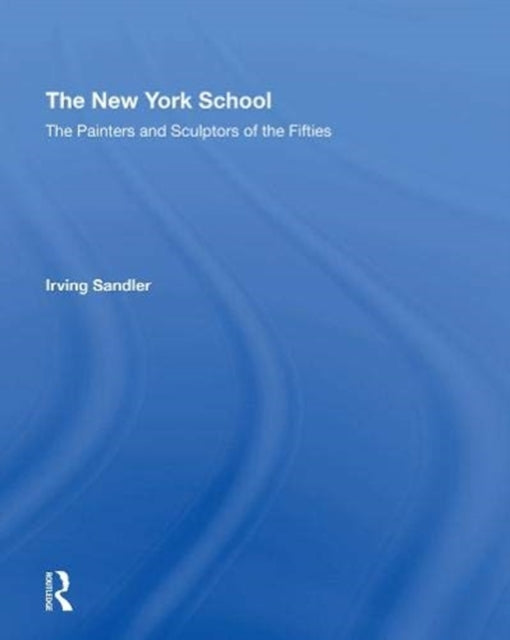
Irving Sandler
New York School
New York School
💎 Earn 221 Points (£2.21) on this item.
YOU SAVE £2.63
- Condition: Brand new
- UK Delivery times: Usually arrives within 2 - 3 working days
- UK Shipping: Fee starts at £2.39. Subject to product weight & dimension
Bulk ordering. Want 15 or more copies? Get a personalised quote and bigger discounts. Learn more about bulk orders.
Couldn't load pickup availability
- More about New York School
The book explores the role of gesture painting and sculpture in the development of distinctive artistic tendencies by members of the second generation of the New York School during the second part of the fifties.
\n Format: Paperback / softback
\n Length: 376 pages
\n Publication date: 31 May 2021
\n Publisher: Taylor & Francis Ltd
\n
This book delves into the profound influence of gesture painting and sculpture on the development of distinctive artistic tendencies among the members of the second generation of the New York School during the second half of the 1950s. It explores the ways in which these artistic mediums shaped the artistic landscape and contributed to the evolution of modern art.
The authors of this book argue that gesture painting and sculpture played a crucial role in breaking away from the traditional representational styles of the past. They highlight the experimental and expressive nature of these artistic practices, which allowed artists to convey their emotions, ideas, and experiences in a more direct and personal way.
Gesture painting, characterized by loose and expressive brushstrokes, was a departure from the tight and controlled techniques of earlier generations. Artists such as Jackson *******, Willem de Kooning, and Franz Kline embraced this style, using their bodies and drips of paint to create abstract compositions that were both dynamic and visually arresting.
In contrast, sculpture played a vital role in shaping the spatial and tactile aspects of gesture painting. Artists such as David Smith and Anthony Caro used their sculptures to complement and enhance the visual impact of their paintings. They created large-scale works that were often composed of geometric shapes and materials, creating a sense of monumentality and power that contrasted with the delicate and ephemeral nature of the paintings.
The book also examines the relationship between gesture painting and the broader cultural and social context of the 1950s. The authors argue that the emergence of this artistic movement was influenced by the post-war economic boom, the rise of consumer culture, and the growing influence of abstract expressionism. They explore how these factors shaped the artistic language and aesthetic preferences of the second generation of New York School artists, leading to the development of a unique and innovative artistic style.
Furthermore, the book delves into the individual contributions of each artist to the development of gesture painting and sculpture. It provides detailed analysis of their techniques, styles, and artistic influences, allowing readers to gain a deeper understanding of their artistic processes and the impact they had on the world of art.
In conclusion, this book is a valuable resource for anyone interested in the history of modern art, the development of artistic styles, and the role of gesture painting and sculpture in shaping the artistic landscape. It offers a comprehensive and insightful examination of the contributions of the second generation of New York School artists, providing a rich and detailed account of their artistic achievements and their impact on the world of art.
This book delves into the profound influence of gesture painting and sculpture on the development of distinctive artistic tendencies among the members of the second generation of the New York School during the second half of the 1950s. It explores the ways in which these artistic mediums shaped the artistic landscape and contributed to the evolution of modern art.
The authors of this book argue that gesture painting and sculpture played a crucial role in breaking away from the traditional representational styles of the past. They highlight the experimental and expressive nature of these artistic practices, which allowed artists to convey their emotions, ideas, and experiences in a more direct and personal way.
Gesture painting, characterized by loose and expressive brushstrokes, was a departure from the tight and controlled techniques of earlier generations. Artists such as Jackson *******, Willem de Kooning, and Franz Kline embraced this style, using their bodies and drips of paint to create abstract compositions that were both dynamic and visually arresting.
In contrast, sculpture played a vital role. Artists such as David Smith and Anthony Caro used their sculptures to complement and enhance the visual impact of their paintings. They created large-scale works that were often composed of geometric shapes and materials, creating a sense of monumentality and power that contrasted with the delicate and ephemeral nature of the paintings.
The book also examines the relationship between gesture painting and the broader cultural and social context of the 1950s. The authors argue that the emergence of this artistic movement shaped the post-war economic boom, the rise. The rise of consumer culture, and the growing influence of abstract expressionism. They explore how these factors shaped the artistic language and aesthetic preferences of the second generation of New York School artists, leading to the development of a unique and innovative artistic style.
Furthermore, the book delves into the individual contributions of each artist to the development of gesture painting and sculpture. It provides detailed analysis of their techniques, styles, and artistic influences, allowing readers to gain a deeper understanding of their artistic processes and the impact they had on the world of art.
In conclusion, this book is a valuable resource for anyone interested in the history of modern art, the development of artistic styles, and the role of gesture painting and sculpture in shaping the artistic landscape. It offers a comprehensive and insightful examination of the contributions of the second generation of New York School artists, providing a rich and detailed account of their artistic achievements and their impact on the world of art.
\n Weight: 940g\n
Dimension: 205 x 254 x 24 (mm)\n
ISBN-13: 9780367152635\n \n
UK and International shipping information
UK and International shipping information
UK Delivery and returns information:
- Delivery within 2 - 3 days when ordering in the UK.
- Shipping fee for UK customers from £2.39. Fully tracked shipping service available.
- Returns policy: Return within 30 days of receipt for full refund.
International deliveries:
Shulph Ink now ships to Australia, Belgium, Canada, France, Germany, Ireland, Italy, India, Luxembourg Saudi Arabia, Singapore, Spain, Netherlands, New Zealand, United Arab Emirates, United States of America.
- Delivery times: within 5 - 10 days for international orders.
- Shipping fee: charges vary for overseas orders. Only tracked services are available for most international orders. Some countries have untracked shipping options.
- Customs charges: If ordering to addresses outside the United Kingdom, you may or may not incur additional customs and duties fees during local delivery.