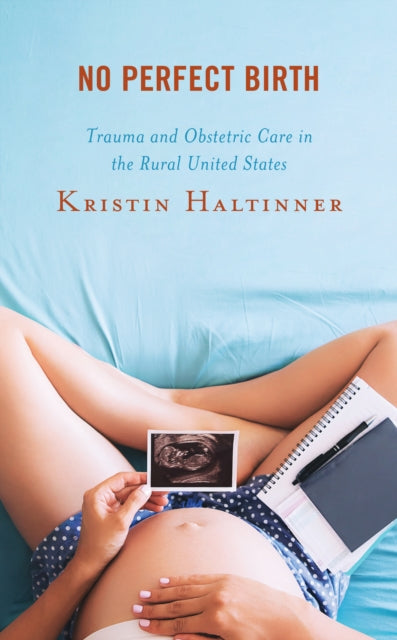
Kristin Haltinner
No Perfect Birth: Trauma and Obstetric Care in the Rural United States
No Perfect Birth: Trauma and Obstetric Care in the Rural United States
We can order this item for you. Delivery usually takes about 4 to 6 weeks.
This item is not held in our immediate stock. We will order it for you after checkout.
Estimated delivery: About 4 to 6 weeks
- Condition: Brand new
- UK Delivery times: Usually arrives within 2 - 3 working days
- UK Shipping: Fee starts at £3.89. Subject to product weight & dimension
Bulk ordering. Want 15 or more copies? Get a personalised quote and bigger discounts. Learn more about bulk orders.
Couldn't load pickup availability
- More about No Perfect Birth: Trauma and Obstetric Care in the Rural United States
Kristin Haltinner's No Perfect Birth explores the institutional and ideological forces that cause harm to women in childbirth in the rural United States, offering suggestions for improving current practices.
Format: Paperback / softback
Length: 192 pages
Publication date: 03 April 2023
Publisher: Bloomsbury Publishing Plc
Kristin Haltinner's book, No Perfect Birth: Trauma and Obstetric Care in the Rural United States, explores the institutional and ideological factors that contribute to harm during childbirth in rural areas of the United States. Through a combination of personal narratives from mothers and existing research on obstetric care and social theories, Haltinner highlights how a lack of time, the need for mothers to navigate complex spaces, and the reliance on established obstetric routines can lead to unnecessary and long-lasting harm for women during childbirth. The book also provides suggestions for improving current practices, drawing on case models from other countries and incorporating mothers' embodied knowledge.
Haltinner begins by examining the historical and cultural context of childbirth in the United States, noting that it has been shaped by a patriarchal medical system that prioritizes the needs of the doctor over those of the mother. This system has led to a lack of respect for women's bodies and a focus on medical interventions rather than holistic care. Haltinner also highlights the impact of poverty and racism on childbirth outcomes, noting that women of color and low-income women are more likely to experience complications and have poorer birth outcomes than white women.
One of the key factors that contribute to harm during childbirth in rural areas is the lack of time. Obstetricians are often overworked and understaffed, which can lead to long wait times for appointments and delays in treatment. This can be particularly problematic for women who are experiencing complications or who are in labor. Haltinner argues that this lack of time can lead to rushed decisions and poor communication, which can result in harm to the mother and the baby.
Another factor that contributes to harm during childbirth in rural areas is the need for mothers to navigate complex spaces. Many rural hospitals are located in remote areas, which can make it difficult for women to access care. This can be particularly challenging for women who have limited transportation or who live in rural areas that are not well-served by public transportation. Haltinner argues that this lack of access can lead to delays in treatment and can result in complications.
In addition to the lack of time and the need for mothers to navigate complex spaces, Haltinner also highlights the reliance on established obstetric routines. Obstetricians are often trained to follow a set of protocols and procedures, which can be effective in many cases. However, Haltinner argues that these routines can be harmful to women in certain situations. For example, the use of forceps or vacuum extraction can be traumatic for women and can lead to complications such as bleeding and infection.
Haltinner offers several suggestions for improving current practices in obstetric care in rural areas. One of these suggestions is to increase the number of obstetricians and midwives in rural areas. This can help to reduce wait times and delays in treatment and can provide women with more personalized care. Haltinner also suggests that obstetricians should be trained to work with women in a more collaborative and respectful manner. This can help to build trust and can lead to better outcomes for women.
Haltinner also suggests that women should be given more control over their childbirth experience. This can include allowing women to choose their own birth plan, to have access to pain management options, and to have support from their family and friends. Haltinner argues that women should be able to make decisions that are best for their own bodies and their own babies.
In addition to these suggestions, Haltinner also highlights the importance of incorporating mothers' embodied knowledge into obstetric care. Mothers have a unique perspective on childbirth and can provide valuable insights into the best practices for care. Haltinner suggests that obstetricians should work with mothers to develop personalized birth plans and to provide support during labor and delivery.
Haltinner's book has received positive reviews from both medical professionals and women who have experienced childbirth. Many medical professionals have praised the book for its comprehensive and insightful analysis of the issues that contribute to harm during childbirth in rural areas. Women who have experienced childbirth have praised the book for its ability to provide a voice to their experiences and to offer hope for the future.
However, Haltinner's book has also faced criticism from some medical professionals and policymakers. Some have argued that the book is too focused on the negative aspects of childbirth and that it does not provide enough information on the positive aspects of childbirth. Haltinner argues that her book is intended to be a call to action and that it is important to address the issues that contribute to harm during childbirth in rural areas.
In conclusion, Kristin Haltinner's book, No Perfect Birth: Trauma and Obstetric Care in the Rural United States, explores the institutional and ideological factors that contribute to harm during childbirth in rural areas of the United States. Through a combination of personal narratives from mothers and existing research on obstetric care and social theories, Haltinner highlights how a lack of time, the need for mothers to navigate complex spaces, and the reliance on established obstetric routines can lead to unnecessary and long-lasting harm for women during childbirth. The book also provides suggestions for improving current practices, drawing on case models from other countries and incorporating mothers' embodied knowledge. While Haltinner's book has received positive reviews from both medical professionals and women who have experienced childbirth, it has also faced criticism from some medical professionals and policymakers. Haltinner argues that her book is intended to be a call to action and that it is important to address the issues that contribute to harm during childbirth in rural areas.
Weight: 286g
Dimension: 223 x 154 x 14 (mm)
ISBN-13: 9781793643957
UK and International shipping information
UK and International shipping information
We deliver throughout the United Kingdom and to 128 countries and territories worldwide, including the United States, Australia, Canada, Germany, Spain and France.