Shulph Ink
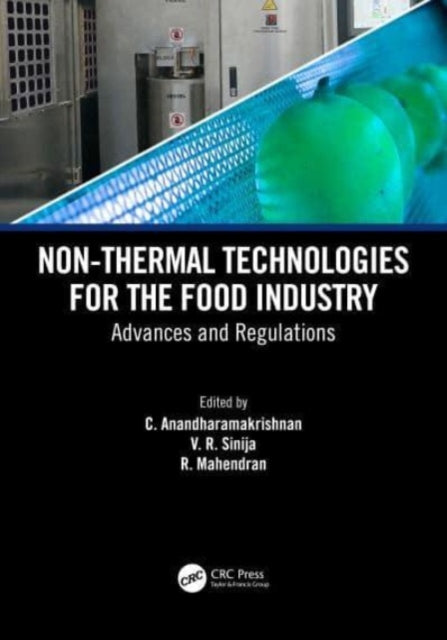
Non-Thermal Technologies for the Food Industry: Advances and Regulations
Non-Thermal Technologies for the Food Industry: Advances and Regulations
We can order this item for you. Delivery usually takes about 4 to 6 weeks.
This item is not held in our immediate stock. We will order it for you after checkout.
Estimated delivery: About 4 to 6 weeks
YOU SAVE £16.54
- Condition: Brand new
- UK Delivery times: Usually arrives within 2 - 3 working days
- UK Shipping: Fee starts at £3.89. Subject to product weight & dimension
Bulk ordering. Want 15 or more copies? Get a personalised quote and bigger discounts. Learn more about bulk orders.
Couldn't load pickup availability
- More about Non-Thermal Technologies for the Food Industry: Advances and Regulations
Non-thermal technologies, such as ozonization, irradiation, ultrasound processing, plasma processing, and advanced oxidative processes, can interact with food molecules to lead to desirable reactions. This book provides a comprehensive overview of these technologies, their applications in food processing, international regulations, and sustainability aspects. It is aimed at researchers and graduate students in food and food process engineering.
Format: Hardback
Length: 380 pages
Publication date: 29 February 2024
Publisher: Taylor & Francis Ltd
Non-thermal technologies, such as ozonization, irradiation, ultrasound processing, plasma processing, and advanced oxidative processes, offer diverse approaches to food processing. These technologies have the potential to induce desirable reactions by interacting with food molecules. The interaction mechanisms vary depending on the specific non-thermal technique employed.
In the realm of non-thermal technologies, there exists a wide array of applications that can benefit the food industry. These technologies encompass ozonization, irradiation, ultrasound processing, plasma processing, and advanced oxidative processes. Each of these techniques has its unique characteristics and mechanisms, which can lead to specific desirable reactions in food.
One of the primary applications of non-thermal technologies is shelf-life extension. By employing these technologies, food products can be stored for longer periods without compromising their quality or safety. For instance, ozonization can kill bacteria and microorganisms, while irradiation can inactivate enzymes and other harmful compounds. Ultrasound processing can also be used to enhance the texture and flavor of food products.
Another significant benefit of non-thermal technologies is reduced energy consumption. These technologies often require less energy than traditional heating or cooling methods, which can lead to cost savings for food manufacturers. For example, ultrasound processing can be used to pasteurize milk without the need for high temperatures, reducing energy consumption and preserving the nutritional value of the product.
In addition to shelf-life extension and reduced energy consumption, non-thermal technologies can also be used for adhesion and safety improvement. For instance, electro-spraying can be used to coat food products with a thin layer of polymer, which can improve their texture and prevent spoilage. Electrospinning can also be used to create nanofibers that can be used as food packaging materials, providing a barrier against moisture, oxygen, and other contaminants.
Furthermore, non-thermal technologies have the potential to valorize agri-food wastes and by-products. By employing these technologies, these waste materials can be transformed into valuable products, such as biofuels, fertilizers, and animal feed. This not only reduces waste disposal costs but also promotes sustainability by utilizing resources that would otherwise be discarded.
Despite the numerous benefits of non-thermal technologies, there are also regulatory considerations to be addressed. Different countries have different regulations regarding the use of these technologies in food processing. For example, the United States Food and Drug Administration (FDA) has established guidelines for the use of irradiation in food processing. These guidelines ensure that the use of irradiation is safe and effective and does not pose any risk to consumers.
In conclusion, non-thermal technologies offer a promising solution for the food industry. These technologies have the potential to enhance shelf-life, reduce energy consumption, improve adhesion and safety, and valorize agri-food wastes and by-products. However, it is essential to ensure that these technologies are used responsibly and in compliance with international regulations. By continuing to research and develop these technologies, the food industry can continue to innovate and improve the quality and safety of food products for consumers worldwide.
Weight: 890g
Dimension: 254 x 178 (mm)
ISBN-13: 9781032399737
UK and International shipping information
UK and International shipping information
We deliver throughout the United Kingdom and to 128 countries and territories worldwide, including the United States, Australia, Canada, Germany, Spain and France.