Professor RaminJahanbegloo
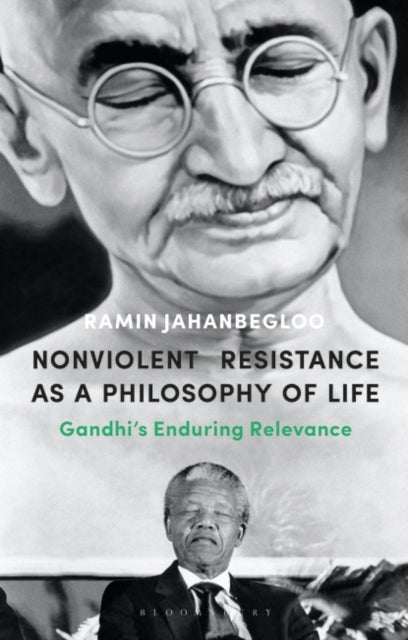
Nonviolent Resistance as a Philosophy of Life: Gandhi's Enduring Relevance
Nonviolent Resistance as a Philosophy of Life: Gandhi's Enduring Relevance
💎 Earn 86 Points (£0.86) on this item.
We can order this item for you. Delivery usually takes about 4 to 6 weeks.
This item is not held in our immediate stock. We will order it for you after checkout.
Estimated delivery: About 4 to 6 weeks
YOU SAVE £3.66
- Condition: Brand new
- UK Delivery times: Usually arrives within 2 - 3 working days
- UK Shipping: Fee starts at £3.89. Subject to product weight & dimension
Bulk ordering. Want 15 or more copies? Get a personalised quote and bigger discounts. Learn more about bulk orders.
Couldn't load pickup availability
- More about Nonviolent Resistance as a Philosophy of Life: Gandhi's Enduring Relevance
Ramin Jahanbegloo explores the major political advocates of nonviolence in the 20th century, including Gandhi, Martin Luther King Jr., Nelson Mandela, Mother Teresa, and Václav Havel, and examines why nonviolence remains relevant as a form of resistance against injustice and oppression. He provides balanced readings of central players and events and presents convincing reasons to commit to nonviolence.
Format: Paperback / softback
Length: 168 pages
Publication date: 14 January 2021
Publisher: Bloomsbury Publishing PLC
Nonviolence is a concept that has been present throughout human culture since its earliest beginnings, with representations of nonviolence in Eastern religions like Jainism, Buddhism, and Hinduism being ubiquitous. However, it was only in the 20th century that nonviolence emerged as a major preoccupation of figures such as Gandhi, Martin Luther King Jr., Nelson Mandela, Mother Teresa, and Václav Havel. These individuals and their respective movements, such as the Indian Independence Movement, the US Civil Rights and Anti-Apartheid movement, the Velvet Revolution in Czechoslovakia, and nonviolent protests in Tunisia, Iran, Serbia, and Hong Kong, explored the reasons why nonviolence remains relevant as a form of resistance against injustice and oppression around the world.
Jahanbegloo's comparative study of nonviolence is a compelling read that presents convincing reasons to commit to nonviolence. By focusing on the central players and events of different cultural, geographic, and political contexts, he demonstrates why nonviolence matters to the development of contemporary political thought. The book provides balanced readings of key figures and events, making it an essential resource for anyone interested in understanding the power of nonviolence as a means of achieving social change.
One of the key themes of the book is the idea that nonviolence is not just a passive response to violence but a proactive approach to creating a more just and equitable society. Jahanbegloo argues that nonviolence is a powerful tool that can be used to challenge power structures, dismantle oppressive systems, and promote social justice. He highlights the success of nonviolent movements in achieving their goals, such as the Indian Independence Movement, the US Civil Rights Movement, and the Velvet Revolution in Czechoslovakia.
However, Jahanbegloo also acknowledges that nonviolence has its limits. He points out that nonviolence can be difficult to sustain in the face of extreme violence and oppression, and that it may not always be effective in achieving its goals. He provides examples of situations where nonviolence has failed, such as the Holocaust and the Rwandan genocide.
Despite these limitations, Jahanbegloo remains optimistic about the potential of nonviolence. He argues that nonviolence is a universal human value that can be found in all cultures and societies. He believes that nonviolence can be learned and practiced by anyone, and that it can be a powerful tool for promoting peace and social justice.
One of the key challenges facing nonviolence is the need to address the root causes of violence and oppression. Jahanbegloo argues that nonviolence is not just a means of responding to violence but a means of addressing the underlying social, economic, and political factors that contribute to it. He provides examples of successful nonviolent campaigns that have addressed these root causes, such as the anti-apartheid movement in South Africa and the civil rights movement in the United States.
Another challenge facing nonviolence is the need to engage with the media and public opinion. Jahanbegloo argues that nonviolence can be effective only if it is supported by the public and the media. He provides examples of successful nonviolent campaigns that have been supported by the media, such as the civil rights movement in the United States and the Velvet Revolution in Czechoslovakia.
In addition to these challenges, Jahanbegloo also highlights the importance of nonviolence in promoting human rights and democracy. He argues that nonviolence is a fundamental human right that should be protected and promoted by all governments. He provides examples of successful nonviolent campaigns that have promoted human rights and democracy, such as the Arab Spring and the Occupy movement.
Despite these challenges, Jahanbegloo remains optimistic about the future of nonviolence. He believes that nonviolence can be a powerful tool for promoting peace and social justice in the 21st century. He provides examples of successful nonviolent campaigns that have been implemented in recent years, such as the anti-war movement in the United States and the climate change movement.
In conclusion, nonviolence is a concept that has been present throughout human culture since its earliest beginnings, and it has emerged as a major preoccupation of figures such as Gandhi, Martin Luther King Jr., Nelson Mandela, Mother Teresa, and Václav Havel in the 20th century. Jahanbegloo's comparative study of nonviolence is a compelling read that presents convincing reasons to commit to nonviolence. By focusing on the central players and events of different cultural, geographic, and political contexts, he demonstrates why nonviolence matters to the development of contemporary political thought. While nonviolence has its limits, Jahanbegloo remains optimistic about the potential of nonviolence to promote peace and social justice in the 21st century.
Weight: 222g
Dimension: 139 x 215 x 15 (mm)
ISBN-13: 9781350168282
UK and International shipping information
UK and International shipping information
We deliver throughout the United Kingdom and to 128 countries and territories worldwide, including the United States, Australia, Canada, Germany, Spain and France.