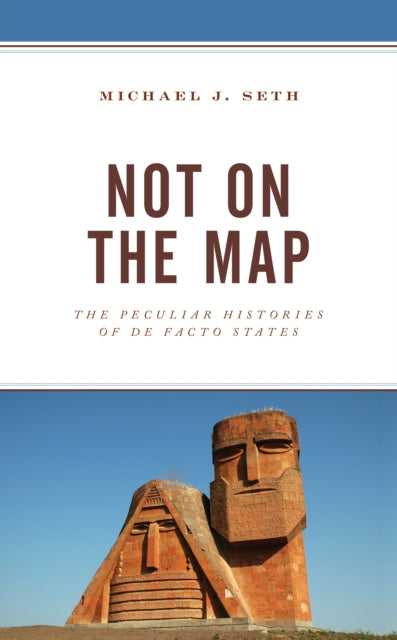
Michael J. Seth
Not on the Map: The Peculiar Histories of De Facto States
Not on the Map: The Peculiar Histories of De Facto States
💎 Earn 169 Points (£1.69) on this item.
We can order this item for you. Delivery usually takes about 4 to 6 weeks.
This item is not held in our immediate stock. We will order it for you after checkout.
Estimated delivery: About 4 to 6 weeks
- Condition: Brand new
- UK Delivery times: Usually arrives within 2 - 3 working days
- UK Shipping: Fee starts at £2.39. Subject to product weight & dimension
Bulk ordering. Want 15 or more copies? Get a personalised quote and bigger discounts. Learn more about bulk orders.
Couldn't load pickup availability
- More about Not on the Map: The Peculiar Histories of De Facto States
This book explores the development of de facto states without international recognition.
Format: Paperback / softback
Length: 246 pages
Publication date: 15 September 2023
Publisher: Lexington Books
This book delves into the fascinating and complex dynamics of de facto states, examining their emergence and development without formal recognition from the international community. These states, which include Nagorno Karabakh, Abkhazia, South Ossetia, Transnistria, Kosovo, the Turkish Republic of Northern Cyprus, the Sahrawi Arab Democratic Republic, Somaliland, and Taiwan, have emerged as unique political entities with their own histories, cultures, and aspirations.
Despite their lack of official recognition, de facto states have managed to establish themselves and function as independent entities. They have developed their own governments, legal systems, and currencies, and have often sought to assert their sovereignty and territorial integrity. However, their status as de facto states has also led to challenges and complexities, including disputes with neighboring countries, political instability, and economic development.
The book explores the various factors that have contributed to the formation of de facto states, including historical, political, and economic factors. It also examines the strategies that these states have employed to gain international recognition and support, as well as the challenges they face in maintaining their independence and stability.
One of the key themes of the book is the role of international law and diplomacy in shaping the status of de facto states. While international law does not explicitly recognize these states, it does provide a framework for their interactions with other countries and the international community. The book argues that de facto states can play an important role in promoting stability and peace in regions where formal political institutions are weak or nonexistent.
However, the book also highlights the risks and challenges associated with de facto states. They may be vulnerable to external intervention and manipulation, and their lack of formal recognition can lead to economic and social marginalization. Additionally, de facto states may face difficulties in achieving international recognition and support, particularly if they are located in conflict-prone regions or are seen as a threat to regional stability.
In conclusion, this book provides a comprehensive and insightful analysis of the development of de facto states without recognition of sovereignty from the international community. It sheds light on the complex dynamics and challenges that these states face, and explores the role that international law and diplomacy play in shaping their status and future. By examining the experiences of these states, the book offers valuable insights into the complex and evolving nature of international relations and the role that de facto states play in shaping the world we live in today.
This book delves into the fascinating and complex dynamics of de facto states, examining their emergence and development without formal recognition from the international community. These states, which include Nagorno Karabakh, Abkhazia, South Ossetia, Transnistria, Kosovo, the Turkish Republic of Northern Cyprus, the Sahrawi Arab Democratic Republic, Somaliland, and Taiwan, have emerged as unique political entities with their own histories, cultures, and aspirations.
Despite their lack of official recognition, de facto states have managed to establish themselves and function as independent entities. They have developed their own governments, legal systems, and currencies, and have often sought to assert their sovereignty and territorial integrity. However, their status as de facto states has also led to challenges and complexities, including disputes with neighboring countries, political instability, and economic development.
The book explores the various factors that have contributed to the formation of de facto states, including historical, political, and economic factors. It also examines the strategies that these states have employed to gain international recognition and support, as well as the challenges they face in maintaining their independence and stability.
One of the key themes of the book is the role of international law and diplomacy in shaping the status of de facto states. While international law does not explicitly recognize these states, it does provide a framework for their interactions with other countries and the international community. The book argues that de facto states can play an important role in promoting stability and peace in regions where formal political institutions are weak or nonexistent.
However, the book also highlights the risks and challenges associated with de facto states. They may be vulnerable to external intervention and manipulation, and their lack of formal recognition can lead to economic and social marginalization. Additionally, de facto states may face difficulties in achieving international recognition and support, particularly if they are located in conflict-prone regions or are seen as a threat to regional stability.
In conclusion, this book provides a comprehensive and insightful analysis of the development of de facto states without recognition of sovereignty from the international community. It sheds light on the complex dynamics and challenges that these states face, and explores the role that international law and diplomacy play in shaping their status and future. By examining the experiences of these states, the book offers valuable insights into the complex and evolving nature of international relations and the role that de facto states play in shaping the world we live in today.
Weight: 399g
Dimension: 231 x 154 x 18 (mm)
ISBN-13: 9781793632548
UK and International shipping information
UK and International shipping information
UK Delivery and returns information:
- Delivery within 2 - 3 days when ordering in the UK.
- Shipping fee for UK customers from £2.39. Fully tracked shipping service available.
- Returns policy: Return within 30 days of receipt for full refund.
International deliveries:
Shulph Ink now ships to Australia, Belgium, Canada, France, Germany, Ireland, Italy, India, Luxembourg Saudi Arabia, Singapore, Spain, Netherlands, New Zealand, United Arab Emirates, United States of America.
- Delivery times: within 5 - 10 days for international orders.
- Shipping fee: charges vary for overseas orders. Only tracked services are available for most international orders. Some countries have untracked shipping options.
- Customs charges: If ordering to addresses outside the United Kingdom, you may or may not incur additional customs and duties fees during local delivery.