Shulph Ink
Notions of Temporalities in Artistic Practice
Notions of Temporalities in Artistic Practice
💎 Earn 121 Points (£1.21) on this item.
YOU SAVE £1.62
- Condition: Brand new
- UK Delivery times: Usually arrives within 2 - 3 working days
- UK Shipping: Fee starts at £2.39. Subject to product weight & dimension
Bulk ordering. Want 15 or more copies? Get a personalised quote and bigger discounts. Learn more about bulk orders.
Couldn't load pickup availability
- More about Notions of Temporalities in Artistic Practice
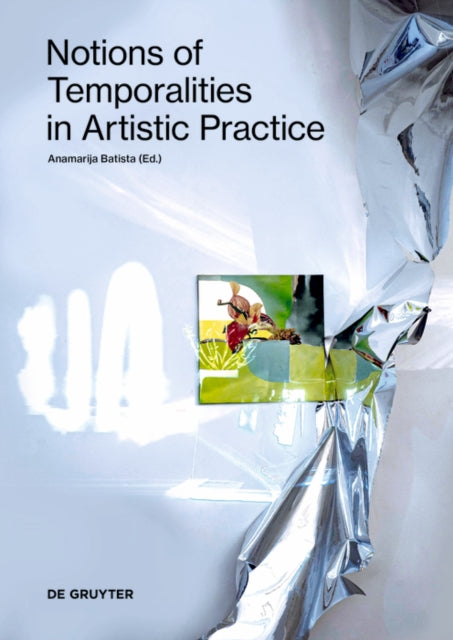
The reflections on historical and contemporary positions in this publication explore the concept of temporality in the context of artistic practices, focusing on the pursuit of the situational, processual, and actual in the 1960s and 1970s and the exploration of anachronism, impermanence, performative, and ephemeral qualities in contemporary practices. The goal is to offer a deep dive into situation-specific settings and explore how temporality can initiate action and structure our perception, affecting our bodies, senses, communication, and the present moment.
Format: Paperback / softback
Length: 172 pages
Publication date: 05 September 2022
Publisher: De Gruyter
Here is the rephrased text:
The reflections on historical and contemporary positions assembled here shed light on concepts of temporalities in the context of artistic practices. In the 1960s and 1970s, the pursuit for the situational, processual, and actual stirred up artistic and theoretical fields. Nowadays, contemporary practices expand on these subjects by exploring the notion of anachronism, the impermanence of one's own corporeality together with the performative and ephemeral qualities of the sonic amongst other relevant concepts.
The goal of this publication is to offer a deep dive into situation-specific settings and to fundamentally explore how temporality is able to initiate action and structure our perception, thereby affecting our bodies, our senses, how we communicate, and how the present moment is shaped.
The concept of temporality is central to understanding the dynamics of artistic practices, as it encompasses the temporal dimensions of artistic production, reception, and interpretation. Temporalities can be understood as the relationships between different moments, times, and durations, as well as the ways in which these relationships are experienced and expressed by individuals and communities.
Historical positions on temporality have been shaped by a range of factors, including philosophical, cultural, and artistic traditions. For example, the concept of the Renaissance, which emerged in the 14th century, was characterized by a renewed interest in classical antiquity and a belief in the potential for human creativity and innovation to transcend the limitations of time and space. This perspective on temporality was reflected in the art of the Renaissance, which emphasized the beauty and complexity of the natural world, the human body, and the human mind.
In contrast, the concept of modernity, which emerged in the 18th century, was characterized by a belief in progress, rationality, and the ability to control the natural world through technology and science. This perspective on temporality was reflected in the art of the Modernist movement, which emphasized the fragmentation and deconstruction of traditional forms and the exploration of new, abstract forms of expression.
Contemporary positions on temporality continue to evolve and expand, reflecting the changing social, cultural, and technological landscape. For example, the concept of the post-modernist movement, which emerged in the late 20th century, was characterized by a rejection of the linear and hierarchical structures of modernity and a focus on the subjective and fragmented nature of experience. This perspective on temporality was reflected in the art of the post-modernist movement, which emphasized the role of the individual and the power of language and image to shape meaning.
Another important aspect of contemporary positions on temporality is the exploration of the notion of anachronism. Anachronism refers to the use of elements or styles from a past period in a way that is not appropriate or relevant to the present context. This concept has been particularly relevant in the field of art, where artists have used historical references and styles to comment on contemporary social and political issues. For example, the artist Banksy has used street art to comment on issues of homelessness, poverty, and political corruption.
In addition to anachronism, contemporary positions on temporality also emphasize the impermanence of one's own corporeality and the performative and ephemeral qualities of the sonic. The body is often seen as a site of temporal and spatial exploration, with artists exploring the ways in which the body can be used to express and communicate ideas and emotions. The sonic, on the other hand, is often seen as a medium that can capture and evoke the fleeting and ephemeral nature of experience, with artists using sound to create immersive and sensory experiences that challenge the boundaries of perception and understanding.
Overall, the reflections on historical and contemporary positions assembled here shed light on the complex and multifaceted nature of temporality in the context of artistic practices. Temporalities are not only a matter of historical and cultural context but also a matter of individual experience and perception. By exploring the notion of anachronism, the impermanence of one's own corporeality, and the performative and ephemeral qualities of the sonic, contemporary practices are able to create new and innovative ways of understanding and experiencing the world.
Weight: 434g
Dimension: 240 x 170 (mm)
ISBN-13: 9783110738032
This item can be found in:
UK and International shipping information
UK and International shipping information
UK Delivery and returns information:
- Delivery within 2 - 3 days when ordering in the UK.
- Shipping fee for UK customers from £2.39. Fully tracked shipping service available.
- Returns policy: Return within 30 days of receipt for full refund.
International deliveries:
Shulph Ink now ships to Australia, Belgium, Canada, France, Germany, Ireland, Italy, India, Luxembourg Saudi Arabia, Singapore, Spain, Netherlands, New Zealand, United Arab Emirates, United States of America.
- Delivery times: within 5 - 10 days for international orders.
- Shipping fee: charges vary for overseas orders. Only tracked services are available for most international orders. Some countries have untracked shipping options.
- Customs charges: If ordering to addresses outside the United Kingdom, you may or may not incur additional customs and duties fees during local delivery.