Clement Petitjean
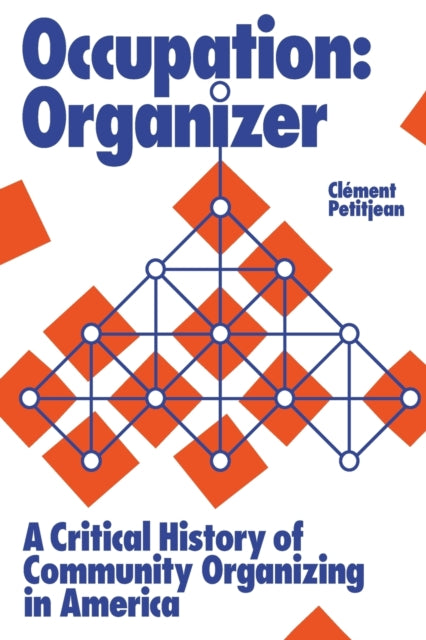
Occupation: Organizer: A Critical History of Community Organizing in America
Occupation: Organizer: A Critical History of Community Organizing in America
💎 Earn 84 Points (£0.84) on this item.
YOU SAVE £5.13
- Condition: Brand new
- UK Delivery times: Usually arrives within 2 - 3 working days
- UK Shipping: Fee starts at £2.39. Subject to product weight & dimension
Bulk ordering. Want 15 or more copies? Get a personalised quote and bigger discounts. Learn more about bulk orders.
Couldn't load pickup availability
- More about Occupation: Organizer: A Critical History of Community Organizing in America
Occupation: Organizer is a must-read for the next generation of organizers seeking to learn from the successes, failures, and contradictions of the past. It traces the history of community organizing from its roots in the Progressive movement to its expansion and diverging paths during the social movements of the 1960s and 70s, when Saul Alinsky became the most popular "professional radical" in the US. However, the professionalization of organizing work has only increased, despite the critiques. Only by grappling with its limitations and pitfalls can we learn to build durable, effective organizations for change.
Format: Paperback / softback
Length: 340 pages
Publication date: 01 June 2023
Publisher: Haymarket Books
A History of Community Organizing
Community organizing is a powerful tool for social change, and it has a rich history that dates back to the Progressive movement of the early 20th century. In his book "Occupation: Organizer, Scholar, and Activist," Clément Petitjean traces the history of community organizing from its roots to its expansion and diverging paths during the social movements of the 1960s and 70s. Petitjean argues that the professionalization of organizing work has only increased in recent years, despite the critiques of its limitations and pitfalls. By grappling with its limitations and pitfalls, Petitjean insists that we can learn to build durable, effective organizations for change.
The Progressive Movement
Community organizing began in the Progressive movement, which was a broad-based social and political movement that sought to address the social and economic inequalities of the time. The movement was led by individuals such as Jane Addams, W.E.B. Du Bois, and John Dewey, and it was characterized by a commitment to social justice, democracy, and the empowerment of the working class.
Expansion and Diverging Paths
During the social movements of the 1960s and 70s, community organizing expanded and diverged in several ways. One of the most significant changes was the emergence of Saul Alinsky as the most popular "professional radical" in the US. Alinsky's approach to organizing was characterized by a focus on building power and influence through grassroots organizing, and he developed a set of techniques that were widely adopted by community organizers.
However, other groups, such as Student Nonviolent Coordinating Committee, Students for a Democratic Society, and the Black Panthers, redefined organizers as horizontal, anti-hierarchical spadeworkers—those who do the work as part of the community, rather than standing apart from it. This shift in perspective was a response to the perceived failures of traditional organizing methods, which were often top-down and hierarchical.
Professionalization of Organizing Work
Despite the critiques of its limitations and pitfalls, the professionalization of organizing work has only increased in recent years. This has led to the development of a professional organizing industry, with organizations such as the Industrial Areas Foundation, the Association of Community Organizations for Reform Now (ACORN), and the National Association of Social Workers (NASW) playing a significant role in organizing work.
However, Petitjean argues that the professionalization of organizing work has also led to a loss of the grassroots spirit and the ability to build durable, effective organizations for change. He argues that the focus on professionalization has led to a narrowing of the focus on social justice and democracy, and has resulted in a lack of attention to the needs of the community.
Learning from the Past
To learn from the past, Petitjean suggests that we need to grapple with the limitations and pitfalls of community organizing. He argues that we need to develop a more holistic approach to organizing that takes into account the social, economic, and political context of the community. We also need to develop a more democratic and participatory approach to organizing, that involves the community in the decision-making process.
Petitjean also suggests that we need to be more aware of the power dynamics that exist in the community and to work to address them. He argues that the power dynamics in the community can be a source of conflict and instability, and that we need to work to create a more equitable and just society.
Conclusion
Community organizing is a powerful tool for social change, and it has a rich history that dates back to the Progressive movement of the early 20th century. While the professionalization of organizing work has only increased in recent years, Petitjean argues that we can learn to build durable, effective organizations for change by grappling with its limitations and pitfalls. By developing a more holistic approach to organizing that takes into account the social, economic, and political context of the community, and by developing a more democratic and participatory approach to organizing, we can create a more equitable and just society.
Weight: 488g
Dimension: 152 x 228 x 22 (mm)
ISBN-13: 9781642599145
UK and International shipping information
UK and International shipping information
UK Delivery and returns information:
- Delivery within 2 - 3 days when ordering in the UK.
- Shipping fee for UK customers from £2.39. Fully tracked shipping service available.
- Returns policy: Return within 30 days of receipt for full refund.
International deliveries:
Shulph Ink now ships to Australia, Belgium, Canada, France, Germany, Ireland, Italy, India, Luxembourg Saudi Arabia, Singapore, Spain, Netherlands, New Zealand, United Arab Emirates, United States of America.
- Delivery times: within 5 - 10 days for international orders.
- Shipping fee: charges vary for overseas orders. Only tracked services are available for most international orders. Some countries have untracked shipping options.
- Customs charges: If ordering to addresses outside the United Kingdom, you may or may not incur additional customs and duties fees during local delivery.