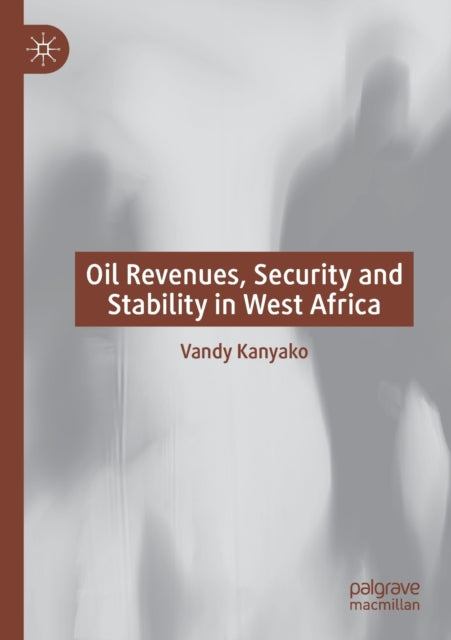
Vandy Kanyako
Oil Revenues, Security and Stability in West Africa
Oil Revenues, Security and Stability in West Africa
We can order this item for you. Delivery usually takes about 4 to 6 weeks.
This item is not held in our immediate stock. We will order it for you after checkout.
Estimated delivery: About 4 to 6 weeks
YOU SAVE £9.09
- Condition: Brand new
- UK Delivery times: Usually arrives within 2 - 3 working days
- UK Shipping: Fee starts at £3.89. Subject to product weight & dimension
Bulk ordering. Want 15 or more copies? Get a personalised quote and bigger discounts. Learn more about bulk orders.
Couldn't load pickup availability
- More about Oil Revenues, Security and Stability in West Africa
This book offers a new perspective on the oil industry in West Africa, examining the region beyond Nigeria, Ghana, and Gabon and analyzing the transformative powers of petroleum revenue for peace and stability. It also explores the effects and importance of local communities and the challenges posed by petro-capitalism for regional stability and human security.
Format: Paperback / softback
Length: 219 pages
Publication date: 21 May 2021
Publisher: Springer Nature Switzerland AG
This captivating book delves into a fresh perspective on the oil industry in West Africa, offering a comprehensive examination of the entire region, often limited to Nigeria, Ghana, and Gabon. The author passionately argues that to achieve peace and stability in this region, it is crucial to grasp the profound transformative impact of petroleum revenue. Furthermore, the project encompasses the author's insightful analysis on various levels, including international oil companies, states, and local communities. It also takes a profound dive into the effects and significance of local communities in these countries, providing a thorough exploration of the strategic challenges posed by petro-capitalism to West Africa's regional stability and human security.
Introduction:
The oil industry in West Africa has played a pivotal role in shaping the region's economic and political landscape for decades. However, the industry has also been associated with various challenges, including environmental degradation, social unrest, and geopolitical tensions. This book aims to provide a comprehensive examination of the oil industry in West Africa, exploring its historical development, current trends, and potential future directions.
Historical Development:
The oil industry in West Africa dates back to the early 20th century, when oil was discovered in Nigeria in 1956. Since then, the region has experienced significant growth and development, with oil becoming a major source of revenue for many countries. However, the industry has also been plagued by challenges, including corruption, environmental degradation, and social unrest.
Current Trends:
In recent years, the oil industry in West Africa has continued to grow, with new discoveries and production increasing. However, the industry is also facing several challenges, including declining oil prices, increasing competition from other sources of energy, and environmental concerns.
Potential Future Directions:
The future of the oil industry in West Africa is uncertain, with many factors likely to influence its development. Some potential future directions include:
Increased Investment:
The oil industry in West Africa is likely to continue to attract investment, particularly from international oil companies. This investment could lead to increased production, job creation, and economic growth.
Environmental Sustainability:
The oil industry in West Africa is facing increasing pressure to adopt more sustainable practices, such as reducing greenhouse gas emissions and promoting renewable energy sources.
Social Development:
The oil industry in West Africa has the potential to contribute to social development, particularly through the creation of jobs and the provision of infrastructure. However, there is also a risk that the industry could exacerbate social inequality and conflict.
Geopolitical Tensions:
The oil industry in West Africa is closely linked to geopolitical tensions, particularly in the Gulf of Guinea. The region is also home to several conflict zones, which could pose risks to the industry and its workers.
Conclusion:
The oil industry in West Africa is a complex and multifaceted industry that has played a significant role in shaping the region's economic and political landscape. While the industry has brought many benefits, it has also faced numerous challenges. The future of the industry is uncertain, and it will be important for policymakers, industry players, and local communities to work together to address these challenges and ensure that the oil industry contributes to the region's long-term development and prosperity.
Weight: 454g
Dimension: 210 x 148 (mm)
ISBN-13: 9783030379889
Edition number: 1st ed. 2020
UK and International shipping information
UK and International shipping information
We deliver throughout the United Kingdom and to 128 countries and territories worldwide, including the United States, Australia, Canada, Germany, Spain and France.