KimPaffenroth
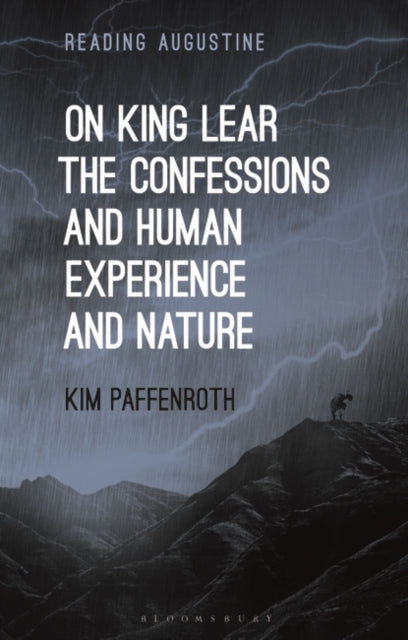
On King Lear, The Confessions, and Human Experience and Nature
On King Lear, The Confessions, and Human Experience and Nature
💎 Earn 115 Points (£1.15) on this item.
YOU SAVE £4.87
- Condition: Brand new
- UK Delivery times: Usually arrives within 2 - 3 working days
- UK Shipping: Fee starts at £2.39. Subject to product weight & dimension
Bulk ordering. Want 15 or more copies? Get a personalised quote and bigger discounts. Learn more about bulk orders.
Couldn't load pickup availability
- More about On King Lear, The Confessions, and Human Experience and Nature
Kim Paffenroth compares the thinking of Augustine and Shakespeare on love, language, nature, and reason, showing how their worldviews are more similar than they first seem and relevant to our own fragmented and disillusioned world.
Format: Paperback / softback
Length: 192 pages
Publication date: 17 June 2021
Publisher: Bloomsbury Publishing PLC
Augustines Confessions and Shakespeares King Lear are two of the most influential and enduring works of Western canon or world literature. However, what does Stratford-upon-Avon have to do with Hippo, or the ascetical heretic-fighting polemicist with the author of some of the worlds most beautiful love poetry? To answer these questions, Kim Paffenroth analyzes the similarities and differences between the thinking of these two figures on the themes of love, language, nature, and reason. Pairing and connecting the insights of Shakespeares most nihilist tragedy with those of Augustines most personal and sometimes self-condemnatory, sometimes triumphal work, challenges us to see their worldviews as more similar than they first seem and as more relevant to our own fragmented and disillusioned world.
Augustine, a renowned philosopher and theologian of the early Christian Church, lived in the fourth century AD. His Confessions, a personal account of his spiritual journey, is considered one of the most important works of Christian literature. In this work, Augustine explores the nature of sin, the role of God in human redemption, and the importance of faith and grace in achieving salvation.
On the other hand, Shakespeare, a renowned playwright and poet of the Elizabethan era, lived in the sixteenth century AD. His King Lear, a tragic play about the aging king who divides his kingdom among his three daughters, is considered one of the greatest works of English literature. In this play, Shakespeare explores the themes of power, corruption, madness, and the nature of human relationships.
Despite their different backgrounds and periods, Augustine and Shakespeare share several similarities in their thinking about love, language, nature, and reason. Here are some of the key points of comparison:
Love: Both Augustine and Shakespeare explore the complexities of love, both divine and human. Augustine emphasizes the importance of love as a means of connecting with God and as a source of spiritual fulfillment. Shakespeare, in his plays, portrays love as a powerful force that can lead to both tragedy and redemption.
Language: Both Augustine and Shakespeare were deeply interested in the power of language. Augustine believed that language was a tool for expressing the truth about God and the human condition. Shakespeare, in his plays, uses language to create complex characters, convey emotions, and explore the themes of power and corruption.
Nature: Both Augustine and Shakespeare were fascinated by the natural world. Augustine believed that nature was a reflection of the divine and that humans were meant to live in harmony with it. Shakespeare, in his plays, portrays nature as a powerful force that can both destroy and heal.
Reason: Both Augustine and Shakespeare were advocates of reason. Augustine believed that reason was a tool for understanding the truth about God and the human condition. Shakespeare, in his plays, uses reason to explore the themes of power, madness, and the nature of human relationships.
Despite these similarities, there are also significant differences between the thinking of Augustine and Shakespeare. Here are some of the key points of contrast:
Augustine: Augustine was a Christian philosopher and theologian who believed in the authority. He was a firm believer in the authority
Shakespeare: Shakespeare was a Christian philosopher and theologian who believed in the power of the human mind
Augustine: Augustine was a firm believer in the authority
Shakespeare: Shakespeare was a firm believer in the power of the human mind and the ability of humans to shape their own destinies.
Augustine: Augustine was a firm believer in the importance of faith and grace in achieving salvation. He believed that humans were saved by God's grace through faith in Jesus Christ and the forgiveness of sins.
Shakespeare: Shakespeare was a believer in the importance of the human mind and the ability of humans to shape their own destinies. He believed that humans were saved by their own actions and choices, and that redemption was possible through self-awareness and self-improvement.
Augustine: Augustine was a moralist who believed in the importance of living a virtuous life and following the Ten Commandments. He believed that humans were meant to live in harmony with God and with each other, and that sin was a violation of this harmony.
Shakespeare: Shakespeare was a moralist who believed in the importance of living a virtuous life and following the Ten Commandments. He believed that humans were meant to live in harmony with each other and with the natural world, and that sin was a violation of this harmony.
In conclusion, Augustine and Shakespeare are two of the most influential and enduring figures in Western canon or world literature. While they come from different backgrounds and periods, they share several similarities in their thinking about love, language, nature, and reason. Both Augustine and Shakespeare were deeply interested in the power of language, the natural world, and the importance of reason. They both believed in the importance of love as a means of connecting with God and as a source of spiritual fulfillment. They both portrayed nature as a powerful force that can both destroy and heal. They both advocated for the importance of living a virtuous life and following the Ten Commandments. However, they also had significant differences in their beliefs about the role of faith and grace in achieving salvation, the power of the human mind and the ability of humans to shape their own destinies, and the importance of living in harmony with God and with each other. These differences reflect the different contexts and periods in which they lived, but they also highlight the enduring relevance of their ideas to our own fragmented and disillusioned world. By comparing and contrasting the insights of Augustine and Shakespeare, we can gain a deeper understanding of their worldviews and their relevance to our own lives.
Weight: 238g
Dimension: 136 x 214 x 19 (mm)
ISBN-13: 9781350203198
This item can be found in:
UK and International shipping information
UK and International shipping information
UK Delivery and returns information:
- Delivery within 2 - 3 days when ordering in the UK.
- Shipping fee for UK customers from £2.39. Fully tracked shipping service available.
- Returns policy: Return within 30 days of receipt for full refund.
International deliveries:
Shulph Ink now ships to Australia, Belgium, Canada, France, Germany, Ireland, Italy, India, Luxembourg Saudi Arabia, Singapore, Spain, Netherlands, New Zealand, United Arab Emirates, United States of America.
- Delivery times: within 5 - 10 days for international orders.
- Shipping fee: charges vary for overseas orders. Only tracked services are available for most international orders. Some countries have untracked shipping options.
- Customs charges: If ordering to addresses outside the United Kingdom, you may or may not incur additional customs and duties fees during local delivery.