Kimberly Jensen
Oregon's Others: Gender, Civil Liberties, and the Surveillance State in the Early Twentieth Century
Oregon's Others: Gender, Civil Liberties, and the Surveillance State in the Early Twentieth Century
💎 Earn 150 Points (£1.50) on this item.
- Condition: Brand new
- UK Delivery times: Usually arrives within 2 - 3 working days
- UK Shipping: Fee starts at £2.39. Subject to product weight & dimension
Bulk ordering. Want 15 or more copies? Get a personalised quote and bigger discounts. Learn more about bulk orders.
Couldn't load pickup availability
- More about Oregon's Others: Gender, Civil Liberties, and the Surveillance State in the Early Twentieth Century
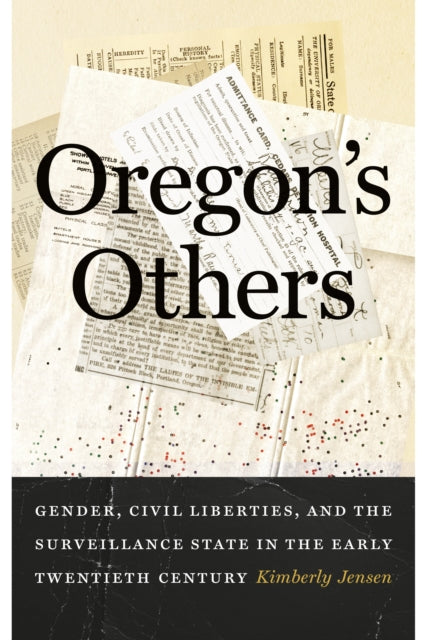
In the First World War era, Oregon and the nation experienced a quest to identify, restrict, and punish internal enemy others, leading to severe curtailment of civil liberties. Kimberly Jensen's book, Oregon's Others, explores the processes and personal stories that shaped the growing surveillance state and the resistance movements that emerged. The book highlights the exclusionary and invasive practices used to target various groups, including women, enemy aliens, and individuals with sexually transmitted diseases, as well as the use of deportations and forced sterilization. However, some Oregonians resisted these restrictions and fought for their rights, contributing to the development of human rights, social justice, and dissent movements that continue to resonate today.
Format: Paperback / softback
Length: 348 pages
Publication date: 25 June 2024
Publisher: University of Washington Press
Nativism, pseudoscience, and the campaign against the enemy within were significant factors in the First World War and its aftermath, leading to severe curtailment of civil liberties in Oregon and the nation. In her book, "Oregon's Others," Kimberly Jensen explores the processes that shaped the growing surveillance state of the era and the compelling personal stories that tell its history. The exclusionary and invasive practices ranged from multiple wartime registrations for women and the registration of enemy aliens to the incarceration of women with sexually transmitted diseases, the use of deportations, and forced sterilization at the Oregon State Hospital and other institutions. However, some Oregonians resisted these restrictions and challenges to their civil liberties. Their fierce determination to maintain their rights and freedoms fueled movements for human rights, social justice, and dissent that still reverberate today. "Oregon's Others" examines the collision of civil liberties and persecution through the lens of gender, gender identity and presentation, ability, race, ethnicity, and class.
One of the most significant aspects of the book is Jensen's analysis of the eugenic movement in Oregon. The eugenic movement was a social and political movement that sought to improve the genetic quality of the population by promoting selective breeding and sterilization. In Oregon, the eugenic movement was particularly influential in the early 20th century, with the state passing several laws that restricted the rights of individuals with disabilities and other marginalized groups.
Jensen's book highlights the personal stories of individuals who were affected by the eugenic movement. For example, she tells the story of a woman named Mary, who was diagnosed with epilepsy and was forced to undergo sterilization. Mary's story is a powerful example of the way that the eugenic movement violated her rights and her dignity.
Another important aspect of the book is Jensen's analysis of the impact of the First World War on civil liberties. The war led to a significant increase in government surveillance and control, and many people were arrested and detained without trial. Jensen's book shows how these practices were used to target specific groups, such as immigrants and African Americans.
Despite these challenges, there were also movements for human rights and social justice in Oregon. For example, the Civil Rights Act of 1964 was passed in Oregon, and it provided protections for individuals against discrimination based on race, gender, and other factors. Jensen's book highlights the role that individuals and organizations played in these movements, and how they helped to shape the state's political landscape.
In conclusion, Nativism, pseudoscience, and the campaign against the enemy within were significant factors in the First World War and its aftermath, leading to severe curtailment of civil liberties in Oregon and the nation. Kimberly Jensen's book, "Oregon's Others," provides a comprehensive and compelling analysis of the processes that shaped the growing surveillance state of the era and the compelling personal stories that tell its history. The book highlights the impact of the eugenic movement on civil liberties, and the role that individuals and organizations played in movements for human rights and social justice.
Weight: 496g
Dimension: 228 x 153 x 26 (mm)
ISBN-13: 9780295752587
This item can be found in:
UK and International shipping information
UK and International shipping information
UK Delivery and returns information:
- Delivery within 2 - 3 days when ordering in the UK.
- Shipping fee for UK customers from £2.39. Fully tracked shipping service available.
- Returns policy: Return within 30 days of receipt for full refund.
International deliveries:
Shulph Ink now ships to Australia, Belgium, Canada, France, Germany, Ireland, Italy, India, Luxembourg Saudi Arabia, Singapore, Spain, Netherlands, New Zealand, United Arab Emirates, United States of America.
- Delivery times: within 5 - 10 days for international orders.
- Shipping fee: charges vary for overseas orders. Only tracked services are available for most international orders. Some countries have untracked shipping options.
- Customs charges: If ordering to addresses outside the United Kingdom, you may or may not incur additional customs and duties fees during local delivery.