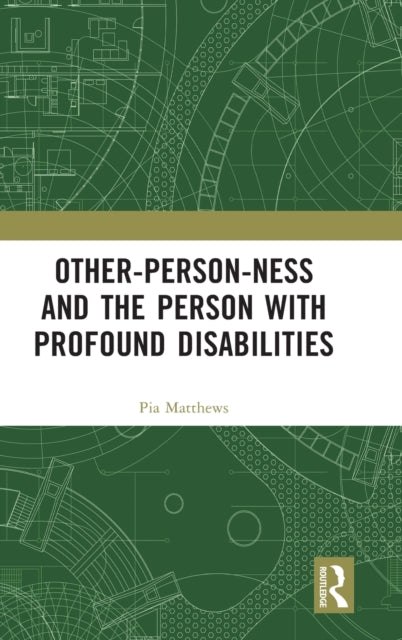
Pia Matthews
Other-person-ness and the Person with Profound Disabilities
Other-person-ness and the Person with Profound Disabilities
💎 Earn 689 Points (£6.89) on this item.
We can order this item for you. Delivery usually takes about 4 to 6 weeks.
This item is not held in our immediate stock. We will order it for you after checkout.
Estimated delivery: About 4 to 6 weeks
YOU SAVE £8.18
- Condition: Brand new
- UK Delivery times: Usually arrives within 2 - 3 working days
- UK Shipping: Fee starts at £2.39. Subject to product weight & dimension
Bulk ordering. Want 15 or more copies? Get a personalised quote and bigger discounts. Learn more about bulk orders.
Couldn't load pickup availability
- More about Other-person-ness and the Person with Profound Disabilities
This book explores the relationship between disability studies and philosophy and theology, arguing that they are complementary and should be seen as practical studies. It will be of interest to scholars and students of disability studies, philosophy, and anthropology.
Format: Hardback
Length: 182 pages
Publication date: 13 October 2022
Publisher: Taylor & Francis Ltd
Here is the rephrased text:
Embracing a Personalist Philosophy: A Call for a Positive View of the Other
In the realm of disability studies, there has been a prevailing emphasis on practical considerations, often at the expense of theoretical exploration. However, this book challenges that notion by explicitly linking disability studies with philosophy and theology. It argues that these disciplines offer unique perspectives and methodologies that can enrich our understanding of disability and its impact on individuals, communities, and society as a whole.
One of the key proponents of this approach is Marcel Mounier, a French philosopher who believed in the inherent value and dignity of every human being, regardless of their abilities or disabilities. Mounier's philosophy of personalism emphasizes the importance of recognizing the unique individuality of each person and their potential for growth and fulfillment. He argued that disability should not be seen as a barrier to personal development but rather as an opportunity for self-discovery and self-expression.
Another influential figure in this movement is John Paul II, the late Pope who championed the rights and dignity of people with disabilities. In his encyclical "Evangelium Vitae," he emphasized the importance of treating every person with respect and compassion, regardless of their condition. He also called for a society that values diversity and inclusion and provides opportunities for all individuals to contribute to the good of society.
The philosophy of personalism is further deepened by participation, belonging, and the possibility of contributing to the good of all. When individuals with disabilities are actively involved in their communities and given opportunities to participate in decision-making processes, they can bring valuable insights and perspectives to the table. This not only benefits individuals with disabilities but also contributes to the broader social good.
Furthermore, the concept of belonging is crucial in promoting a positive view of the other. When individuals with disabilities feel a sense of belonging and inclusion in society, they are more likely to develop a positive self-image and self-esteem. This, in turn, can lead to greater social engagement and participation, as well as a sense of purpose and fulfillment.
In conclusion, the book argues for a return to a positive view of the other via a personalist philosophy of being offered by Mounier, Marcel, and Wojtyła. By embracing this philosophy and promoting participation, belonging, and the possibility of contributing to the good of all, we can create a more inclusive and equitable society for all individuals, regardless of their abilities or disabilities.
This book will be of interest to all scholars and students of disability studies, philosophy, and anthropology. Disability studies are often regarded as practical studies as opposed to the apparently inevitable theorizing of philosophy or theology. However, this book's methodology of explicitly linking disability studies with philosophy and theology demonstrates their complementarity.
Disability studies offer a unique perspective on the experiences of individuals with disabilities, and by integrating philosophical and theological ideas, we can gain a deeper understanding of the complexities of disability and its impact on society. Philosophy provides a framework for analyzing and evaluating ethical and philosophical issues related to disability, while theology offers a spiritual and ethical framework for understanding the significance of disability in the context of faith and religion.
By combining these two disciplines, we can develop a more comprehensive and interdisciplinary approach to disability studies that addresses the social, cultural, and spiritual dimensions of disability. This approach will be valuable to researchers, policymakers, and practitioners working in the field of disability, as well as to individuals with disabilities and their families and caregivers.
In conclusion, this book offers a compelling argument for the integration of disability studies with philosophy and theology. By embracing a personalist philosophy and promoting participation, belonging, and the possibility of contributing to the good of all, we can create a more inclusive and equitable society for all individuals, regardless of their abilities or disabilities. It is a timely and important contribution to the field of disability studies and will be of interest to scholars and students of disability studies, philosophy, and anthropology.
Weight: 508g
Dimension: 234 x 156 (mm)
ISBN-13: 9781032255453
This item can be found in:
UK and International shipping information
UK and International shipping information
UK Delivery and returns information:
- Delivery within 2 - 3 days when ordering in the UK.
- Shipping fee for UK customers from £2.39. Fully tracked shipping service available.
- Returns policy: Return within 30 days of receipt for full refund.
International deliveries:
Shulph Ink now ships to Australia, Belgium, Canada, France, Germany, Ireland, Italy, India, Luxembourg Saudi Arabia, Singapore, Spain, Netherlands, New Zealand, United Arab Emirates, United States of America.
- Delivery times: within 5 - 10 days for international orders.
- Shipping fee: charges vary for overseas orders. Only tracked services are available for most international orders. Some countries have untracked shipping options.
- Customs charges: If ordering to addresses outside the United Kingdom, you may or may not incur additional customs and duties fees during local delivery.