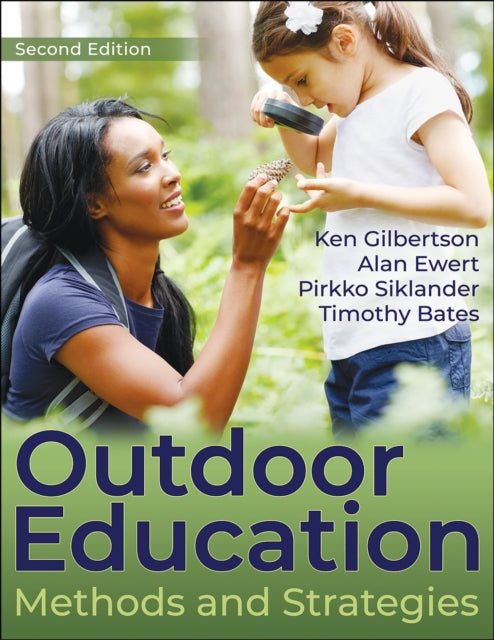
Ken Gilbertson,Alan Ewert,Pirkko Siklander,Timothy Bates
Outdoor Education: Methods and Strategies
Outdoor Education: Methods and Strategies
💎 Earn 405 Points (£4.05) on this item.
YOU SAVE £4.82
- Condition: Brand new
- UK Delivery times: Usually arrives within 2 - 3 working days
- UK Shipping: Fee starts at £2.39. Subject to product weight & dimension
Bulk ordering. Want 15 or more copies? Get a personalised quote and bigger discounts. Learn more about bulk orders.
Couldn't load pickup availability
- More about Outdoor Education: Methods and Strategies
Outdoor Education: Methods and Strategies,Second Edition, provides information and tools for teaching outdoor education, covering optimal learning opportunities, effective lessons, and methods for various organizations. It is divided into three parts and includes sample lesson plans and learning aids to enhance knowledge retention. The book aims to increase audiences' awareness, appreciation, and knowledge of the outdoors and advance their ability to increase people's enjoyment and understanding of the environment.
Format: Paperback / softback
Length: 280 pages
Publication date: 18 July 2022
Publisher: Human Kinetics Publishers
Outdoor education is a dynamic and engaging approach to learning that takes place in natural environments. It encompasses a wide range of activities and experiences that promote personal growth, social development, and environmental awareness. In this comprehensive guide, we will explore the methods and strategies used in outdoor education, including instructional design, teaching techniques, and assessment strategies.
Part I: Defining Outdoor Education
Outdoor education is a pedagogical approach that emphasizes learning through direct experience and interaction with the natural world. It is rooted in the belief that students can learn best when they are actively engaged in hands-on activities that allow them to explore, observe, and analyze their surroundings.
Outdoor education can take place in a variety of settings, including forests, parks, beaches, and wilderness areas. It can be tailored to meet the needs and interests of different age groups and learning styles.
Professional Expectations for Outdoor Educators
Outdoor educators are responsible for creating safe and effective learning environments for their students. They must have a deep understanding of the natural world, as well as the ability to communicate effectively with students and other stakeholders.
Outdoor educators must also be skilled in risk management, first aid, and emergency procedures. They must be able to adapt their teaching strategies to meet the needs of different learners and ensure that all students have access to the learning opportunities available.
Theories Supporting Outdoor Education
Several theories support outdoor education, including developmental stages, learning stages, and constructivism.
Developmental stages theory suggests that children learn best when they are engaged in activities that are appropriate for their age and stage of development. This theory emphasizes the importance of providing students with a variety of learning experiences that challenge and engage them.
Learning stages theory suggests that students learn best when they are provided with opportunities to practice and apply new skills and knowledge. This theory emphasizes the importance of providing students with a variety of learning experiences that allow them to build on their existing knowledge and skills.
Constructivism theory suggests that students construct their own knowledge and understanding through their experiences and interactions with the world. This theory emphasizes the importance of providing students with opportunities to explore, experiment, and create.
Part II: Understanding Participants' Backgrounds and Abilities
Understanding participants' backgrounds and abilities is an essential component of effective outdoor education. Outdoor educators must be able to assess the needs and interests of their students and tailor their teaching strategies accordingly.
One effective way to assess participants' backgrounds and abilities is through pre-activity questionnaires. These questionnaires can help educators identify students' prior knowledge and experiences, as well as their interests and goals.
Outdoor educators must also be able to observe students' behavior and performance during activities. This observation can help educators identify areas where students may need additional support or guidance.
Creating a Successful Learning Environment
Creating a successful learning environment is an essential component of effective outdoor education. Outdoor educators must be able to create a sense of community and support among their students, as well as provide them with the resources and equipment they need to succeed.
One effective way to create a successful learning environment is to establish clear expectations and guidelines for student behavior. This can help students understand what is expected of them and ensure that they are able to participate fully in the learning experience.
Outdoor educators must also be able to provide students with the resources and equipment they need to succeed. This can include safety equipment, such as helmets and harnesses, as well as educational materials, such as maps and field guides.
Teaching Effectively in a Variety of Settings
Teaching effectively in a variety of settings is an essential component of effective outdoor education. Outdoor educators must be able to adapt their teaching strategies to meet the needs of different learners and ensure that all students have access to the learning opportunities available.
One effective way to teach effectively in a variety of settings is to use a variety of teaching techniques. This can include hands-on activities, group discussions, and individual reflection.
Outdoor educators must also be able to adapt their teaching strategies to meet the needs of different learners. This can include providing students with additional support or guidance if they are struggling, as well as providing them with opportunities to work independently or in small groups.
Designing Lesson Plans
Designing lesson plans is an essential component of effective outdoor education. Outdoor educators must be able to create lesson plans that are engaging, relevant, and aligned with the learning objectives of their students.
One effective way to design lesson plans is to use a variety of instructional strategies. This can include using visual aids, such as diagrams and charts, as well as using hands-on activities, such as experiments and simulations.
Outdoor educators must also be able to align their lesson plans with the learning objectives of their students. This can include identifying the key concepts and skills that students need to learn and developing activities that will help them achieve those objectives.
Part III: Examining the Uses of Physical, Cognitive, and Affective Methods for Teaching
Examining the uses of physical, cognitive, and affective methods for teaching is an essential component of effective outdoor education. Outdoor educators must be able to use a variety of teaching methods to meet the needs of different learners and ensure that all students have access to the learning opportunities available.
Physical methods for teaching include activities such as hiking, rock climbing, and swimming. These activities can help students develop physical fitness, coordination, and problem-solving skills.
Cognitive methods for teaching include activities such as problem-solving, critical thinking, and decision-making. These activities can help students develop their cognitive abilities and improve their problem-solving skills.
Affective methods for teaching include activities such as storytelling, role-playing, and creative expression. These activities can help students develop their emotional and social skills and improve their communication and collaboration skills.
Sample Lesson Plans
Sample lesson plans are an essential component of effective outdoor education. They can help educators demonstrate the methods and strategies used in outdoor education and provide students with opportunities to practice and apply their knowledge and skills.
One effective way to use sample lesson plans is to provide students with opportunities to experiment and explore. This can include providing students with the resources and equipment they need to conduct experiments and providing them with opportunities to observe and analyze their results.
Another effective way to use sample lesson plans is to provide students with opportunities to practice and apply their knowledge and skills. This can include providing students with opportunities to work in groups and collaborate on projects.
Conclusion
Outdoor education is a dynamic and engaging approach to learning that takes place in natural environments. It encompasses a wide range of activities and experiences that promote personal growth, social development, and environmental awareness. In this comprehensive guide, we have explored the methods and strategies used in outdoor education, including instructional design, teaching techniques, and assessment strategies.
By understanding participants' backgrounds and abilities, creating a successful learning environment, teaching effectively in a variety of settings, and designing lesson plans that are engaging, relevant, and aligned with the learning objectives of their students, outdoor educators can create learning experiences that are both effective and enjoyable.
Outdoor education is a powerful tool for promoting personal growth, social development, and environmental awareness. By using a variety of teaching methods and strategies, outdoor educators can create learning experiences that are both effective and enjoyable. Whether you are a teacher, a parent, or a community member, there are many ways you can support outdoor education and help promote its growth and success.
One way to support outdoor education is to volunteer your time and expertise to help with outdoor education programs. This can include leading hikes, teaching classes, or assisting with outdoor education events.
Another way to support outdoor education is to donate equipment or resources to outdoor education programs. This can include things such as tents, backpacks, and water bottles, as well as educational materials such as maps and field guides.
Finally, you can support outdoor education by advocating for its importance and value. This can include speaking out in support of outdoor education programs in your community, writing letters to elected officials, or attending public meetings.
In conclusion, outdoor education is a powerful tool for promoting personal growth, social development, and environmental awareness. By using a variety of teaching methods and strategies, outdoor educators can create learning experiences that are both effective and enjoyable. Whether you are a teacher, a parent, or a community member, there are many ways you can support outdoor education and help promote its growth and success.
Weight: 794g
Dimension: 215 x 280 x 19 (mm)
ISBN-13: 9781492591221
Edition number: 2 ed
This item can be found in:
UK and International shipping information
UK and International shipping information
UK Delivery and returns information:
- Delivery within 2 - 3 days when ordering in the UK.
- Shipping fee for UK customers from £2.39. Fully tracked shipping service available.
- Returns policy: Return within 30 days of receipt for full refund.
International deliveries:
Shulph Ink now ships to Australia, Belgium, Canada, France, Germany, Ireland, Italy, India, Luxembourg Saudi Arabia, Singapore, Spain, Netherlands, New Zealand, United Arab Emirates, United States of America.
- Delivery times: within 5 - 10 days for international orders.
- Shipping fee: charges vary for overseas orders. Only tracked services are available for most international orders. Some countries have untracked shipping options.
- Customs charges: If ordering to addresses outside the United Kingdom, you may or may not incur additional customs and duties fees during local delivery.