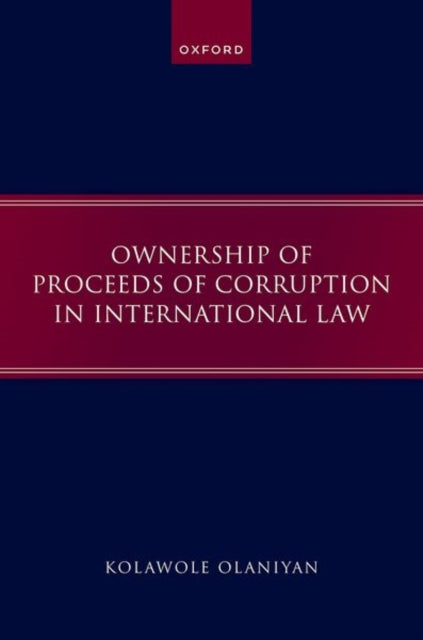
KolawoleOlaniyan
Ownership of Proceeds of Corruption in International Law
Ownership of Proceeds of Corruption in International Law
💎 Earn 637 Points (£6.37) on this item.
We can order this item for you. Delivery usually takes about 4 to 6 weeks.
This item is not held in our immediate stock. We will order it for you after checkout.
Estimated delivery: About 4 to 6 weeks
- Condition: Brand new
- UK Delivery times: Usually arrives within 2 - 3 working days
- UK Shipping: Fee starts at £3.89. Subject to product weight & dimension
Bulk ordering. Want 15 or more copies? Get a personalised quote and bigger discounts. Learn more about bulk orders.
Couldn't load pickup availability
- More about Ownership of Proceeds of Corruption in International Law
Recovery of proceeds from corruption is recognized as international law, but sovereign and ownership rights over wealth and natural resources remain theoretical. Kolawole Olaniyan's book argues that victim-states populations should be empowered to pursue grand corruption and asset recovery actions against their governments, and proposes theoretical and legal remedies for recovering proceeds.
Format: Hardback
Length: 400 pages
Publication date: 21 November 2023
Publisher: Oxford University Press
Recovery of proceeds derived from corruption has gained increasing recognition as a fundamental principle of contemporary international law. Nonetheless, the theoretical nature of sovereign and ownership rights over wealth and natural resources has often overshadowed their practical realization, particularly in the global fight against corruption. Consequently, the populations of victim-states often find themselves unable to hold their governments accountable for misusing the proceeds of corruption, hindering their ability to benefit from the recovery, repatriation, management, and utilization of these returned funds. In a groundbreaking study, Kolawole Olaniyan challenges the conventional notion that states should have exclusive control over sovereign and ownership rights over wealth and natural resources, including the proceeds of corruption. Olaniyan's Ownership of Proceeds of Corruption in International Law delves into the intricate relationship between the right to wealth and natural resources, proceeds of corruption, and economic activities. With a particular focus on the victims of corruption, the book argues that victim-states' populations should be empowered to pursue robust actions against their governments for grand corruption and asset recovery. It proposes theoretical and legal remedies for recovering proceeds of corruption, fostering the development of domestic laws to combat this global issue.
The recovery of proceeds derived from corruption has gained increasing recognition as a fundamental principle of contemporary international law. Nonetheless, the theoretical nature of sovereign and ownership rights over wealth and natural resources has often overshadowed their practical realization, particularly in the global fight against corruption. Consequently, the populations of victim-states often find themselves unable to hold their governments accountable for misusing the proceeds of corruption, hindering their ability to benefit from the recovery, repatriation, management, and utilization of these returned funds. In a groundbreaking study, Kolawole Olaniyan challenges the conventional notion that states should have exclusive control over sovereign and ownership rights over wealth and natural resources, including the proceeds of corruption. Olaniyan's Ownership of Proceeds of Corruption in International Law delves into the intricate relationship between the right to wealth and natural resources, proceeds of corruption, and economic activities. With a particular focus on the victims of corruption, the book argues that victim-states' populations should be empowered to pursue robust actions against their governments for grand corruption and asset recovery. It proposes theoretical and legal remedies for recovering proceeds of corruption, fostering the development of domestic laws to combat this global issue.
The right to wealth and natural resources, including the proceeds of corruption, is a fundamental aspect of international law. However, the practical realization of these rights has often been hindered by the theoretical nature of sovereign and ownership rights. This has particularly impacted the populations of victim-states, who struggle to hold their governments accountable for misusing the proceeds of corruption and benefit from the recovery, repatriation, management, and utilization of these returned funds. In a groundbreaking study, Kolawole Olaniyan challenges the conventional notion that states should have exclusive control over sovereign and ownership rights over wealth and natural resources, including the proceeds of corruption. Olaniyan's Ownership of Proceeds of Corruption in International Law delves into the intricate relationship between the right to wealth and natural resources, proceeds of corruption, and economic activities. With a particular focus on the victims of corruption, the book argues that victim-states' populations should be empowered to pursue robust actions against their governments for grand corruption and asset recovery. It proposes theoretical and legal remedies for recovering proceeds of corruption, fostering the development of domestic laws to combat this global issue.
The recovery of proceeds derived from corruption has gained increasing recognition as a fundamental principle of contemporary international law. Nonetheless, the theoretical nature of sovereign and ownership rights over wealth and natural resources has often overshadowed their practical realization, particularly in the global fight against corruption. Consequently, the populations of victim-states often find themselves unable to hold their governments accountable for misusing the proceeds of corruption, hindering their ability to benefit from the recovery, repatriation, management, and utilization of these returned funds. In a groundbreaking study, Kolawole Olaniyan challenges the conventional notion that states should have exclusive control over sovereign and ownership rights over wealth and natural resources, including the proceeds of corruption. Olaniyan's Ownership of Proceeds of Corruption in International Law delves into the intricate relationship between the right to wealth and natural resources, proceeds of corruption, and economic activities. With a particular focus on the victims of corruption, the book argues that victim-states' populations should be empowered to pursue robust actions against their governments for grand corruption and asset recovery. It proposes theoretical and legal remedies for recovering proceeds of corruption, fostering the development of domestic laws to combat this global issue.
The right to wealth and natural resources, including the proceeds of corruption, is a fundamental aspect of international law. However, the practical realization of these rights has often been hindered by the theoretical nature of sovereign and ownership rights. This has particularly impacted the populations of victim-states, who struggle to hold their governments accountable for misusing the proceeds of corruption and benefit from the recovery, repatriation, management, and utilization of these returned funds. In a groundbreaking study, Kolawole Olaniyan challenges the conventional notion that states should have exclusive control over sovereign and ownership rights over wealth and natural resources, including the proceeds of corruption. Olaniyan's Ownership of Proceeds of Corruption in International Law delves into the intricate relationship between the right to wealth and natural resources, proceeds of corruption, and economic activities. With a particular focus on the victims of corruption, the book argues that victim-states' populations should be empowered to pursue robust actions against their governments for grand corruption and asset recovery. It proposes theoretical and legal remedies for recovering proceeds of corruption, fostering the development of domestic laws to combat this global issue.
Weight: 728g
Dimension: 164 x 242 x 28 (mm)
ISBN-13: 9780192867834
UK and International shipping information
UK and International shipping information
We deliver throughout the United Kingdom and to 128 countries and territories worldwide, including the United States, Australia, Canada, Germany, Spain and France.