Shulph Ink
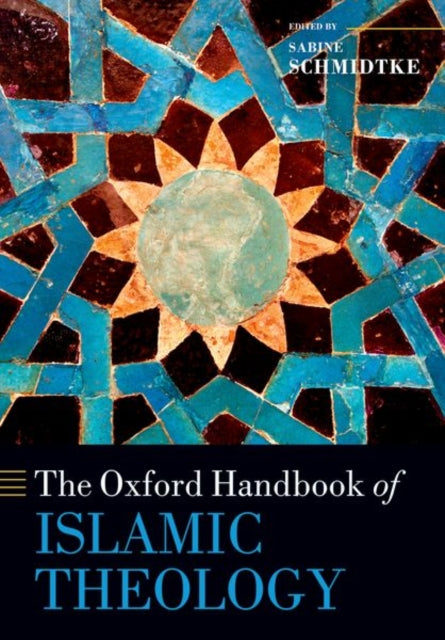
Oxford Handbook of Islamic Theology
Oxford Handbook of Islamic Theology
💎 Earn 244 Points (£2.44) on this item.
- Condition: Brand new
- UK Delivery times: Usually arrives within 2 - 3 working days
- UK Shipping: Fee starts at £3.89. Subject to product weight & dimension
Bulk ordering. Want 15 or more copies? Get a personalised quote and bigger discounts. Learn more about bulk orders.
Couldn't load pickup availability
- More about Oxford Handbook of Islamic Theology
The Oxford Handbook of Islamic Theology provides a comprehensive and authoritative survey of the current state of the field, covering the various strands of Islamic theology during the formative and early middle periods, rational as well as scripturalist, and the growing amalgamation of theology with philosophy and mysticism. It also addresses the impact of political and social developments on theology through a number of case studies.
Format: Paperback / softback
Length: 832 pages
Publication date: 06 September 2018
Publisher: Oxford University Press
The scientific study of Muslim theology is a relatively recent field within the realm of Islamic Studies. Over the past few decades, significant strides have been made in terms of both the discovery of new materials and the development of scholarly approaches to the study. The Oxford Handbook of Islamic Theology serves as a comprehensive and authoritative overview of the current state of the field. It presents a diverse portrayal of the current state-of-the-art while also suggesting potential avenues for future research.
Part One of the handbook explores the various theological strands that emerged during the formative and early middle periods, encompassing both rationalist and scripturalist approaches. By highlighting the ongoing interplay among these strands and their subsequent consequences, Part Two presents a series of case studies. These case studies focus on specific theological issues that have arisen through the often contentious and divisive interactions between different theological schools and thinkers.
Part Three of the handbook examines Islamic theology during the later middle and early modern periods. One notable feature of this era is the increasing fusion of theology with philosophy, particularly the Peripatetic and Illuminationist traditions, as well as mysticism. Part Four delves into the impact of political and social developments on theology through a series of case studies. These case studies include the famous mi?na instituted by al-Ma mun (r. 189/813-218/833) and the subsequent mihna to which Ibn Aqil (d. 769/1367) was subjected. They also explore the religious policies of the Almohads and the shifting interpretations of the relationship between Ash arism and Maturidism, particularly during the Mamluk and Ottoman periods, which were often driven by political motives.
Part Five of the handbook examines Islamic theological thought from a historical perspective. It explores the evolution of Islamic theology over time and the various influences and developments that have shaped it. The handbook also considers the contributions of different scholars and thinkers to the field, highlighting their unique perspectives and contributions.
In conclusion, the Oxford Handbook of Islamic Theology is a valuable resource for scholars and students interested in the study of Muslim theology. It provides a comprehensive and authoritative survey of the current state of the field, while also suggesting new directions for future research. The handbook's multidisciplinary approach and its focus on the historical and contemporary aspects of Islamic theology make it an essential tool for anyone seeking to understand the complex and multifaceted nature of this discipline.
Weight: 1482g
Dimension: 243 x 183 x 43 (mm)
ISBN-13: 9780198816607
UK and International shipping information
UK and International shipping information
We deliver throughout the United Kingdom and to 128 countries and territories worldwide, including the United States, Australia, Canada, Germany, Spain and France.