Shulph Ink
Paper Knives, Paper Crowns: Political Prints in the Dutch Republic
Paper Knives, Paper Crowns: Political Prints in the Dutch Republic
💎 Earn 126 Points (£1.26) on this item.
YOU SAVE £7.69
- Condition: Brand new
- UK Delivery times: Usually arrives within 2 - 3 working days
- UK Shipping: Fee starts at £2.39. Subject to product weight & dimension
Bulk ordering. Want 15 or more copies? Get a personalised quote and bigger discounts. Learn more about bulk orders.
Couldn't load pickup availability
- More about Paper Knives, Paper Crowns: Political Prints in the Dutch Republic
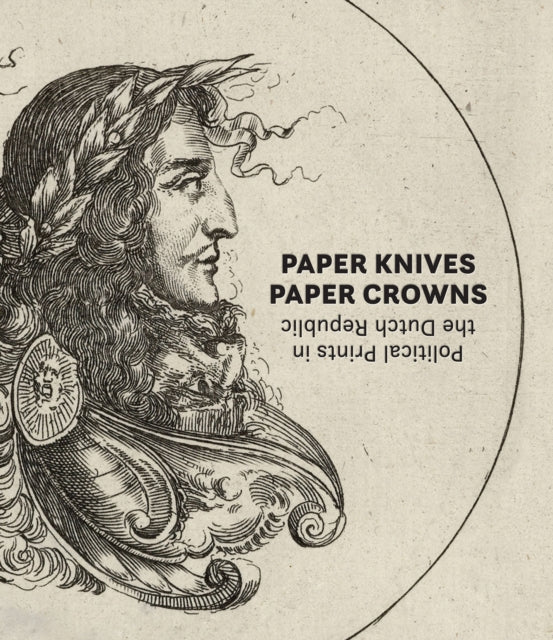
This volume explores the satirical visual strategies of early modern Netherlandish printmakers to memorialize historical events, lionize or demonize leaders, and instigate collective action. It provides a chronological arc and thematic overview of Netherlandish political prints, engaging with art historical scholarship and studies of early modern political history and theory.
Format: Hardback
Length: 184 pages
Publication date: 25 October 2022
Publisher: Marquand Books Inc
This comprehensive volume delves into the satirical visual strategies employed by early modern Netherlandish printmakers, including Joan Blaeu, Romeyn de Hooghe, Willem Jacobsz, and Claes Jansz Visscher, during the golden age of Dutch satire. These artists used their prints to commemorate historical events, celebrate (or condemn) domestic and international leaders, and inspire collective action. While some of their works relied on visual puns that even the uneducated could appreciate, others were accompanied by Latin, French, or Dutch captions, prompting educated elites across Europe to contemplate the intricate relationship between text and image. Published in conjunction with an exhibit at the Krannert Art Museum, "Paper Knives, Paper Crowns" offers a chronological journey and thematic exploration of Netherlandish political prints, encompassing various printmaking techniques and their interplay with other art forms. It engages with art historical scholarship and studies of early modern political history and theory, providing a rich and nuanced perspective on this influential artistic genre.
Introduction:
The early modern period in Europe was marked by a vibrant cultural and intellectual landscape, characterized by the emergence of new ideas, technologies, and artistic movements. Among these, Dutch satire played a crucial role in shaping public opinion and challenging the dominant narratives of the time. The satirical prints produced by Netherlandish printmakers during this era were not only visually striking but also deeply political, reflecting the social, economic, and political tensions of the period.
Visual Strategies:
Netherlandish printmakers employed a range of visual strategies to convey their satirical messages. One of the most prominent techniques was the use of visual puns, which relied on the juxtaposition of words or images to create humorous or ironic effects. For example, Blaeu's "The Four Seasons" series, which depicted various agricultural activities throughout the year, included a print titled "Spring," in which a group of farmers were depicted as playing musical instruments while working in the fields. The use of visual puns allowed the prints to appeal to a wide audience, including those who were not familiar with Latin or French, as the captions were often written in Dutch, the language of the common people.
Captioning in Latin, French, and Dutch:
In addition to visual puns, Netherlandish printmakers also used captions in Latin, French, and Dutch to further enhance their satirical messages. These captions were often used to comment on political events, social issues, and cultural norms of the time. For instance, de Hooghe's "The Four Emperors" series, which depicted the Roman emperors from Augustus to Constantine, included a print titled "Constantine," in which the emperor is depicted as a Christian leader surrounded by angels. The caption, written in Latin, humorously juxtaposed the emperor's religious beliefs with his political power.
Collective Action:
Another important aspect of Netherlandish satire was its ability to inspire collective action. The prints often depicted social injustices, political corruption, and economic inequality, and they aimed to mobilize the public to take action against these problems. For example, Jacobsz's "The Poor Man's Prayer" series, which depicted the struggles of the poor and marginalized, included a print titled "The Rich Man's Feast," in which a wealthy man is depicted feasting on a lavish meal while his servants work in the background. The print's caption, written in Dutch, expressed the author's frustration with the unequal distribution of wealth and called for social reform.
Conclusion:
In conclusion, this volume explores the satirical visual strategies that early modern Netherlandish printmakers used to memorialize historical events, lionize (or demonize) domestic and international leaders, and instigate collective action. While some of their prints employed visual puns that even the illiterate could enjoy, others were captioned in Latin, French, or Dutch, prompting educated elites across Europe to consider the relationship between text and image in earnest. Published for an exhibit at the Krannert Art Museum, "Paper Knives, Paper Crowns" provides a chronological arc and thematic overview of Netherlandish political prints, addressing multiple types of printmaking as well as the mediums relationship to other art forms, engaging with art historical scholarship and studies of early modern political history and theory in the process.
Weight: 1362g
Dimension: 251 x 287 x 24 (mm)
ISBN-13: 9781646570294
UK and International shipping information
UK and International shipping information
UK Delivery and returns information:
- Delivery within 2 - 3 days when ordering in the UK.
- Shipping fee for UK customers from £2.39. Fully tracked shipping service available.
- Returns policy: Return within 30 days of receipt for full refund.
International deliveries:
Shulph Ink now ships to Australia, Belgium, Canada, France, Germany, Ireland, Italy, India, Luxembourg Saudi Arabia, Singapore, Spain, Netherlands, New Zealand, United Arab Emirates, United States of America.
- Delivery times: within 5 - 10 days for international orders.
- Shipping fee: charges vary for overseas orders. Only tracked services are available for most international orders. Some countries have untracked shipping options.
- Customs charges: If ordering to addresses outside the United Kingdom, you may or may not incur additional customs and duties fees during local delivery.