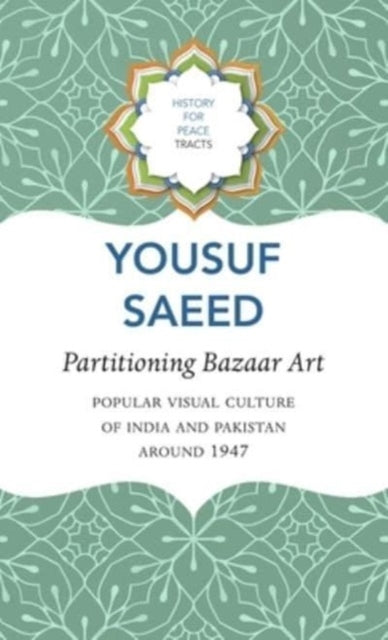
Yousuf Saeed
Partitioning Bazaar Art – Popular Visual Culture of India and Pakistan around 1947
Partitioning Bazaar Art – Popular Visual Culture of India and Pakistan around 1947
💎 Earn 44 Points (£0.44) on this item.
YOU SAVE £1.15
- Condition: Brand new
- UK Delivery times: Usually arrives within 2 - 3 working days
- UK Shipping: Fee starts at £2.39. Subject to product weight & dimension
Bulk ordering. Want 15 or more copies? Get a personalised quote and bigger discounts. Learn more about bulk orders.
Couldn't load pickup availability
- More about Partitioning Bazaar Art – Popular Visual Culture of India and Pakistan around 1947
The essay explores the relationship between the development of print culture and the many dynamic strains of nationalism in dialogue during the Partition of the Indian subcontinent in 1947. It highlights the biased representation of leaders fighting for Indian independence in "patriotic" posters and the evolving portrayal of religious minority communities in India's popular print culture. It also charts the turn popular print culture took in post-Partition Pakistan, focusing on the country's thriving industry of Sufi-saint posters.
Format: Hardback
Length: 72 pages
Publication date: 06 December 2023
Publisher: Seagull Books London Ltd
The partition of the Indian subcontinent in 1947 marked a significant moment in the history of South Asia, resulting in the creation of two new countries, India and Pakistan. This event had a profound impact on the region's culture, politics, and society, and it is still felt today. One of the most visible manifestations of this impact was the development of print culture in the two countries.
In India, the partition led to the creation of a new national identity, and print culture played a crucial role in shaping this identity. Posters, newspapers, magazines, and books were used to promote the idea of a unified India and to celebrate the country's diversity. These materials were often produced in multiple languages to reach a wider audience, and they often featured images of national heroes, religious leaders, and cultural symbols.
One of the most iconic posters of the partition era was the "Tear Down This Wall" poster, which was created by artist M.F. Hussain in 1947. This poster depicted a Hindu temple being demolished by a bulldozer, and it was used to promote the idea of religious freedom and the end of partition. Another notable poster was the "Quit India" poster, which was created by artist Abanindranath Tagore in 1942. This poster depicted a crying Indian woman holding a child, and it was used to promote the idea of Indian independence from British rule.
In Pakistan, the partition led to the creation of a new national identity, and print culture played a crucial role in shaping this identity. Posters, newspapers, magazines, and books were used to promote the idea of a separate Pakistan and to celebrate the country's Islamic heritage. These materials were often produced in Urdu, the language of Pakistan, and they often featured images of religious leaders, national heroes, and cultural symbols.
One of the most iconic posters of the partition era was the "Pakistan Zindabad" poster, which was created by artist Jameel Akhtar in 1947. This poster depicted a Muslim woman holding a flag with the words "Pakistan Zindabad" written on it, and it was used to promote the idea of a separate Pakistan. Another notable poster was the "Allah-o-Akbar" poster, which was created by artist Syed Ahmad Khan in 1940. This poster depicted a Muslim woman holding a sword and a Quran, and it was used to promote the idea of Islamic nationalism and the separation of Pakistan from India.
In addition to posters, newspapers, magazines, and books, print culture in the two countries also included other forms of visual media, such as cinema and television. These media were used to promote national identity and to spread propaganda about the respective countries. For example, in India, the film "Mother India" was released in 1957, and it was used to promote the idea of a unified India and to celebrate the country's diversity. In Pakistan, the film "Waqt" was released in 1965, and it was used to promote the idea of a separate Pakistan and to celebrate the country's Islamic heritage.
Overall, the development of print culture in the two countries following the partition of the Indian subcontinent in 1947 was a significant event in the history of South Asia. It played a crucial role in shaping the new national identities of India and Pakistan, and it continues to have an impact on the region's culture, politics, and society today.
In the decades leading up to and succeeding the Partition of the Indian subcontinent in 1947, inexpensive posters had a profound influence on nationalism. These posters, which were often mechanically reproduced and widely distributed in public spaces, played a crucial role in shaping the collective memory and identity of the people in the region.
One of the most significant ways in which posters influenced nationalism was through their representation of leaders fighting for Indian independence. These leaders were often depicted in heroic and patriotic poses, with their faces and bodies highlighted against a background of the Indian flag. Posters such as "Tear Down This Wall" and "Quit India" were particularly effective in promoting the idea of a unified India and in inspiring people to join the struggle for independence.
However, the posters also reflected the biases and prejudices of the time. The representation of religious minority communities, for example, was often biased and negative. Posters that depicted Muslims as violent and aggressive, or Hindus as submissive and inferior, were common. This biased representation contributed to the marginalization and persecution of these communities in the years that followed the partition.
Despite these biases, posters continued to play a significant role in shaping nationalism in the region. They were used to promote the idea of a shared cultural heritage and to encourage people to identify with their country. Posters that depicted historical events, cultural symbols, and national heroes were particularly effective in promoting a sense of national pride and belonging.
In post-Partition Pakistan, the development of print culture was influenced by the country's unique political and social context. The partition led to the creation of a new nation, and the people of Pakistan were determined to create a separate identity that was distinct from that of India. Posters played a crucial role in this process, with artists and designers using their work to promote the idea of a separate Pakistan and to celebrate the country's Islamic heritage.
One of the most notable posters of this era was the "Pakistan Zindabad" poster, which was created by artist Jameel Akhtar in 1947. This poster depicted a Muslim woman holding a flag with the words "Pakistan Zindabad" written on it. The poster was widely distributed and became a symbol of the struggle for a separate Pakistan.
Another notable poster was the "Allah-o-Akbar" poster, which was created by artist Syed Ahmad Khan in 1940. This poster depicted a Muslim woman holding a sword and a Quran, and it was used to promote the idea of Islamic nationalism and the separation of Pakistan from India.
Posters continued to play a significant role in shaping nationalism in Pakistan in the years that followed the partition. They were used to promote political parties, religious organizations, and social movements, and they were often used to spread propaganda and to promote a particular ideology.
In conclusion, the development of print culture in the decades leading up to and succeeding the Partition of the Indian subcontinent in 1947 was influenced by a range of factors, including the political and social context of the region. Posters played a crucial role in shaping nationalism, with their representation of leaders fighting for Indian independence and their biased representation of religious minority communities. Despite these biases, posters continued to play a significant role in promoting a sense of national pride and belonging, and they continue to be a powerful tool for shaping collective memory and identity in the region today.
Weight: 160g
Dimension: 115 x 188 x 14 (mm)
ISBN-13: 9781803092911
This item can be found in:
UK and International shipping information
UK and International shipping information
UK Delivery and returns information:
- Delivery within 2 - 3 days when ordering in the UK.
- Shipping fee for UK customers from £2.39. Fully tracked shipping service available.
- Returns policy: Return within 30 days of receipt for full refund.
International deliveries:
Shulph Ink now ships to Australia, Belgium, Canada, France, Germany, Ireland, Italy, India, Luxembourg Saudi Arabia, Singapore, Spain, Netherlands, New Zealand, United Arab Emirates, United States of America.
- Delivery times: within 5 - 10 days for international orders.
- Shipping fee: charges vary for overseas orders. Only tracked services are available for most international orders. Some countries have untracked shipping options.
- Customs charges: If ordering to addresses outside the United Kingdom, you may or may not incur additional customs and duties fees during local delivery.