VirginiaOliveros
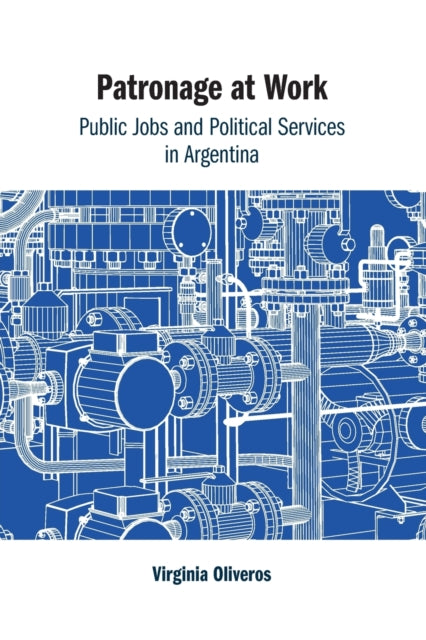
Patronage at Work: Public Jobs and Political Services in Argentina
Patronage at Work: Public Jobs and Political Services in Argentina
💎 Earn 113 Points (£1.13) on this item.
We can order this item for you. Delivery usually takes about 4 to 6 weeks.
This item is not held in our immediate stock. We will order it for you after checkout.
Estimated delivery: About 4 to 6 weeks
YOU SAVE £1.34
- Condition: Brand new
- UK Delivery times: Usually arrives within 2 - 3 working days
- UK Shipping: Fee starts at £2.39. Subject to product weight & dimension
Bulk ordering. Want 15 or more copies? Get a personalised quote and bigger discounts. Learn more about bulk orders.
Couldn't load pickup availability
- More about Patronage at Work: Public Jobs and Political Services in Argentina
Politicians give patronage jobs to supporters in exchange for political services, which helps them stay in power. This study provides a systematic analysis of the political activities of mid and low-level public employees in Latin America and explains the enforcement of patronage contracts.
Format: Paperback / softback
Length: 265 pages
Publication date: 08 June 2023
Publisher: Cambridge University Press
Politicians across the globe engage in a pervasive practice known as patronage, where they distribute jobs to their supporters in exchange for a diverse array of political services. These patronage employees, often referred to as clients, actively participate in political activities that serve the interests of their patrons, as their own political fortunes are closely intertwined with those of their patrons. While conventional wisdom suggests that control over patronage significantly enhances an incumbent's chances of retaining power, our understanding of this intricate system remains limited. In a groundbreaking study, Virginia Oliveros delves into the intricate mechanisms that explain the impact of patronage on political competition. Through in-depth interviews, comprehensive survey data, and innovative survey experiments conducted in Argentina and Virginia, Oliveros provides a detailed account of the political activities of mid and low-level public employees in Latin America. This pioneering study stands as the first to offer a systematic analysis of these individuals' political behavior, shedding light on the enforcement of patronage contracts and offering broader insights into the functioning of clientelist exchanges.
Patronage is a widespread practice in countries worldwide, where politicians distribute jobs to their supporters in exchange for various political services. These patronage employees, often referred to as clients, engage in political activities that support their patrons, as their own political fortunes are closely tied to those of their patrons. While conventional wisdom suggests that control over patronage significantly enhances an incumbent's chances of retaining power, our understanding of this intricate system remains limited. In a groundbreaking study, Virginia Oliveros delves into the intricate mechanisms that explain the impact of patronage on political competition. Through in-depth interviews, comprehensive survey data, and innovative survey experiments conducted in Argentina and Virginia, Oliveros provides a detailed account of the political activities of mid and low-level public employees in Latin America. This pioneering study stands as the first to offer a systematic analysis of these individuals' political behavior, shedding light on the enforcement of patronage contracts and offering broader insights into the functioning of clientelist exchanges.
The study conducted by Oliveros sheds light on several key mechanisms that explain the effect of patronage on political competition. Firstly, it highlights the importance of clientelist exchanges in shaping political outcomes. Clientelist exchanges involve the exchange of favors and benefits between politicians and their supporters, creating a network of mutual obligations and dependencies. This network can influence political competition by shaping the distribution of resources and opportunities within a political system.
Secondly, the study explores the role of political connections in facilitating patronage exchanges. Political connections, such as personal relationships, family ties, and social networks, play a crucial role in securing patronage jobs for supporters. These connections can provide access to information, resources, and political support, which can enhance an individual's chances of securing patronage employment.
Thirdly, the study examines the impact of patronage on the political behavior of clients. Patronage employees are often motivated by their personal interests and the perceived benefits of supporting their patrons. They may engage in political activities that align with their patron's interests, such as campaigning for their election or participating in electoral mobilization. However, the study also highlights the potential conflicts of interest that can arise from these relationships, as clients may prioritize their own interests over those of their patrons.
Overall, Oliveros's study provides valuable insights into the complex dynamics of patronage and its impact on political competition. It sheds light on the mechanisms that drive patronage exchanges, the role of political connections in facilitating these exchanges, and the implications of patronage on the political behavior of clients. This study contributes to our understanding of political systems in Latin America and has broader the broader implications for understanding the functioning of clientelist exchanges in other regions.
In conclusion, patronage is a pervasive practice in countries around the world, where politicians distribute jobs to their supporters in exchange for a wide range of political services. This study by Virginia Oliveros provides a detailed analysis of the mechanisms that explain the effect of patronage on political competition. Through in-depth interviews, survey data, and survey experiments, Oliveros sheds light on the importance of clientelist exchanges, the role of political connections in facilitating patronage exchanges, and the implications of patronage on the political behavior of clients. This study contributes to our understanding of political systems in Latin America and has broader implications for understanding the functioning of clientelist exchanges in other regions.
Weight: 416g
Dimension: 152 x 229 x 23 (mm)
ISBN-13: 9781009077354
UK and International shipping information
UK and International shipping information
UK Delivery and returns information:
- Delivery within 2 - 3 days when ordering in the UK.
- Shipping fee for UK customers from £2.39. Fully tracked shipping service available.
- Returns policy: Return within 30 days of receipt for full refund.
International deliveries:
Shulph Ink now ships to Australia, Belgium, Canada, France, Germany, Ireland, Italy, India, Luxembourg Saudi Arabia, Singapore, Spain, Netherlands, New Zealand, United Arab Emirates, United States of America.
- Delivery times: within 5 - 10 days for international orders.
- Shipping fee: charges vary for overseas orders. Only tracked services are available for most international orders. Some countries have untracked shipping options.
- Customs charges: If ordering to addresses outside the United Kingdom, you may or may not incur additional customs and duties fees during local delivery.