Shulph Ink
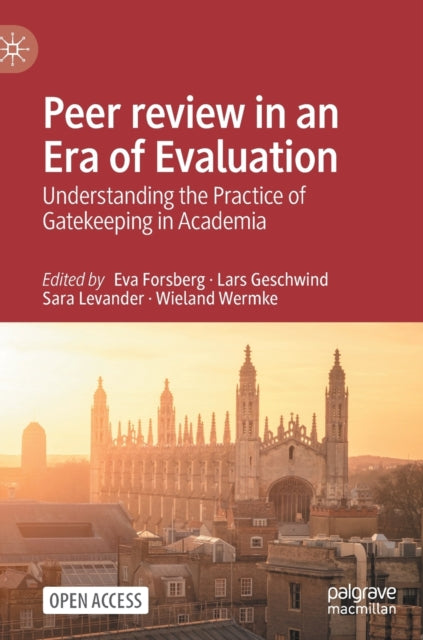
Peer review in an Era of Evaluation: Understanding the Practice of Gatekeeping in Academia
Peer review in an Era of Evaluation: Understanding the Practice of Gatekeeping in Academia
We can order this item for you. Delivery usually takes about 4 to 6 weeks.
This item is not held in our immediate stock. We will order it for you after checkout.
Estimated delivery: About 4 to 6 weeks
YOU SAVE £9.09
- Condition: Brand new
- UK Delivery times: Usually arrives within 2 - 3 working days
- UK Shipping: Fee starts at £3.89. Subject to product weight & dimension
Bulk ordering. Want 15 or more copies? Get a personalised quote and bigger discounts. Learn more about bulk orders.
Couldn't load pickup availability
- More about Peer review in an Era of Evaluation: Understanding the Practice of Gatekeeping in Academia
This book explores peer review in the scientific community and academia, discussing its history, problems, and developments. It provides an overview of peer review and examines how it can move forward.
Format: Hardback
Length: 402 pages
Publication date: 04 January 2022
Publisher: Springer Nature Switzerland AG
This comprehensive volume delves into the realm of peer review within the scientific community and academia. While peer review has been an integral part of modern science since its inception, recent developments in higher education systems have witnessed a significant increase in its utilization. As a result, the purposes, forms, and functions of peer review have undergone a remarkable diversification. This book brings together a diverse collection of conceptual and empirical contributions, offering valuable insights into various peer review practices relevant to the scientific community and higher education institutions across the globe. Comprising three parts, the editors and contributors explore the historical background, challenges, and advancements of peer review, while also examining the unique characteristics of different peer review practices. By undertaking this comprehensive examination, the book provides a comprehensive overview of peer review and raises important questions about its future direction.
Introduction
Peer review has been a fundamental aspect of scientific research and publication since the early days of modern science. It serves as a critical mechanism for ensuring the quality, accuracy, and reliability of scientific findings. However, the process of peer review has evolved over time, reflecting changes in the evaluation culture of higher education systems. In recent years, there has been a growing emphasis on the importance of peer review in promoting academic excellence, fostering interdisciplinary collaboration, and ensuring the dissemination of credible scientific knowledge.
Historical Background
Peer review can be traced back to the early days of scientific journals, where editors and referees played a crucial role in the publication process. The first scientific journals were established in the 17th century, and they relied on the expertise of scholars and experts to evaluate the quality of research articles. Over time, the process of peer review became more standardized and rigorous, with established guidelines and procedures for evaluating manuscripts.
Problems and Developments
Despite its longstanding importance, peer review has faced several challenges in recent years. One of the primary concerns is the increasing pressure to publish rapidly, which can lead to compromises in the quality of research. In addition, the rise of open access publishing has created new challenges for peer review, as it requires reviewers to assess the quality of research articles without the financial barriers that traditional journals impose.
Specificities of Various Peer Review Practices
Peer review practices vary widely across different scientific disciplines and journals. For example, some journals may use a single-blind review process, where the reviewers are not aware of the authors' identities, while others may use a double-blind review process, where both the reviewers and the authors are anonymous. Different journals may also have different criteria for evaluating research articles, such as the importance of the research question, the methodology used, and the results obtained.
Moving Forward
In conclusion, peer review remains an essential component of the scientific community and academia. While it has faced challenges, it is also an opportunity for improvement and innovation. By continuing to refine and enhance peer review practices, we can ensure that scientific research is conducted to the highest standards, that interdisciplinary collaboration is fostered, and that credible scientific knowledge is disseminated to the broader public.
Weight: 678g
Dimension: 210 x 148 (mm)
ISBN-13: 9783030752620
Edition number: 1st ed. 2022
UK and International shipping information
UK and International shipping information
We deliver throughout the United Kingdom and to 128 countries and territories worldwide, including the United States, Australia, Canada, Germany, Spain and France.