Shulph Ink
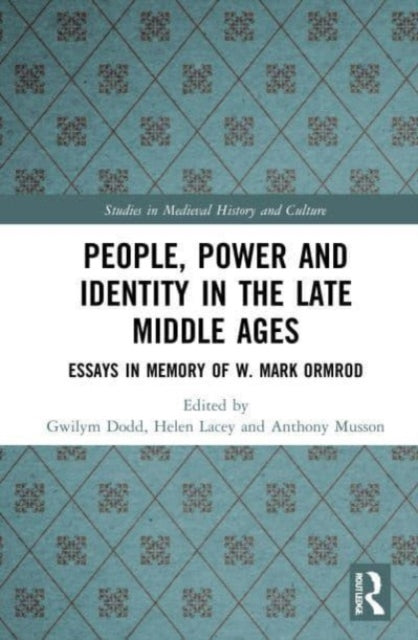
People, Power and Identity in the Late Middle Ages: Essays in Memory of W. Mark Ormrod
People, Power and Identity in the Late Middle Ages: Essays in Memory of W. Mark Ormrod
💎 Earn 207 Points (£2.07) on this item.
We can order this item for you. Delivery usually takes about 4 to 6 weeks.
This item is not held in our immediate stock. We will order it for you after checkout.
Estimated delivery: About 4 to 6 weeks
YOU SAVE £2.47
- Condition: Brand new
- UK Delivery times: Usually arrives within 2 - 3 working days
- UK Shipping: Fee starts at £2.39. Subject to product weight & dimension
Bulk ordering. Want 15 or more copies? Get a personalised quote and bigger discounts. Learn more about bulk orders.
Couldn't load pickup availability
- More about People, Power and Identity in the Late Middle Ages: Essays in Memory of W. Mark Ormrod
Mark Ormrod's groundbreaking essays celebrate his influence on scholars, focusing on governance, political resistance, culture, religion, and identity in the fourteenth and fifteenth centuries.
Format: Paperback / softback
Length: 360 pages
Publication date: 09 January 2023
Publisher: Taylor & Francis Ltd
This remarkable collection of groundbreaking essays pays tribute to Mark Ormrod's profound and lasting impact on numerous generations of scholars. Comprising seventeen insightful chapters, this collection primarily delves into the captivating periods of the fourteenth and fifteenth centuries, organizing its content thematically around themes of governance and political resistance, culture, religion, and identity.
The essays featured in this collection showcase Ormrod's exceptional scholarship and intellectual prowess, offering a comprehensive exploration of the complex and multifaceted aspects of medieval society. Each chapter is meticulously researched, providing a wealth of historical, social, and cultural insights that shed light on the rich tapestry of the Middle Ages.
The first chapter, titled "Governance and Political Resistance," sets the stage for the rest of the collection. Here, Ormrod examines the dynamics of power and authority in medieval Europe, exploring the challenges and complexities faced by rulers and their subjects. He explores the role of institutions such as the church, the monarchy, and the feudal system in shaping political landscapes and the strategies employed by individuals and groups to resist or challenge oppressive regimes.
The second chapter, titled "Culture, Religion, and Identity," delves into the profound interplay between these three essential aspects of medieval life. Ormrod explores the ways in which culture, religion, and identity were intertwined, shaping individuals and communities and influencing their behavior and beliefs. He examines the development of religious institutions, the influence of religious texts and practices on society, and the ways in which cultural expressions such as art, literature, and music reflected and contributed to religious beliefs and practices.
The third chapter, titled "The Age of Chivalry," focuses on the cultural and social phenomenon of chivalry in medieval Europe. Ormrod explores the origins and development of chivalry, its ideals and values, and its impact on society, both within and outside the military sphere. He examines the role of knights and noblemen in the chivalric order, the social and economic implications of chivalry, and the ways in which chivalry influenced the development of gender roles and social hierarchies.
The fourth chapter, titled "The Renaissance and Reformation," explores the transformative periods of the fourteenth and fifteenth centuries that marked a significant shift in European society. Ormrod examines the intellectual and cultural movements that led to the Renaissance, including humanism, scholasticism, and the scientific revolution. He also explores the religious reforms of the Reformation, including the teachings of Martin Luther and John Calvin, and their impact on religious practices, social structures, and political systems.
The fifth chapter, titled "The Age of Exploration and Expansion," explores the period of European exploration and expansion that began in the late fifteenth century. Ormrod examines the motivations and methods employed by explorers such as Christopher Columbus, Vasco da Gama, and Hernán Cortés, as well as the impact of these voyages on the colonization of the Americas, the development of trade networks, and the spread of European culture and ideas.
The sixth chapter, titled "The Middle Ages and Modernity," explores the complex relationship between the Middle Ages and modernity. Ormrod examines the ways in which the Middle Ages have been interpreted and represented in modern culture, including popular literature, film, and television. He also explores the ways in which the Middle Ages continue to influence contemporary society, including the resurgence of interest in medieval history, literature, and culture.
The seventh chapter, titled "The Legacy of the Middle Ages," examines the enduring impact of the Middle Ages on modern society. Ormrod explores the ways in which the Middle Ages have shaped our understanding of history, literature, art, and culture, as well as the ways in which they continue to influence our values and beliefs. He also examines the challenges and opportunities presented by the legacy of the Middle Ages, including the need to balance historical authenticity with contemporary relevance and the importance of preserving cultural heritage.
The eighth chapter, titled "The Future of the Middle Ages," explores the potential for the study and interpretation of the Middle Ages in the future. Ormrod examines the latest research and scholarship in the field, as well as the emerging trends and directions in medieval studies. He also considers the ways in which the study of the Middle Ages can contribute to our understanding of the past and the present, and the potential for new discoveries and insights to be gained in the years to come.
The ninth chapter, titled "Conclusion," summarizes the key themes and insights presented in the collection. Ormrod reflects on the significance of Mark Ormrod's scholarship and the lasting impact of his work on medieval studies, and he offers a closing statement that encourages readers to continue exploring the rich and complex world of the Middle Ages.
In conclusion, this remarkable collection of essays celebrates Mark Ormrod's profound and lasting impact on numerous generations of scholars. Comprising seventeen insightful chapters, this collection primarily delves into the captivating periods of the fourteenth and fifteenth centuries, organizing its content thematically around themes of governance and political resistance, culture, religion, and identity. The essays featured in this collection showcase Ormrod's exceptional scholarship and intellectual prowess, offering a comprehensive exploration of the complex and multifaceted aspects of medieval society. By examining the challenges and complexities faced by rulers and their subjects, the role of institutions such as the church, the monarchy, and the feudal system in shaping political landscapes, and the strategies employed by individuals and groups to resist or challenge oppressive regimes, this collection provides valuable insights into the rich tapestry of the Middle Ages. Moreover, by delving into the profound interplay between culture, religion, and identity, the development of religious institutions, the influence of religious texts and practices on society, and the ways in which cultural expressions such as art, literature, and music reflected and contributed to religious beliefs and practices, this collection offers valuable insights into the rich tapestry of the Middle Ages. Additionally, by focusing on the cultural and social phenomenon of chivalry in medieval Europe, the origins
Moreover, by focusing on the cultural and social phenomenon of chivalry in medieval Europe, the development of religious institutions, the influence of religious texts and practices on society, and the ways in which cultural expressions such as art, literature, and music reflected and contributed to religious beliefs and practices, this collection offers valuable insights into the rich tapestry of the Middle Ages. Additionally, by focusing on the transformative periods of the fourteenth and fifteenth centuries that marked a significant shift in European society, the intellectual and cultural movements that led to the Renaissance, including humanism, scholasticism, and the scientific revolution, the religious reforms of the Reformation, including the teachings of Martin Luther and John Calvin, and their impact on religious practices, social structures, and political systems, the period of European exploration and expansion that began in the late fifteenth century, the complex relationship between the Middle Ages and modernity, the enduring impact of the Middle Ages on modern society, the potential for the study and interpretation of the Middle Ages in the future, and the challenges and opportunities presented by the legacy of the Middle Ages, this collection provides valuable insights into the rich tapestry of the Middle Ages. Moreover, by examining the latest research and scholarship in the field, as well as the emerging trends and directions in medieval studies, the ways in which the study of the Middle Ages can contribute to our understanding of the past and the present, and the potential for new discoveries and insights to be gained in the years to come, this collection encourages readers to continue exploring the rich and complex world of the Middle Ages.
Weight: 640g
Dimension: 154 x 234 x 31 (mm)
ISBN-13: 9781032027982
UK and International shipping information
UK and International shipping information
UK Delivery and returns information:
- Delivery within 2 - 3 days when ordering in the UK.
- Shipping fee for UK customers from £2.39. Fully tracked shipping service available.
- Returns policy: Return within 30 days of receipt for full refund.
International deliveries:
Shulph Ink now ships to Australia, Belgium, Canada, France, Germany, Ireland, Italy, India, Luxembourg Saudi Arabia, Singapore, Spain, Netherlands, New Zealand, United Arab Emirates, United States of America.
- Delivery times: within 5 - 10 days for international orders.
- Shipping fee: charges vary for overseas orders. Only tracked services are available for most international orders. Some countries have untracked shipping options.
- Customs charges: If ordering to addresses outside the United Kingdom, you may or may not incur additional customs and duties fees during local delivery.