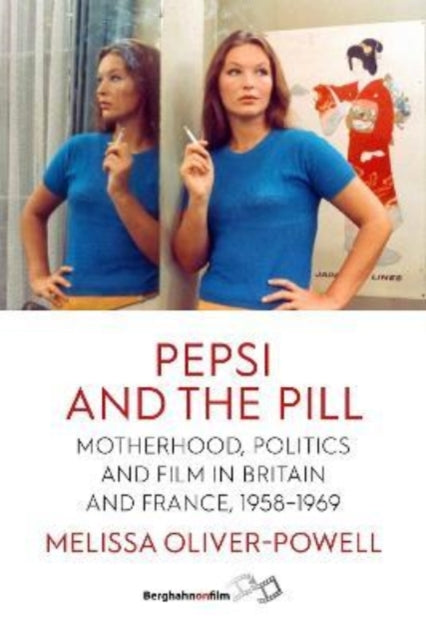
Melissa Oliver-Powell
Pepsi and the Pill: Motherhood, Politics and Film in Britain and France, 1958–1969
Pepsi and the Pill: Motherhood, Politics and Film in Britain and France, 1958–1969
💎 Earn 496 Points (£4.96) on this item.
We can order this item for you. Delivery usually takes about 4 to 6 weeks.
This item is not held in our immediate stock. We will order it for you after checkout.
Estimated delivery: About 4 to 6 weeks
- Condition: Brand new
- UK Delivery times: Usually arrives within 2 - 3 working days
- UK Shipping: Fee starts at £2.39. Subject to product weight & dimension
Bulk ordering. Want 15 or more copies? Get a personalised quote and bigger discounts. Learn more about bulk orders.
Couldn't load pickup availability
- More about Pepsi and the Pill: Motherhood, Politics and Film in Britain and France, 1958–1969
Pepsi and the Pill explores the 1960s in Western Europe, examining the impact of political activity and film movements on gender, sexuality, and domesticity, with a focus on the legacy of debates over reproductive rights, migration, and reproductive nationalism.
Format: Hardback
Length: 324 pages
Publication date: 11 November 2022
Publisher: Berghahn Books
The 1960s was a transformative decade in Western Europe, marked by significant political and cultural changes that reshaped attitudes towards sexuality, gender, and motherhood in everyday life. Through the lens of British and French films, Pepsi and the Pill provides a fresh perspective on a pivotal moment in European culture, examining the intricate interplay between political activism and celebrated film movements in shaping their views on gender, sexuality, and domesticity. As Europe grapples with the resurgence of popular nationalism, this book offers a timely exploration of the enduring legacy of debates surrounding reproductive rights, migration, and reproductive nationalism, intertwined with political discourse, protest, and film.
The 1960s: A Decade of Political and Cultural Change in Western Europe
The 1960s was a decade of immense political and cultural change in Western Europe, characterized by seismic shifts in attitudes towards sexuality, gender, and motherhood in everyday life. This period witnessed a profound transformation in the way individuals viewed and engaged with these aspects of their lives, leading to significant social and cultural upheaval. Through the lens of British and French films, Pepsi and the Pill offers a fresh and insightful perspective on this pivotal moment in European culture, exploring the various ways in which political activism and celebrated film movements mutually shaped each other's views on gender, sexuality, and domesticity.
British and French Films: A Reflection of the Times
British and French films of the 1960s played a significant role in capturing the essence of the decade's political and cultural changes. These films served as a platform for filmmakers to express their views on these issues and to challenge the prevailing social norms. Pepsi and the Pill highlights the works of several notable directors, including Jean-Luc Godard, François Truffaut, and Alain Resnais, who used their films to explore the complexities of gender, sexuality, and motherhood. These films often featured strong female characters who challenged traditional gender roles and sought to assert their independence and autonomy.
Pepsi and the Pill: A Fresh Vision of a Pivotal Moment in European Culture
Pepsi and the Pill is a documentary film that explores the impact of the birth control pill on women's lives in the 1960s. Directed by Laura Bialis, the film features interviews with women who used the pill and their experiences with it. The film also examines the broader social and cultural implications of the pill, including its impact on gender roles, sexuality, and motherhood. Pepsi and the Pill offers a fresh vision of a pivotal moment in European culture, highlighting the ways in which political activism and celebrated film movements mutually shaped each other's views on gender, sexuality, and domesticity.
Political Activism and Film Movements
Political activism and film movements were closely intertwined during the 1960s. Filmmakers used their films to raise awareness about social and political issues and to advocate for change. Pepsi and the Pill highlights the work of several filmmakers who used their films to promote reproductive rights, including the National Organization for Women (NOW) and the National Abortion Rights Action League (NARAL). These filmmakers used their films to challenge the prevailing social norms and to promote a more inclusive and equitable society.
Reproductive Rights, Migration, and Reproductive Nationalism
Reproductive rights, migration, and reproductive nationalism were major issues that shaped the political landscape of the 1960s. The National Organization for Women (NOW) and the National Abortion Rights Action League (NARAL) were among the leading organizations advocating for reproductive rights, including the right to access birth control and abortion. These organizations faced significant opposition from conservative groups and the government, but they continued to push for change. Pepsi and the Pill explores the legacy of these debates, highlighting the ways in which they continue to impact our society today.
Popular Nationalism and the Resurgence of the 1960s
Popular nationalism has once again emerged as a significant political force in Europe, with many countries experiencing a resurgence of nationalist sentiment. Pepsi and the Pill offers a timely account of the legacy of the 1960s debates over reproductive rights, migration, and reproductive nationalism. The film highlights the ways in which these debates continue to shape our understanding of gender, sexuality, and domesticity and the ways in which they can be used to promote a more inclusive and equitable society.
Conclusion
The 1960s was a decade of immense political and cultural change in Western Europe, characterized by seismic shifts in attitudes towards sexuality, gender, and motherhood in everyday life. Through the lens of British and French films, Pepsi and the Pill offers a fresh and insightful perspective on this pivotal moment in European culture, exploring the various ways in which political activism and celebrated film movements mutually shaped each other's views on gender, sexuality, and domesticity. As Europe grapples with the resurgence of popular nationalism, this book offers a timely exploration of the enduring legacy of debates surrounding reproductive rights, migration, and reproductive nationalism, intertwined with political discourse, protest, and film.
Weight: 566g
Dimension: 159 x 236 x 24 (mm)
ISBN-13: 9781800736917
This item can be found in:
UK and International shipping information
UK and International shipping information
UK Delivery and returns information:
- Delivery within 2 - 3 days when ordering in the UK.
- Shipping fee for UK customers from £2.39. Fully tracked shipping service available.
- Returns policy: Return within 30 days of receipt for full refund.
International deliveries:
Shulph Ink now ships to Australia, Belgium, Canada, France, Germany, Ireland, Italy, India, Luxembourg Saudi Arabia, Singapore, Spain, Netherlands, New Zealand, United Arab Emirates, United States of America.
- Delivery times: within 5 - 10 days for international orders.
- Shipping fee: charges vary for overseas orders. Only tracked services are available for most international orders. Some countries have untracked shipping options.
- Customs charges: If ordering to addresses outside the United Kingdom, you may or may not incur additional customs and duties fees during local delivery.