AdamPautz
Perception
Perception
💎 Earn 207 Points (£2.07) on this item.
YOU SAVE £2.47
- Condition: Brand new
- UK Delivery times: Usually arrives within 2 - 3 working days
- UK Shipping: Fee starts at £2.39. Subject to product weight & dimension
Bulk ordering. Want 15 or more copies? Get a personalised quote and bigger discounts. Learn more about bulk orders.
Couldn't load pickup availability
- More about Perception
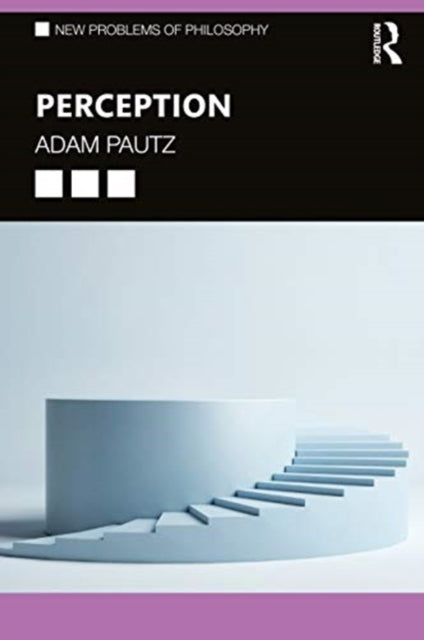
Perception is a complex problem in philosophy, psychology, and metaphysics. Adam Pautz examines four important theories of perception, including sense datum view, internal physical state view, representational view, and naïve realism, and discusses the relationship between perception and the physical world. Examples include hallucinations, illusions, the laws of appearance, blindsight, and neuroscientific explanations of pain, smell, and color. The book covers traditional philosophical arguments and recent empirical arguments from psychophysics and neuroscience.
Format: Paperback / softback
Length: 264 pages
Publication date: 06 May 2021
Publisher: Taylor & Francis Ltd
Perception is a complex and enigmatic issue that has captivated the minds of philosophers, psychologists, and metaphysicians for centuries. It revolves around the question of how our senses provide us with a direct and immediate access to the external world, despite the apparent presence of perceptual illusions and hallucinations. This problem has generated a great deal of attention and controversy, as it challenges our intuitive understanding of perception as a direct window into reality.
One of the central questions in the philosophy of perception is whether perception is internally dependent or externally directed. On the one hand, some philosophers argue that perception is internally dependent, meaning that it is generated by the mind itself and does not depend on external objects. On the other hand, others argue that perception is externally directed, meaning that it is caused by the interaction between the mind and the external world.
Another issue that arises in the philosophy of perception is the relationship between perception and the physical world. Some philosophers argue that perception is merely an illusion or a hallucination, while others argue that perception is a genuine representation of the external world. This debate has been particularly intense in the field of metaphysics, where philosophers have sought to explain the nature of reality and the relationship between the mind and the physical world.
In recent years, research in psychophysics and neuroscience has provided new insights into the nature of perception. These studies have shown that perception is not a direct and immediate access to the external world, but rather a complex process that involves the interaction between the mind and the physical world. Perception is not a passive process, but rather an active one that involves the interpretation and processing of sensory information.
One of the most important theories of perception is the sense-datum view, which argues that perception is the result of the interaction between the mind and sensory data. According to this view, sensory data are the building blocks of perception, and the mind uses these data to construct a mental representation of the external world. This view has been challenged by other theories, such as the internal physical state view, which argues that perception is the result of the interaction between the mind and the internal physical state of the body.
Another important theory of perception is the representational view, which argues that perception is the result of the mind's ability to represent the external world in a mental format. According to this view, the mind creates a mental representation of the external world based on sensory information and previous experiences. This view has been supported by empirical research in psychophysics and neuroscience, which has shown that the brain can represent the external world in a mental format.
Naïve realism is another important theory of perception, which argues that perception is a direct and immediate access to the external world. According to this view, the external world is exactly as it appears to us, and we have a direct and immediate access to it through our senses. This view has been challenged by empirical research in psychophysics and neuroscience, which has shown that perception is not a direct and immediate access to the external world, but rather a complex process that involves the interpretation and processing of sensory information.
Perception also raises important ethical and philosophical questions. For example, how do we distinguish between perceptual illusions and hallucinations? How do we account for the fact that our perception of the external world can be influenced by our beliefs, desires, and emotions? How do we justify the use of sensory information in scientific inquiry and decision-making?
In conclusion, perception is a complex and enigmatic issue that has captivated the minds of philosophers, psychologists, and metaphysicians for centuries. It is a topic that has generated a great deal of attention and controversy, as it challenges our intuitive understanding of perception as a direct window into reality. Perception is not a passive process, but rather an active one that involves the interpretation and processing of sensory information. The study of perception has provided new insights into the nature of perception and the relationship between the mind and the physical world. These insights have challenged traditional theories of perception and have opened up new avenues for research and inquiry. As we continue to explore the mysteries of perception, we will undoubtedly discover new ways to understand the world around us and our place in it.
Weight: 426g
Dimension: 154 x 234 x 20 (mm)
ISBN-13: 9780415486057
UK and International shipping information
UK and International shipping information
UK Delivery and returns information:
- Delivery within 2 - 3 days when ordering in the UK.
- Shipping fee for UK customers from £2.39. Fully tracked shipping service available.
- Returns policy: Return within 30 days of receipt for full refund.
International deliveries:
Shulph Ink now ships to Australia, Belgium, Canada, France, Germany, Ireland, Italy, India, Luxembourg Saudi Arabia, Singapore, Spain, Netherlands, New Zealand, United Arab Emirates, United States of America.
- Delivery times: within 5 - 10 days for international orders.
- Shipping fee: charges vary for overseas orders. Only tracked services are available for most international orders. Some countries have untracked shipping options.
- Customs charges: If ordering to addresses outside the United Kingdom, you may or may not incur additional customs and duties fees during local delivery.