RachelMorley
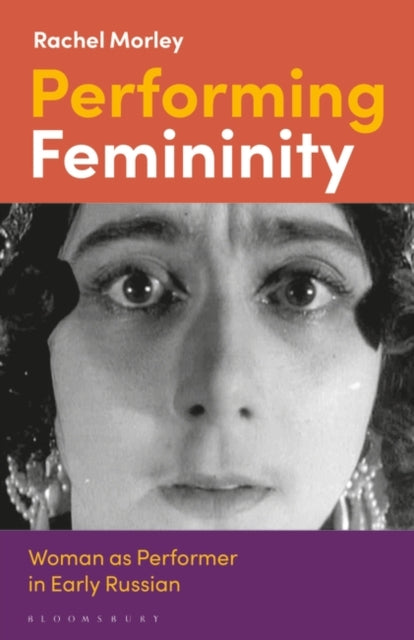
Performing Femininity: Woman as Performer in Early Russian Cinema
Performing Femininity: Woman as Performer in Early Russian Cinema
💎 Earn 175 Points (£1.75) on this item.
We can order this item for you. Delivery usually takes about 4 to 6 weeks.
This item is not held in our immediate stock. We will order it for you after checkout.
Estimated delivery: About 4 to 6 weeks
- Condition: Brand new
- UK Delivery times: Usually arrives within 2 - 3 working days
- UK Shipping: Fee starts at £2.39. Subject to product weight & dimension
Bulk ordering. Want 15 or more copies? Get a personalised quote and bigger discounts. Learn more about bulk orders.
Couldn't load pickup availability
- More about Performing Femininity: Woman as Performer in Early Russian Cinema
The female performer was a central figure in pre-Revolutionary Russian cinema, used to explore contemporary concerns such as femininity, gender identity, and cinematic technology.
\n Format: Paperback / softback
\n Length: 304 pages
\n Publication date: 29 July 2021
\n Publisher: Bloomsbury Publishing PLC
\n
The captivating world of pre-Revolutionary Russian cinema was graced by a multitude of talented female performers, including oriental dancers, ballerinas, actresses, and opera singers. These remarkable women played a central role in shaping the cinematic landscape from the very first feature film, "Romashkov's Stenka Razin" (1908), to the sophisticated melodramas of the 1910s and even the poignant masterpiece, "Viskovsky's The Last Tango" (1918), which was created just before the pre-Revolutionary film industry was dismantled by the new Soviet government. In her groundbreaking new study, Rachel Morley delves deep into the fascinating realm of early Russian cinema, exploring the profound ways in which the character of the female performer was utilized to address a range of contemporary concerns. From the shifting conceptions of femininity and the emergence of the so-called "New Woman" to broader questions of gender identity, Morley uncovers the rich tapestry of themes that were explored through the lens of the female performer.
Morley's research reveals that early Russian film-makers were audacious explorers, employing the archetype of femininity as a platform for experimentation and the development of a distinct cinematic language. They pushed the boundaries of visual storytelling, employing innovative techniques and artistic approaches to convey their messages. Through their creative endeavors, they sought to challenge societal norms, question established hierarchies, and explore the complexities of human emotions and experiences.
One of the most striking aspects of Morley's study is her analysis of the ways in which the female performer was used to represent and challenge traditional gender roles. In the early 20th century, Russia was undergoing a significant social and cultural transformation, with women gaining greater rights and opportunities. The cinema played a crucial role in shaping public perception and challenging gender stereotypes. The female performers in pre-Revolutionary Russian films were often portrayed as strong, independent, and resilient, defying the societal expectations of femininity. They showcased a range of emotions, from vulnerability to strength, and challenged the notion that women were solely defined by their roles as wives and mothers.
Morley's study also highlights the ways in which the female performer was used to explore broader questions of gender identity. The emergence of the "New Woman" in the early 20th century marked a significant shift in societal attitudes towards gender roles and sexuality. The female performers in pre-Revolutionary Russian films were often portrayed as complex and multifaceted characters, navigating the complexities of love, desire, and self-discovery. They challenged the notion of fixed gender identities and promoted the idea that individuals could be both feminine and masculine, or neither.
Furthermore, Morley's study sheds light on the technical innovations that were employed by early Russian film-makers to enhance the visual impact of their films. The use of close-ups, lighting, and camera angles was carefully crafted to evoke emotions and create a sense of realism and depth. The female performers were often showcased in stunning costumes and makeup, further enhancing their allure and captivating the audience.
In conclusion, Rachel Morley's groundbreaking new study provides a fresh perspective on the role of the female performer in pre-Revolutionary Russian cinema. Through her meticulous analysis, Morley reveals the profound ways in which early Russian film-makers used the character of the female performer to explore key contemporary concerns, challenge societal norms, and push the boundaries of cinematic technology. The female performers in these films were not just mere decorative elements but powerful agents of change, shaping the cultural and social landscape of their time. Morley's study is a testament to the enduring legacy of these talented women and their contributions to the world of cinema.
\n Weight: 388g\n
Dimension: 216 x 139 x 22 (mm)\n
ISBN-13: 9781350242869\n \n
UK and International shipping information
UK and International shipping information
UK Delivery and returns information:
- Delivery within 2 - 3 days when ordering in the UK.
- Shipping fee for UK customers from £2.39. Fully tracked shipping service available.
- Returns policy: Return within 30 days of receipt for full refund.
International deliveries:
Shulph Ink now ships to Australia, Belgium, Canada, France, Germany, Ireland, Italy, India, Luxembourg Saudi Arabia, Singapore, Spain, Netherlands, New Zealand, United Arab Emirates, United States of America.
- Delivery times: within 5 - 10 days for international orders.
- Shipping fee: charges vary for overseas orders. Only tracked services are available for most international orders. Some countries have untracked shipping options.
- Customs charges: If ordering to addresses outside the United Kingdom, you may or may not incur additional customs and duties fees during local delivery.