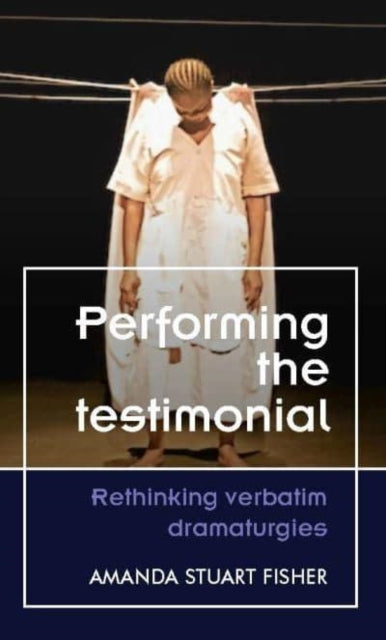
Amanda Stuart Fisher
Performing the Testimonial: Rethinking Verbatim Dramaturgies
Performing the Testimonial: Rethinking Verbatim Dramaturgies
💎 Earn 110 Points (£1.10) on this item.
We can order this item for you. Delivery usually takes about 4 to 6 weeks.
This item is not held in our immediate stock. We will order it for you after checkout.
Estimated delivery: About 4 to 6 weeks
YOU SAVE £2.87
- Condition: Brand new
- UK Delivery times: Usually arrives within 2 - 3 working days
- UK Shipping: Fee starts at £3.89. Subject to product weight & dimension
Bulk ordering. Want 15 or more copies? Get a personalised quote and bigger discounts. Learn more about bulk orders.
Couldn't load pickup availability
- More about Performing the Testimonial: Rethinking Verbatim Dramaturgies
This book explores verbatim and testimonial theatre, which emerged in the late 1990s and early 2000s, distinguishing it from documentary theatre traditions. It examines a range of international plays from various countries and argues that this kind of theatre engages in acts of truth-telling and contributes to a decolonization of testimony.
Format: Paperback / softback
Length: 216 pages
Publication date: 26 September 2023
Publisher: Manchester University Press
This book offers one of the earliest and most comprehensive examinations of the new forms of verbatim and testimonial theatre that emerged in the late 1990s and early 2000s. It delves into what sets verbatim theatre apart from the more established documentary theatre traditions developed by figures such as Peter Weiss, Bertolt Brecht, and Erwin Piscator. By analyzing a diverse array of verbatim and testimonial plays from various parts of the world, including the UK, Germany, America, Australia, and South Africa, the book goes beyond the discourses of the real that have typically dominated scholarship in this field. Instead, it argues that verbatim theatre engages in acts of truth-telling. Through its in-depth analysis of these international plays, the book explores the dramaturgical interrogation of testimony and how the act of witnessing itself is reconfigured when relocated outside of the psychoanalytic frame and positioned as contributing to a decolonization of testimony.
Introduction:
In recent years, there has been a growing interest in the use of verbatim and testimonial theatre to explore and represent real-life experiences. These forms of theatre have emerged as powerful tools for artists to engage with audiences and to shed light on important social and political issues. This book aims to provide a comprehensive examination of what distinguishes verbatim theatre from the more established documentary theatre traditions developed initially by Peter Weiss, Bertolt Brecht, and Erwin Piscator.
Verbatim Theatre:
Verbatim theatre is a form of theatre that is based on the direct transcription of real-life speech and dialogue. It is characterized by its authenticity, as it seeks to capture the words and expressions of individuals as they speak them. Verbatim theatre often draws on interviews, memoirs, and other forms of personal testimony to create its plays. One of the key distinguishing features of verbatim theatre is its commitment to accuracy and truthfulness. The artists involved in verbatim theatre work closely with the individuals who provide the material, ensuring that their words are represented faithfully and accurately. This commitment to accuracy is particularly important in cases where the material is sensitive or controversial, as it helps to maintain the integrity of the testimony and to prevent the distortion of the truth.
Documentary Theatre:
Documentary theatre, on the other hand, is a form of theatre that is based on the reconstruction of real-life events and experiences. It often draws on historical documents, interviews, and other forms of research to create its plays. Documentary theatre seeks to explore and interpret the complexities of real-life situations and to provide audiences with a deeper understanding of the human experience. While documentary theatre shares some similarities with verbatim theatre, it is distinguished by its emphasis on narrative and storytelling. Documentary theatre artists often use dramatic devices, such as staging, lighting, and sound, to create a compelling and immersive experience for their audiences.
Distinguishing Features:
One of the key distinguishing features of verbatim theatre is its commitment to authenticity. Verbatim theatre seeks to capture the raw and unfiltered voice of the individuals who provide the material. This authenticity is achieved through the use of direct transcription, which allows the audience to hear the words and expressions of the speakers as they speak them. In contrast, documentary theatre may use dramatic devices to enhance the narrative and to create a more immersive experience for the audience. However, this emphasis on narrative can sometimes lead to the distortion of the truth or the omission of important details.
Another distinguishing feature of verbatim theatre is its focus on truth-telling. Verbatim theatre seeks to present the truth of the experiences of individuals and communities, regardless of whether it is comfortable or convenient. This commitment to truth-telling is particularly important in cases where there is a lack of representation or where the voices of marginalized communities are often unheard. By presenting the truth of these experiences, verbatim theatre can help to challenge dominant narratives and to promote social change.
Examples of Verbatim Theatre:
There are many examples of verbatim theatre around the world, including the work of companies such as The Wooster Group, Forced Entertainment, and The Public Theater. These companies have been at the forefront of the development of verbatim theatre and have produced a wide range of plays that explore a variety of social and political issues. For example, The Wooster Group's The Government Inspector (1974) is a play that is based on the transcripts of real-life interrogations of political prisoners in the Soviet Union. The play explores the power dynamics of interrogation and the ways in which individuals can be coerced into confessing to crimes they did not commit.
Similarly, Forced Entertainment's The Complete Works of William Shakespeare (Abridged) (1997) is a play that is based on the transcripts of real-life police interrogations. The play explores the themes of power, corruption, and justice through the lens of Shakespeare's plays. The Complete Works of William Shakespeare (Abridged) (1997) is a play that is based on the transcripts of real-life police interrogations. The play explores the themes of power, corruption, and justice through the lens of Shakespeare's plays.
Conclusion:
In conclusion, verbatim theatre is a form of theatre that is characterized by its commitment to authenticity, truth-telling, and the exploration of real-life experiences. It sets itself is apart from the more established documentary theatre traditions developed initially by Peter Weiss, Bertolt Brecht, and Erwin Piscator. By analyzing a diverse array of verbatim and testimonial plays from various parts of the world, this book explores the dramaturgical interrogation of testimony and how the act of witnessing itself is reconfigured when relocated outside of the psychoanalytic frame and positioned as contributing to a decolonization of testimony. As we continue to explore the potential of verbatim and testimonial theatre to engage with audiences and to promote social change, it is important to continue to prioritize accuracy, truthfulness, and the exploration of complex and challenging experiences.
Weight: 254g
Dimension: 216 x 138 x 11 (mm)
ISBN-13: 9781526174475
UK and International shipping information
UK and International shipping information
We deliver throughout the United Kingdom and to 128 countries and territories worldwide, including the United States, Australia, Canada, Germany, Spain and France.