Shulph Ink
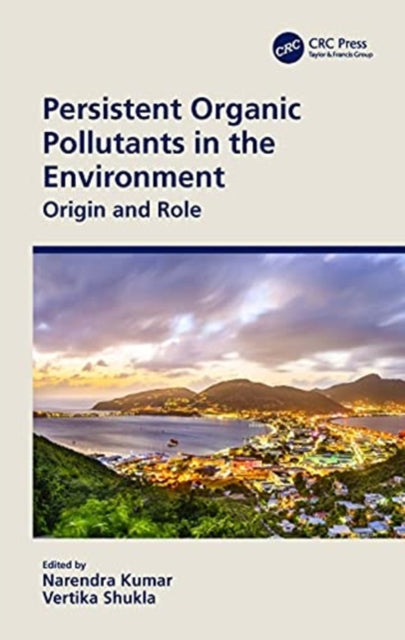
Persistent Organic Pollutants in the Environment: Origin and Role
Persistent Organic Pollutants in the Environment: Origin and Role
💎 Earn 361 Points (£3.61) on this item.
YOU SAVE £62.71
- Condition: Brand new
- UK Delivery times: Usually arrives within 2 - 3 working days
- UK Shipping: Fee starts at £2.39. Subject to product weight & dimension
Bulk ordering. Want 15 or more copies? Get a personalised quote and bigger discounts. Learn more about bulk orders.
Couldn't load pickup availability
- More about Persistent Organic Pollutants in the Environment: Origin and Role
Persistent Organic Pollutants (POPs) are a class of chemicals that persist in the environment and can have harmful effects on humans and ecosystems. They are generated by human activities such as industrialization, agriculture, and combustion and can enter the food chain through the consumption of animals and plants. POPs are classified into different categories based on their chemical structure and behavior. They can be found in a wide range of environmental media, including soil, water, air, and wildlife. POPs have a long environmental fate and can be transported long distances through the atmosphere and water. They can accumulate in the fatty tissues of animals and humans and can cause a range of health problems, including cancer, reproductive disorders, and neurological disorders.
Persistent Organic Pollutants (POPs) are a class of chemicals that persist in the environment and can have harmful effects on humans and ecosystems. They are generated by human activities and can be found in a wide range of environmental media. POPs have a long environmental fate and can accumulate in the fatty tissues of animals and humans, causing a range of health problems. Detection, human exposure, and management of POPs are important issues for environmental protection.
\n Format: Hardback
\n Length: 358 pages
\n Publication date: 30 September 2021
\n Publisher: Taylor & Francis Ltd
\n
Persistent Organic Pollutants (POPs) are a class of organic compounds that persist in the environment for long periods, often exhibiting toxic and harmful properties. These pollutants are derived from various sources, including industrial activities, agricultural practices, and combustion processes. POPs can enter the food chain through the consumption of animals and plants, and can accumulate in the tissues of humans and wildlife.
Genesis:
POPs are produced through a variety of chemical processes, including chlorination, bromination, and oxidation. They are commonly used in industrial products such as pesticides, paints, plastics, and solvents. Additionally, POPs can be released into the environment through improper waste disposal, accidental spills, and atmospheric emissions.
Categories:
POPs are classified into different categories based on their chemical structure and properties. The most well-known categories of POPs include polychlorinated dibenzo-p-dioxins (PCDD/Fs), polychlorinated biphenyls (PCBs), and polycyclic aromatic hydrocarbons (PAHs). These pollutants are known for their ability to accumulate in the food chain and cause a range of health problems, including cancer, reproductive issues, and neurological disorders.
Environmental Fate and Behaviour:
POPs are highly resistant to environmental degradation and can persist in the environment for decades or even centuries. They can be transported long distances through the air, water, and soil, and can accumulate in the highest levels of the food chain. POPs can also be adsorbed onto sediments and soil particles, making them difficult to remove from the environment.
Associated Hazards:
POPs have been linked to a range of health problems, including cancer, reproductive issues, neurological disorders, and immune system disorders. They can also affect the environment, including harming wildlife and ecosystems. POPs can disrupt the balance of natural ecosystems, causing changes in species composition and population dynamics.
Analytical Techniques:
Detection of POPs is a complex and challenging task due to their low levels of detection and their wide range of chemical structures. Analytical techniques such as gas chromatography-mass spectrometry (GC-MS) and high-performance liquid chromatography (HPLC) are commonly used to detect and quantify POPs in environmental samples.
Human Exposure and Management:
Human exposure to POPs can occur through the consumption of contaminated food and water, as well as through inhalation of air and skin contact with contaminated materials. Management of POPs involves reducing the release of POPs into the environment, implementing regulations to control the use and disposal of POPs, and promoting the use of safer alternatives to POPs.
Environmental Dynamics of POPs:
POPs can have significant impacts on the environment, including disrupting the balance of natural ecosystems, causing changes in species composition and population dynamics, and contributing to climate change. POPs can also act as endocrine disruptors, which can interfere with the normal functioning of the human endocrine system.
Focus on PCDD/Fs, PCBs, and PAH:
Polychlorinated dibenzo-p-dioxins (PCDD/Fs), polychlorinated biphenyls (PCBs), and polycyclic aromatic hydrocarbons (PAHs) are the most well-known and studied POPs. These pollutants have been extensively studied for their toxic effects on humans and the environment, and have been the subject of numerous regulations and policies.
Other Organochlorine POPs:
In addition to PCDD/Fs, PCBs, and PAHs, other organochlorine POPs such as DDT, lindane, and dieldrin have also been identified as significant environmental pollutants. These pollutants have been used in agriculture and pest control, but have been banned or restricted due to their toxic effects on humans and the environment.
Conclusion:
Persistent Organic Pollutants (POPs) are a class of organic compounds that persist in the environment for long periods, often exhibiting toxic and harmful properties. These pollutants are derived from various sources, including industrial activities, agricultural practices, and combustion processes. POPs can enter the food chain through the consumption of animals and plants, and can accumulate in the tissues of humans and wildlife. POPs have been linked to a range of health problems, including cancer, reproductive issues, neurological disorders, and immune system disorders. They can also affect the environment, including harming wildlife and ecosystems. Management of POPs involves reducing the release of POPs into the environment, implementing regulations to control the use and disposal of POPs, and promoting the use of safer alternatives to POPs. The focus on PCDD/Fs, PCBs, and PAHs is particularly important due to their toxic effects on humans and the environment, and their extensive study and regulation. Other organochlorine POPs such as DDT, lindane, and dieldrin are also significant environmental pollutants that have been banned or restricted due to their toxic effects.
\n Weight: 708g\n
Dimension: 214 x 363 x 27 (mm)\n
ISBN-13: 9780367512880\n \n
This item can be found in:
UK and International shipping information
UK and International shipping information
UK Delivery and returns information:
- Delivery within 2 - 3 days when ordering in the UK.
- Shipping fee for UK customers from £2.39. Fully tracked shipping service available.
- Returns policy: Return within 30 days of receipt for full refund.
International deliveries:
Shulph Ink now ships to Australia, Belgium, Canada, France, Germany, Ireland, Italy, India, Luxembourg Saudi Arabia, Singapore, Spain, Netherlands, New Zealand, United Arab Emirates, United States of America.
- Delivery times: within 5 - 10 days for international orders.
- Shipping fee: charges vary for overseas orders. Only tracked services are available for most international orders. Some countries have untracked shipping options.
- Customs charges: If ordering to addresses outside the United Kingdom, you may or may not incur additional customs and duties fees during local delivery.