DjebbarTiab,Erle C.Donaldson
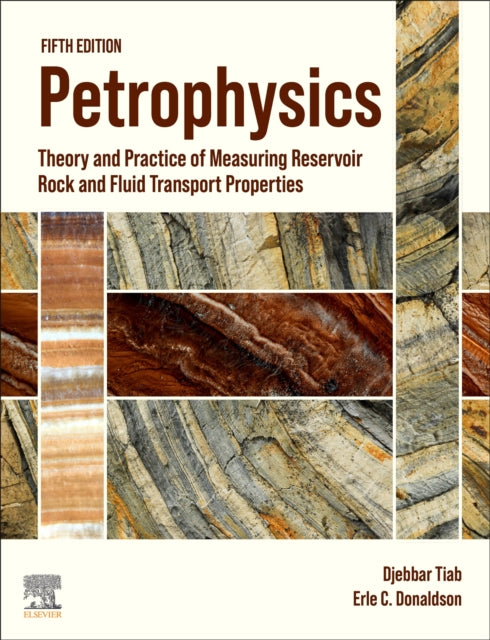
Petrophysics: Theory and Practice of Measuring Reservoir Rock and Fluid Transport Properties
Petrophysics: Theory and Practice of Measuring Reservoir Rock and Fluid Transport Properties
💎 Earn 809 Points (£8.09) on this item.
YOU SAVE £21.05
- Condition: Brand new
- UK Delivery times: Usually arrives within 2 - 3 working days
- UK Shipping: Fee starts at £2.39. Subject to product weight & dimension
Bulk ordering. Want 15 or more copies? Get a personalised quote and bigger discounts. Learn more about bulk orders.
Couldn't load pickup availability
- More about Petrophysics: Theory and Practice of Measuring Reservoir Rock and Fluid Transport Properties
Petrophysics: Theory and Practice of Measuring Reservoir Rock and Fluid Transport Properties, Fifth Edition, is a comprehensive text for reservoir engineers, production engineers, and geoscience students, covering rock-fluid interactions, petroleum geology, and reservoir characterization. It includes theory, studies, methods, procedures, calculations, definitions, exercises, and assignments to reinforce learning.
Format: Hardback
Length: 970 pages
Publication date: 01 March 2024
Publisher: Elsevier - Health Sciences Division
Petrophysics: Theory and Practice of Measuring Reservoir Rock and Fluid Transport Properties, Fifth Edition, is a comprehensive and authoritative text that provides essential knowledge for reservoir engineers, production engineers, and geoscience students to optimize reservoir performance and minimize environmental impacts. This edition covers a wide range of topics, including pre- and post-carbon emission concerns, porosity and permeability, formation resistivity and water saturation, capillary pressure, wettability, applications of Darcy's Law, naturally fractured reservoirs, stress effects on reservoir rock, reservoir characterization and well logs, and more. Each chapter is meticulously crafted to synthesize relevant theory, studies, and advances, methods, procedures, calculations, definitions, exercises, and assignments, ensuring that students gain a thorough understanding of the subject matter.
Petrophysics: Theory and Practice of Measuring Reservoir Rock and Fluid Transport Properties, Fifth Edition
Petrophysics: Theory and Practice of Measuring Reservoir Rock and Fluid Transport Properties, Fifth Edition, is a seminal text on the field that delivers information for reservoir engineers, production engineers, and geoscience students who need to understand rock-fluid interactions in order to maximize reservoir performance and minimize emissions and environmental impacts. This new edition lays a foundation to petroleum geology, including an overview of pre- and post- carbon emission concerns, porosity and permeability, formation resistivity and water saturation, capillary pressure, wettability, applications of Darcy's Law, naturally fractured reservoirs, stress effects on reservoir rock, reservoir characterization and well logs, and more. Each chapter synthesizes relevant theory, studies and advances, methods, procedures, calculations, definitions, exercises and assignments designed to reinforce learning.
Overview of Pre- and Post-Carbon Emission Concerns
Petrophysics: Theory and Practice of Measuring Reservoir Rock and Fluid Transport Properties, Fifth Edition, begins with an overview of pre- and post-carbon emission concerns. The book explains how the extraction and combustion of fossil fuels have led to significant changes in the Earth's climate, including rising temperatures, sea level rise, and extreme weather events. It also discusses the impact of these changes on reservoir rock and fluid transport properties, such as porosity and permeability, formation resistivity and water saturation, capillary pressure, wettability, and stress effects on reservoir rock. The book provides examples of how these properties have been affected by carbon emissions and how they can be managed to minimize their impact.
Porosity and Permeability
Porosity and permeability are two of the most important properties of reservoir rock. They determine the amount of fluid that can flow through a rock and the rate at which it can flow. Porosity is the percentage of void space in a rock, while permeability is the measure of the ease with which fluid can flow through a rock. The book provides a detailed explanation of how porosity and permeability are measured, including the use of core samples, well logs, and computer simulations. It also discusses the factors that affect porosity and permeability, such as rock type, mineralogy, and fluid composition. The book provides examples of how porosity and permeability can be used to optimize reservoir performance and minimize emissions and environmental impacts.
Formation Resistivity and Water Saturation
Formation resistivity and water saturation are two important properties of reservoir rock that affect fluid flow. Formation resistivity is the measure of the resistance of a rock to the flow of electrical current, while water saturation is the measure of the amount of water present in a rock. The book provides a detailed explanation of how formation resistivity and water saturation are measured, including the use of electrical resistivity measurements, well logs, and computer simulations. It also discusses the factors that affect formation resistivity and water saturation, such as rock type, mineralogy, and fluid composition. The book provides examples of how formation resistivity and water saturation can be used to optimize reservoir performance and minimize emissions and environmental impacts.
Capillary Pressure
Capillary pressure is a property of reservoir rock that affects fluid flow. It is the pressure that is exerted on a fluid by the surface of a rock. The book provides a detailed explanation of how capillary pressure is measured, including the use of capillary pressure measurements, well logs, and computer simulations. It also discusses the factors that affect capillary pressure, such as rock type, mineralogy, and fluid composition. The book provides examples of how capillary pressure can be used to optimize reservoir performance and minimize emissions and environmental impacts.
Wettability
Wettability is a property of reservoir rock that affects fluid flow. It is the tendency of a fluid to adhere to the surface of a rock. The book provides a detailed explanation of how wettability is measured, including the use of wettability measurements, well logs, and computer simulations. It also discusses the factors that affect wettability, such as rock type, mineralogy, and fluid composition. The book provides examples of how wettability can be used to optimize reservoir performance and minimize emissions and environmental impacts.
Applications of Darcy's Law
Darcy's Law is a fundamental principle of fluid flow that states that the flow of fluid through a porous medium is proportional to the pressure gradient across the medium. The book provides a detailed explanation of how Darcy's Law is applied to reservoir engineering, including the use of well logs, computer simulations, and reservoir modeling. It also discusses the factors that affect Darcy's Law, such as rock type, mineralogy, and fluid composition. The book provides examples of how Darcy's Law can be used to optimize reservoir performance and minimize emissions and environmental impacts.
Naturally Fractured Reservoirs
Naturally fractured reservoirs are reservoirs that have been fractured by natural processes, such as earthquakes or volcanic activity. These reservoirs can have a significant impact on fluid flow and reservoir performance. The book provides a detailed explanation of how naturally fractured reservoirs are characterized, including the use of seismic data, well logs, and computer simulations. It also discusses the factors that affect naturally fractured reservoirs, such as fracture geometry, fracture density, and fracture permeability. The book provides examples of how naturally fractured reservoirs can be used to optimize reservoir performance and minimize emissions and environmental impacts.
Stress Effects on Reservoir Rock
Stress effects on reservoir rock can have a significant impact on fluid flow and reservoir performance. The book provides a detailed explanation of how stress effects on reservoir rock are measured, including the use of stress measurements, well logs, and computer simulations. It also discusses the factors that affect stress effects on reservoir rock, such as rock type, mineralogy, and fluid composition. The book provides examples of how stress effects on reservoir rock can be used to optimize reservoir performance and minimize emissions and environmental impacts.
Reservoir Characterization and Well Logs
Reservoir characterization and well logs are essential tools for reservoir engineers and production engineers. Well logs provide information about the physical properties of a rock, such as porosity and permeability, formation resistivity and water saturation, capillary pressure, wettability, and stress effects on reservoir rock. The book provides a detailed explanation of how well logs are acquired, processed, and interpreted, including the use of computer simulations and software. It also discusses the factors that affect well logs, such as wellbore conditions, fluid properties, and sampling techniques. The book provides examples of how well logs can be used to optimize reservoir performance and minimize emissions and environmental impacts.
Conclusion
Petrophysics: Theory and Practice of Measuring Reservoir Rock and Fluid Transport Properties, Fifth Edition, is a comprehensive and authoritative text that provides essential knowledge for reservoir engineers, production engineers, and geoscience students to optimize reservoir performance and minimize environmental impacts. This edition covers a wide range of topics, including pre- and post-carbon emission concerns, porosity and permeability, formation resistivity and water saturation, capillary pressure, wettability, applications of Darcy's Law, naturally fractured reservoirs, stress effects on reservoir rock, reservoir characterization and well logs, and more. Each chapter is meticulously crafted to synthesize relevant theory, studies, and advances, methods, procedures, calculations, definitions, exercises, and assignments, ensuring that students gain a thorough understanding of the subject matter. Whether you are a student or a professional in the field of petroleum geology, this book is an essential resource for your success.
Weight: 450g
Dimension: 276 x 216 (mm)
ISBN-13: 9780443241277
Edition number: 5 ed
This item can be found in:
UK and International shipping information
UK and International shipping information
UK Delivery and returns information:
- Delivery within 2 - 3 days when ordering in the UK.
- Shipping fee for UK customers from £2.39. Fully tracked shipping service available.
- Returns policy: Return within 30 days of receipt for full refund.
International deliveries:
Shulph Ink now ships to Australia, Belgium, Canada, France, Germany, Ireland, Italy, India, Luxembourg Saudi Arabia, Singapore, Spain, Netherlands, New Zealand, United Arab Emirates, United States of America.
- Delivery times: within 5 - 10 days for international orders.
- Shipping fee: charges vary for overseas orders. Only tracked services are available for most international orders. Some countries have untracked shipping options.
- Customs charges: If ordering to addresses outside the United Kingdom, you may or may not incur additional customs and duties fees during local delivery.