Shulph Ink
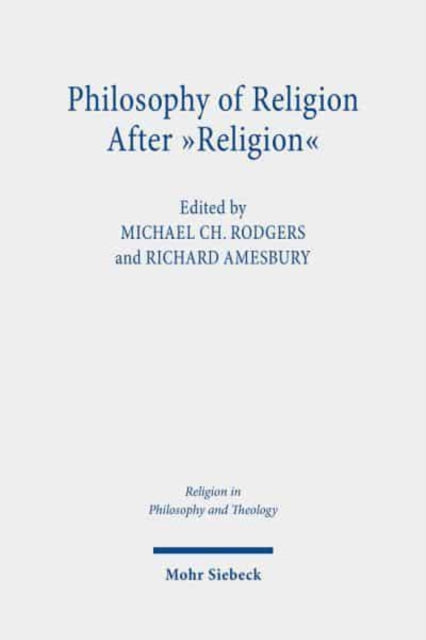
Philosophy of Religion after "Religion"
Philosophy of Religion after "Religion"
💎 Earn 348 Points (£3.48) on this item.
We can order this item for you. Delivery usually takes about 4 to 6 weeks.
This item is not held in our immediate stock. We will order it for you after checkout.
Estimated delivery: About 4 to 6 weeks
- Condition: Brand new
- UK Delivery times: Usually arrives within 2 - 3 working days
- UK Shipping: Fee starts at £3.89. Subject to product weight & dimension
Bulk ordering. Want 15 or more copies? Get a personalised quote and bigger discounts. Learn more about bulk orders.
Couldn't load pickup availability
- More about Philosophy of Religion after "Religion"
The philosophy of religion has expanded to include a wider variety of religious phenomena, but there is a growing body of literature that calls attention to the historical genealogy and limitations of the category of religion. This volume seeks to move the field in the direction of a reflexive turn, examining the philosophical implications of the concept of religion.
Format: Paperback / softback
Length: 170 pages
Publication date: 09 June 2023
Publisher: JCB Mohr (Paul Siebeck)
The field of philosophy of religion has recently been expanding to encompass a broader range of religious phenomena, while also acknowledging the historical genealogy and limitations of the category of religion. This expansion has been driven by Christian and secularist concerns, as well as a growing body of literature within religious studies that has highlighted the historical genealogy and limitations of the category of religion. However, there is a concern that the more capacious approach to philosophy of religion may simply reproduce the deficiencies of the old under the guise of a false universal. The present volume seeks to move the field in the direction of a reflexive turn, toward an examination of the philosophical implications of the concept of religion.
One of the key challenges facing the philosophy of religion is the question of whether religion is itself a modern, secular extrapolation from Christian understandings. This question has been raised by a number of scholars, who argue that religion is a product of the modern world and that its origins can be traced back to the Christian tradition. While this view has been challenged by some scholars, it remains a significant concern for the field.
One of the main arguments against the view that religion is a modern, secular extrapolation from Christian understandings is that religion has a long and complex history that predates the Christian era. This history includes a wide range of religious traditions, practices, and beliefs that have evolved over time and across different cultures. While some of these traditions may have been influenced by Christian ideas, they are not necessarily derived from them.
Another challenge facing the philosophy of religion is the question of whether religion is a universal phenomenon. This question has been raised by a number of scholars, who argue that religion is a unique phenomenon that is specific to human beings and that it cannot be explained by naturalistic or scientific means. While this view has been challenged by some scholars, it remains a significant concern for the field.
One of the main arguments against the view that religion is a universal phenomenon is that there are many different religious traditions and practices that exist in the world, and that these traditions and practices vary widely in terms of their beliefs, practices, and rituals. This diversity suggests that religion is not a universal phenomenon, but rather a complex and diverse phenomenon that is shaped by a wide range of cultural, social, and historical factors.
In addition to these challenges, the philosophy of religion has also been influenced by a number of other philosophical movements, such as phenomenology, hermeneutics, and critical theory. These movements have challenged the traditional assumptions of the philosophy of religion and have led to a more nuanced and complex understanding of the concept of religion.
One of the key contributions of phenomenology to the philosophy of religion is the idea that religion is a lived experience that is shaped by the individual's subjective experiences and beliefs. This idea has led to a more empathetic and compassionate approach to the study of religion, as it recognizes that religion is not just a set of beliefs and practices, but also a way of life that is deeply meaningful to individuals.
Hermeneutics has also been influential in the philosophy of religion, as it has challenged the traditional assumptions of the philosophy of religion and has led to a more nuanced and complex understanding of the text of religious texts. Hermeneutics has shown that religious texts are not just a set of words, but rather a complex and multifaceted text that requires careful interpretation and analysis.
Critical theory has also been influential in the philosophy of religion, as it has challenged the traditional assumptions of the philosophy of religion and has led to a more critical and radical approach to the study of religion. Critical theory has shown that religion is not just a neutral or positive force in society, but rather a complex and multifaceted force that can be used to promote both positive and negative outcomes.
Despite these challenges, the philosophy of religion has made significant progress in recent years. This progress has been driven by a number of factors, including the increasing diversity of religious phenomena, the growing body of literature within religious studies, and the increasing recognition of the philosophical implications of the concept of religion.
One of the key areas of progress in the philosophy of religion has been the development of a more nuanced and complex understanding of the concept of religion. This understanding has been driven by a number of factors, including the work of phenomenologists, hermeneutics, and critical theorists. These scholars have shown that religion is not just a set of beliefs and practices, but also a way of life that is deeply meaningful to individuals.
Another area of progress in the philosophy of religion has been the development of a more inclusive and diverse approach to the study of religion. This approach has been driven by a number of factors, including the increasing diversity of religious phenomena, the growing body of literature within religious studies, and the increasing recognition of the philosophical implications of the concept of religion.
In conclusion, the field of philosophy of religion has recently been expanding to encompass a broader range of religious phenomena, while also acknowledging the historical genealogy and limitations of the category of religion. While there are still many challenges facing the field, there has been significant progress in recent years, driven by a number of factors, including the increasing diversity of religious phenomena, the growing body of literature within religious studies, and the increasing recognition of the philosophical implications of the concept of religion. The present volume seeks to move the field in the direction of a reflexive turn, toward an examination of the philosophical implications of the concept of religion.
Weight: 269g
Dimension: 156 x 232 (mm)
ISBN-13: 9783161608926
UK and International shipping information
UK and International shipping information
We deliver throughout the United Kingdom and to 128 countries and territories worldwide, including the United States, Australia, Canada, Germany, Spain and France.