Prof. or Dr. Daniel Feldman,Prof. or Dr. Efraim Sicher
Poesis in Extremis: Literature Witnessing the Holocaust
Poesis in Extremis: Literature Witnessing the Holocaust
💎 Earn 504 Points (£5.04) on this item.
- Condition: Brand new
- UK Delivery times: Usually arrives within 2 - 3 working days
- UK Shipping: Fee starts at £2.39. Subject to product weight & dimension
Bulk ordering. Want 15 or more copies? Get a personalised quote and bigger discounts. Learn more about bulk orders.
Couldn't load pickup availability
- More about Poesis in Extremis: Literature Witnessing the Holocaust
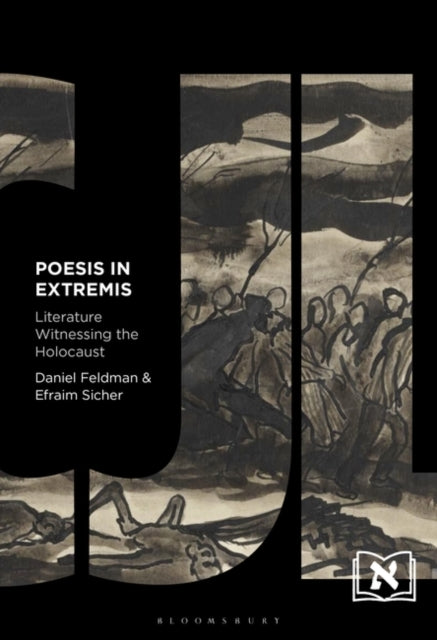
Poesis in Extremis explores the blurred boundary of fact and fiction in Holocaust literature, asking whether there is a poetics of the Holocaust and what might be the criteria for literary witnessing. It tests the limits of "poesis in extremis" when poets faced their own annihilation and wrote in the hope that their words would reach readers.
Format: Hardback
Length: 272 pages
Publication date: 08 February 2024
Publisher: Bloomsbury Publishing USA
Genocide can be witnessed through imaginative literature in a variety of ways. One approach is to read the work of major figures such as Elie Wiesel, Paul Celan, Avrom Sutzkever, Ida Fink, Wladyslaw Szlengel, Itzhak Katzenelson, and Czeslaw Milosz, who have written about the Holocaust in their own unique ways. These writers offer a poetics of the Holocaust, which explores the blurred boundary of fact and fiction in Holocaust literature. They also raise questions about what might be the criteria for literary witnessing.
One of the most significant works in this field is Elie Wiesel's literary memoir Night, which is often considered a classic of Holocaust literature. Night tells the story of Wiesel's experiences as a Jewish boy during the Holocaust, and it is written in a very personal and emotional style. Wiesel's memoir has been translated into many languages and has been read by millions of people around the world.
Another important work is Paul Celan's poetry. Celan was a German-Jewish poet who was killed in a concentration camp during the Holocaust. His poetry is characterized by its intense emotionality and its use of language to convey the horrors of the Holocaust. Celan's poetry has been translated into many languages and has been studied by scholars and poets alike.
Avrom Sutzkever was a Yiddish poet who was also killed in a concentration camp during the Holocaust. His poetry is characterized by its use of language to convey the beauty of the Jewish culture and the tragedy of the Holocaust. Sutzkever's poetry has been translated into many languages and has been studied by scholars and poets alike.
Ida Fink was a Polish poet who was also killed in a concentration camp during the Holocaust. Her poetry is characterized by its use of language to convey the pain and suffering of the Holocaust. Fink's poetry has been translated into many languages and has been studied by scholars and poets alike.
Wladyslaw Szlengel was a Polish poet who was also killed in a concentration camp during the Holocaust. His poetry is characterized by its use of language to convey the horror of the Holocaust. Szlengel's poetry has been translated into many languages and has been studied by scholars and poets alike.
Itzhak Katzenelson was a Polish poet who was also killed in a concentration camp during the Holocaust. His poetry is characterized by its use of language to convey the hope and resilience of the Jewish people. Katzenelson's poetry has been translated into many languages and has been studied by scholars and poets alike.
Czeslaw Milosz was a Polish poet who was also killed in a concentration camp during the Holocaust. His poetry is characterized by its use of language to convey the beauty of the natural world and the tragedy of the Holocaust. Milosz's poetry has been translated into many languages and has been studied by scholars and poets alike.
Reading the work of these major figures can help readers to understand the Holocaust in a deeper and more personal way. It can also help readers to develop a sense of empathy and compassion for the victims of the Holocaust.
However, reading the work of these major figures can also be difficult and challenging. Many of these writers experienced extreme trauma and suffering during the Holocaust, and their writing can be difficult to read. It can also be difficult to understand the language and the cultural context of their writing.
To help readers to understand the Holocaust in a deeper and more personal way, there are many resources available. These resources include museums, memorials, and educational programs. Museums can provide visitors with a visual and interactive experience of the Holocaust, while memorials can provide a place for people to remember and honor the victims of the Holocaust. Educational programs can provide students with a comprehensive understanding of the Holocaust and its historical context.
In addition to reading the work of major figures, there are also many other ways to witness genocide through imaginative literature. For example, some writers have used fiction to explore the experiences of survivors of genocide. For example, Chimamanda Ngozi Adichie's novel Half of a Yellow Sun tells the story of a Nigerian family who is caught up in the Biafran War, which resulted in the deaths of millions of people.
Another way to witness genocide through imaginative literature is to read works that explore the impact of genocide on the broader society. For example, Toni Morrison's novel Beloved tells the story of a former slave who is haunted by the memory of her child's death. Morrison's novel explores the impact of slavery and racism on American society and the legacy of the Holocaust.
Finally, there are many other ways to witness genocide through imaginative literature. For example, some writers have used poetry to express their feelings about the Holocaust. For example, Maya Angelou's poem "On the Pulse of Morning" was read at the inauguration of President Barack Obama in 2009. Angelou's poem expresses her hope for a better future for all people and her anger at the injustices of the past.
In conclusion, genocide can be witnessed through imaginative literature in a variety of ways. Reading the work of major figures such as Elie Wiesel, Paul Celan, Avrom Sutzkever, Ida Fink, Wladyslaw Szlengel, Itzhak Katzenelson, and Czeslaw Milosz can help readers to understand the Holocaust in a deeper and more personal way. However, reading the work of these major figures can also be difficult and challenging. To help readers to understand the Holocaust in a deeper and more personal way, there are many resources available, including museums, memorials, and educational programs. In addition to reading the work of major figures, there are also many other ways to witness genocide through imaginative literature, such as reading works that explore the impact of genocide on the broader society, reading works that explore the experiences of survivors of genocide, and reading works that use poetry to express their feelings about the Holocaust.
Weight: 532g
Dimension: 236 x 160 x 22 (mm)
ISBN-13: 9798765100189
This item can be found in:
UK and International shipping information
UK and International shipping information
UK Delivery and returns information:
- Delivery within 2 - 3 days when ordering in the UK.
- Shipping fee for UK customers from £2.39. Fully tracked shipping service available.
- Returns policy: Return within 30 days of receipt for full refund.
International deliveries:
Shulph Ink now ships to Australia, Belgium, Canada, France, Germany, Ireland, Italy, India, Luxembourg Saudi Arabia, Singapore, Spain, Netherlands, New Zealand, United Arab Emirates, United States of America.
- Delivery times: within 5 - 10 days for international orders.
- Shipping fee: charges vary for overseas orders. Only tracked services are available for most international orders. Some countries have untracked shipping options.
- Customs charges: If ordering to addresses outside the United Kingdom, you may or may not incur additional customs and duties fees during local delivery.