Shulph Ink
Polarization and Political Party Factions in the 2020 Election
Polarization and Political Party Factions in the 2020 Election
💎 Earn 451 Points (£4.51) on this item.
We can order this item for you. Delivery usually takes about 4 to 6 weeks.
This item is not held in our immediate stock. We will order it for you after checkout.
Estimated delivery: About 4 to 6 weeks
- Condition: Brand new
- UK Delivery times: Usually arrives within 2 - 3 working days
- UK Shipping: Fee starts at £3.89. Subject to product weight & dimension
Bulk ordering. Want 15 or more copies? Get a personalised quote and bigger discounts. Learn more about bulk orders.
Couldn't load pickup availability
- More about Polarization and Political Party Factions in the 2020 Election
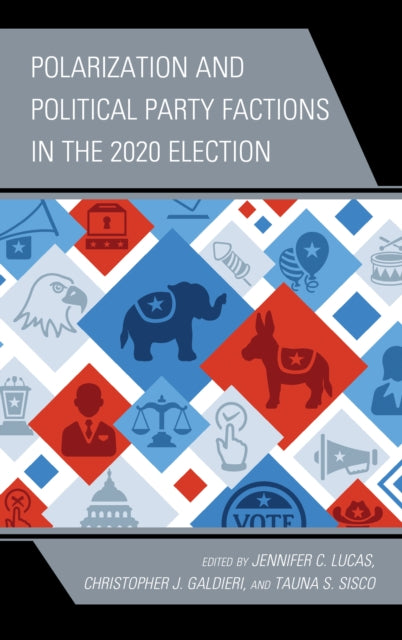
The book explores the conflict between party polarization and party factionalism in the US, highlighting the impact of these forces on the 2020 election. It argues that while polarization has led to stronger and more cohesive parties, it has also caused deep internal divisions within both parties.
Format: Hardback
Length: 236 pages
Publication date: 15 April 2022
Publisher: Lexington Books
The conflict between two powerful forces in American politics has been the subject of much debate and analysis in recent years: party polarization and party factionalism. Over the past half-century, there has been a significant shift in the political landscape of the United States, with increased polarization leading to a new era of heightened inter-party competition. This has resulted in stronger and more cohesive political parties, as each party seeks to appeal to its base and gain an advantage in elections.
However, this increased polarization has also brought about deep internal divisions within both political parties. Elections, particularly primaries, often reveal these divisions, with moderate or establishment candidates pitted against progressive activists and candidates. In the 2020 election, this was particularly evident in the Democratic coalition, which often saw moderate or establishment candidates facing off against progressive activists and candidates.
On the other hand, the Republican Party in 2020 was also polarized, not only between moderates and conservatives but also between those willing to criticize President Trump and those who would not. This division was particularly evident in the Republican primary, where a number of candidates challenged Trump's leadership and his policies.
The outcome of the 2020 election was shaped by these two opposing forces in complex and multifaceted ways. On the one hand, party polarization and factionalism helped to strengthen the political parties and increase their support among their bases. This led to increased turnout in elections, particularly among voters who were highly engaged and motivated by their political beliefs.
On the other hand, these forces also contributed to increased political division and polarization, which can have negative consequences for the functioning of democracy. When political parties become increasingly divided, it can be difficult for them to compromise and work together to address important issues, which can lead to gridlock and a lack of progress on important issues.
Looking ahead, it is clear that party polarization and factionalism will continue to play a significant role in American politics. The question is how these forces will shape the future of American party politics and elections. Some experts suggest that these forces may lead to further political division and polarization, which could have negative consequences for the functioning of democracy. Others suggest that these forces may lead to increased collaboration and compromise between political parties, which could lead to more effective government and more responsive to the needs of the American people.
In conclusion, the conflict between party polarization and party factionalism has been a significant feature of American politics in recent years. While these forces have helped to strengthen political parties and increase their support among their bases, they have also contributed to increased political division and polarization. As we look ahead to the future, it is important to consider how these forces will shape the future of American party politics and elections and to work towards finding solutions that promote collaboration and compromise between political parties.
Weight: 544g
Dimension: 227 x 161 x 21 (mm)
ISBN-13: 9781666906981
UK and International shipping information
UK and International shipping information
We deliver throughout the United Kingdom and to 128 countries and territories worldwide, including the United States, Australia, Canada, Germany, Spain and France.