Nasir Mehmood
Political Conflict and Arms Control: Pakistan-India Policy Analysis 1988-2008
Political Conflict and Arms Control: Pakistan-India Policy Analysis 1988-2008
💎 Earn 504 Points (£5.04) on this item.
We can order this item for you. Delivery usually takes about 4 to 6 weeks.
This item is not held in our immediate stock. We will order it for you after checkout.
Estimated delivery: About 4 to 6 weeks
- Condition: Brand new
- UK Delivery times: Usually arrives within 2 - 3 working days
- UK Shipping: Fee starts at £2.39. Subject to product weight & dimension
Bulk ordering. Want 15 or more copies? Get a personalised quote and bigger discounts. Learn more about bulk orders.
Couldn't load pickup availability
- More about Political Conflict and Arms Control: Pakistan-India Policy Analysis 1988-2008
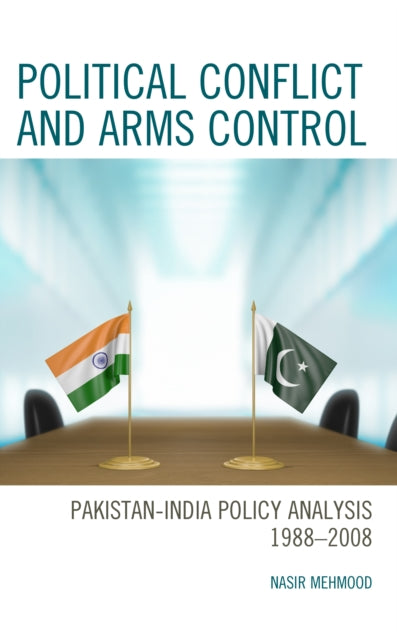
This book examines the evolution and development of arms control processes as an integral part of the Pakistan-India grand dialogue, prioritizing four types of political conflicts and their connection and function in restricting arms control. It offers critical theoretical and policy insights into security studies and international relations theory, with a focus on the strategic horizon of South Asia.
Format: Hardback
Length: 290 pages
Publication date: 15 April 2023
Publisher: Lexington Books
This book provides a comprehensive analysis of the evolution and development of arms control processes as an integral part of the Pakistan-India grand dialogue, which took place from 1988 to 2008. It examines the larger political context and its impact on arms control processes. Nasir Mehmood prioritizes four types of political conflicts: Jammu and Kashmir, hostile domestic politics, dissimilar military doctrines, and China as a third party. Mehmood determines their connection and function in restricting arms control during three major rounds of broader security dialogue between Pakistan and India (1988-1994, 1997-1999, and 2004-2008). Through these major rounds of dialogue, there are patterns of interaction within and across three sub-cases. This volume, which offers a systematic survey of bilateral arms control processes within the local settings and includes critical theoretical and policy insights, will be of interest to students and scholars interested in security studies and international relations theory, with a focus on the strategic horizon of South Asia.
Introduction:
The Pakistan-India grand dialogue, which took place from 1988 to 2008, was a significant attempt to address the complex and multifaceted issues that have plagued the relationship between these two nuclear-armed nations. Arms control was a crucial component of this dialogue, as it sought to mitigate the risks of conflict and promote stability in the region. This book provides a comprehensive analysis of the evolution and development of arms control processes as an integral part of the Pakistan-India grand dialogue.
Political Context:
The Pakistan-India grand dialogue was held in the backdrop of a complex and multifaceted political context. The two nations have been engaged in a territorial dispute over Jammu and Kashmir since the partition of India in 1947. This dispute has been a major source of tension and conflict between the two countries, and it has played a significant role in shaping their arms control policies.
In addition to the Jammu and Kashmir dispute, the grand dialogue was also influenced by the broader political context of South Asia. The region is characterized by a complex web of regional and international relations, including the rivalry between India and Pakistan, the influence of the United States and China, and the regional security concerns of countries such as Afghanistan, Iran, and Russia.
Arms Control Processes:
The Pakistan-India grand dialogue focused on four types of political conflicts: Jammu and Kashmir, hostile domestic politics, dissimilar military doctrines, and China as a third party. These conflicts were seen as key drivers of instability and conflict in the region, and they had a significant impact on arms control processes.
Jammu and Kashmir was the primary focus of the arms control dialogue. The two nations have been engaged in a protracted conflict over the territory, which has claimed the lives of thousands of people and has been a major source of tension between the two countries. The dialogue aimed to find a peaceful resolution to the dispute and to promote stability in the region.
Hostile domestic politics was another key factor in the arms control dialogue. The two nations have been plagued by political instability and internal conflicts, which have had a negative impact on their ability to engage in arms control negotiations. The dialogue aimed to address these political issues and promote stability in the region.
Dissimilar military doctrines were also a significant factor in the arms control dialogue. The two nations have different military doctrines and strategies, which have led to tensions and conflicts in the region. The dialogue aimed to promote mutual understanding and reduce the risk of conflict.
China as a third party was also a significant factor in the arms control dialogue. The two nations have a complex relationship with China, which has been a source of tension and conflict in the region. The dialogue aimed to promote stability and reduce the risk of conflict in the region by engaging China in the arms control process.
Patterns of Interaction:
The Pakistan-India grand dialogue took place in three major rounds: 1988-1994, 1997-1999, and 2004-2008. Each round of dialogue was characterized by different patterns of interaction within and across the three sub-cases.
In the first round of dialogue, the two nations focused on the Jammu and Kashmir dispute. The dialogue was marked by a lack of progress and a lack of trust between the two sides. However, the dialogue did provide an opportunity for the two nations to engage in dialogue and to build some level of trust.
In the second round of dialogue, the two nations focused on hostile domestic politics. The dialogue was marked by a greater level of trust and cooperation between the two sides. The two nations agreed to promote stability in the region by addressing political issues and promoting dialogue.
In the third round of dialogue, the two nations focused on dissimilar military doctrines. The dialogue was marked by a greater level of trust and cooperation between the two sides. The two nations agreed to promote stability in the region by reducing the risk of conflict and promoting mutual understanding.
Conclusion:
The Pakistan-India grand dialogue was a significant attempt to address the complex and multifaceted issues that have plagued the relationship between these two nuclear-armed nations. Arms control was a crucial component of this dialogue, as it sought to mitigate the risks of conflict and promote stability in the region. This book provides a comprehensive analysis of the evolution and development of arms control processes as an integral part of the Pakistan-India grand dialogue. The dialogue was characterized by different patterns of interaction within and across the three sub-cases, and it was marked by a lack of progress and a lack of trust between the two sides. However, the dialogue did provide an opportunity for the two nations to engage in dialogue and to build some level of trust. The book concludes that the Pakistan-India grand dialogue was a significant step towards promoting stability and reducing the risk of conflict in the region. However, there is still a long way to go before the two nations can fully resolve their disputes and promote stability in the region.
Dimension: 229 x 152 (mm)
ISBN-13: 9781666906561
UK and International shipping information
UK and International shipping information
UK Delivery and returns information:
- Delivery within 2 - 3 days when ordering in the UK.
- Shipping fee for UK customers from £2.39. Fully tracked shipping service available.
- Returns policy: Return within 30 days of receipt for full refund.
International deliveries:
Shulph Ink now ships to Australia, Belgium, Canada, France, Germany, Ireland, Italy, India, Luxembourg Saudi Arabia, Singapore, Spain, Netherlands, New Zealand, United Arab Emirates, United States of America.
- Delivery times: within 5 - 10 days for international orders.
- Shipping fee: charges vary for overseas orders. Only tracked services are available for most international orders. Some countries have untracked shipping options.
- Customs charges: If ordering to addresses outside the United Kingdom, you may or may not incur additional customs and duties fees during local delivery.