Shulph Ink
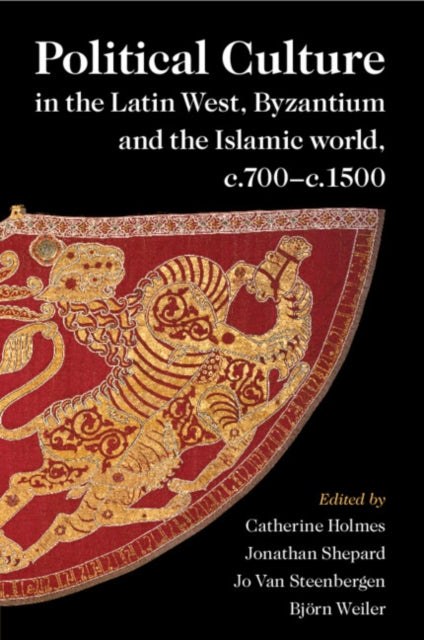
Political Culture in the Latin West, Byzantium and the Islamic World, c.700-c.1500: A Framework for Comparing Three Spheres
Political Culture in the Latin West, Byzantium and the Islamic World, c.700-c.1500: A Framework for Comparing Three Spheres
💎 Earn 127 Points (£1.27) on this item.
We can order this item for you. Delivery usually takes about 4 to 6 weeks.
This item is not held in our immediate stock. We will order it for you after checkout.
Estimated delivery: About 4 to 6 weeks
YOU SAVE £1.51
- Condition: Brand new
- UK Delivery times: Usually arrives within 2 - 3 working days
- UK Shipping: Fee starts at £3.89. Subject to product weight & dimension
Bulk ordering. Want 15 or more copies? Get a personalised quote and bigger discounts. Learn more about bulk orders.
Couldn't load pickup availability
- More about Political Culture in the Latin West, Byzantium and the Islamic World, c.700-c.1500: A Framework for Comparing Three Spheres
This comparative study explores three key cultural and political spheres - the Latin West, Byzantium, and the Islamic world - from the emergence of Islam to the fall of Constantinople. It focuses on power dynamics, resource allocation, legitimization of power, and rulers' interactions with local elites and societies.
Format: Paperback / softback
Length: 592 pages
Publication date: 02 November 2023
Publisher: Cambridge University Press
This comprehensive comparative study delves into three pivotal cultural and political realms, namely the Latin West, Byzantium, and the Islamic world spanning from Central Asia to the Atlantic. These spheres, while sharing a common heritage of late antique Mediterranean culture, philosophy, and science, exhibited distinct variations in terms of political and spiritual power dynamics. The book specifically focuses on exploring the intricate power relationships among ruling elites, the legitimization of power and property through religious institutions, and the interactions between rulers and local elites and societies. By providing detailed route maps for navigating each sphere and offering a foundational understanding of its political culture, this set of parallel studies serves as a timely and invaluable framework for comparing the societies surrounding the medieval Mediterranean.
The Latin West, Byzantium, and the Islamic world emerged as significant cultural and political entities during the period spanning from the emergence of Islam to the fall of Constantinople. These spheres, while sharing a common heritage of late antique Mediterranean culture, philosophy, and science, exhibited distinct variations in terms of political and spiritual power dynamics. The Latin West, characterized by its Christian faith and Roman imperial tradition, exerted its power through centralized governance and the establishment of a bureaucratic system. The Roman Catholic Church played a central role in legitimizing political authority and maintaining social order. The Latin West also witnessed the development of feudalism, where land was owned and controlled by noble families, and the rise of cities and trade networks.
Byzantium, on the other hand, emerged as a powerful empire centered in Constantinople, which had been the capital of the Roman Empire for centuries. The Byzantines embraced Orthodox Christianity and maintained a complex system of governance that blended imperial, aristocratic, and religious authority. The empire was known for its artistic and cultural achievements, including the development of Byzantine art, architecture, and literature. Byzantium also maintained close relations with the Middle East and Europe, particularly through trade and diplomacy.
The Islamic world, spanning from Central Asia to the Atlantic, was characterized by the spread of Islam and the establishment of caliphates. The Islamic world was diverse, with different regions and cultures adopting the Islamic faith and adapting it to their own customs and traditions. The caliphates were governed by Islamic law, known as Sharia, and were characterized by the rule of the Muslim ruler, known as the caliph. The Islamic world also witnessed the development of scientific and philosophical traditions, such as al-Quran and al-Hadith, which contributed to the growth of knowledge and innovation.
Despite these differences, the Latin West, Byzantium, and the Islamic world shared several common features. They all had a shared pool of late antique Mediterranean culture, philosophy, and science, which influenced their intellectual and artistic development. They also had monotheistic and historical antecedents in common, with Christianity, Judaism, and Islam all tracing their roots back to the Abrahamic religions. Additionally, all three spheres were characterized by the presence of ruling elites who exercised power and influence over their respective societies.
However, the distribution of political and spiritual power within these spheres varied significantly. In the Latin West, the power was centralized in the hands of the emperor or king, who held absolute authority over their subjects. The Roman Catholic Church, as the dominant religious institution, played a crucial role in legitimizing political power and maintaining social order. The feudal system, which emerged in the Latin West, also contributed to the concentration of power in the hands of the noble families.
In Byzantium, power was more decentralized, with the emperor or king sharing authority with the aristocracy and the church. The Byzantine Empire was known for its complex system of governance, which blended imperial, aristocratic, and religious authority. The Orthodox Christian Church played a central role in legitimizing political power and maintaining social order, while the empire's military strength and strategic alliances also contributed to its stability.
In the Islamic world, power was primarily exercised by the caliph or Muslim ruler, who held absolute authority over their subjects. The caliphs were elected by the Muslim community and were responsible for the implementation of Islamic law, known as Sharia. The Islamic world was characterized by the rule of the Muslim ruler, known as the caliph. The Islamic world also witnessed the development of scientific and philosophical traditions, such as al-Quran and al-Hadith, which contributed to the growth of knowledge and innovation.
Despite these differences, the Latin West, Byzantium, and the Islamic world also had similarities in terms of their interactions with local elites and societies. All three spheres were characterized by the presence of complex social structures and hierarch. The ruling elites in each sphere interacted with local elites and societies through a variety of channels, including diplomacy, trade, and patronage. The Latin West, for example, maintained close relations with the barbarian tribes and kingdoms that it conquered, while Byzantium maintained close relations with the Middle East and Europe through trade and diplomacy. The Islamic world, on the other hand, was characterized by the development of a diverse range of social classes and cultures, with the ruling elites interacting with local elites and societies through a variety of channels, including religious institutions, military conquest, and patronage.
In conclusion, this comparative study explores three key cultural and political spheres, namely the Latin West, Byzantium, and the Islamic world, from Central Asia to the Atlantic. These spheres, while sharing a common heritage of late antique Mediterranean culture, philosophy, and science, exhibited distinct variations in terms of political and spiritual power dynamics. The book focuses on exploring the intricate power relationships among ruling elites, the legitimization of power and property through religious institutions, and the interactions between rulers and local elites and societies. By providing detailed route maps for navigating each sphere and offering a foundational understanding of its political culture, this set of parallel studies serves as a timely and invaluable framework for comparing the societies surrounding the medieval Mediterranean.
ISBN-13: 9781009011136
UK and International shipping information
UK and International shipping information
We deliver throughout the United Kingdom and to 128 countries and territories worldwide, including the United States, Australia, Canada, Germany, Spain and France.