J. Russell Perkin
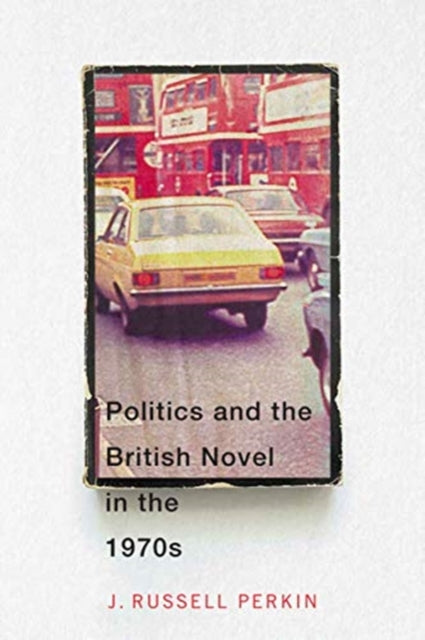
Politics and the British Novel in the 1970s
Politics and the British Novel in the 1970s
💎 Earn 119 Points (£1.19) on this item.
We can order this item for you. Delivery usually takes about 4 to 6 weeks.
This item is not held in our immediate stock. We will order it for you after checkout.
Estimated delivery: About 4 to 6 weeks
YOU SAVE £5.05
- Condition: Brand new
- UK Delivery times: Usually arrives within 2 - 3 working days
- UK Shipping: Fee starts at £3.89. Subject to product weight & dimension
Bulk ordering. Want 15 or more copies? Get a personalised quote and bigger discounts. Learn more about bulk orders.
Couldn't load pickup availability
- More about Politics and the British Novel in the 1970s
The 1970s in Britain saw industrial disputes,a referendum on membership in the European Economic Community,conflict about immigration and citizenship,and emergent environmental and feminist movements. It was also a decade of innovation in the novel,and novelists often addressed the state of the nation directly in their works. Russell Perkin's book explores social novels by John Fowles and Margaret Drabble, Cold War thrillers by John le Carré, Watership Down by Richard Adams, popular campus novels by Malcolm Bradbury and David Lodge, Doris Lessing's dystopian visions, and V.S. Naipaul's explorations of post-colonial displacement. These works sold in large numbers and have enjoyed enduring success, testament to the power of the political novel to explain a nation to itself.
Format: Paperback / softback
Length: 304 pages
Publication date: 15 June 2021
Publisher: McGill-Queen's University Press
The 1970s in Britain were a tumultuous and transformative decade marked by a series of industrial disputes, a referendum on membership in the European Economic Community, intense debates about immigration and citizenship, and the emergence of environmental and feminist movements. It was also a time of remarkable innovation in the novel, with writers taking bold steps to address the state of the nation directly in their works.
In the realm of politics, the 1970s were a period of significant upheaval. Britain faced a series of industrial disputes, including strikes by coal miners, rail workers, and factory workers, which highlighted the growing divide between the rich and the poor and the challenges faced by workers in the industrial sector. The decade also saw the rise of the Conservative Party under Margaret Thatcher, who implemented policies such as monetarism, deregulation, and privatization that had a profound impact on the country's economy and society.
In addition to political developments, the 1970s were a time of great social change. The feminist movement gained momentum, with women challenging traditional gender roles and advocating for equal rights and opportunities. Environmental concerns also emerged, with the publication of Rachel Carson's seminal book Silent Spring, which raised awareness about the harmful effects of pollution and environmental degradation.
The novel was a powerful medium for exploring these social and political themes, and the 1970s saw a flourishing of political fiction. John Fowles' novel The French Lieutenant's Woman, for example, explored the complexities of sexuality and gender roles in a post-World War II society. Margaret Drabble's novel The Road to Wellville explored the social and economic pressures faced by women in the 1920s.
John le Carré's Cold War thrillers, such as The Spy Who Came in from the Cold and Tinker, Tailor, Soldier, Spy, were also highly influential. These works depicted the tensions and complexities of the Cold War era, with characters caught up in espionage and political intrigue. Richard Adams' best-selling fable Watership Down explored the themes of survival, loyalty, and the nature of power in a society of rabbits.
Malcolm Bradbury and David Lodge's popular campus novels, such as The History Man and The Bedazzled, depicted the lives of students and faculty in the 1960s and 1970s, exploring themes of social change, rebellion, and the search for identity. Doris Lessing's dystopian visions, such as The Handmaid's Tale and The Children of Men, depicted societies in which women were subjugated and men held all the power.
V.S. Naipaul's explorations of post-colonial displacement, such as A House for Mr. Biswas and A Bend in the River, were also notable. These works examined the effects of colonization on the lives of individuals and communities, highlighting the complexities of cultural identity and the challenges of transitioning from colonial to post-colonial societies.
In conclusion, the 1970s in Britain were a period of intense political, social, and cultural activity. The novel was a powerful medium for exploring these themes, with writers taking bold steps to address the state of the nation directly in their works. The decade saw a flourishing of political fiction, with works by John Fowles, Margaret Drabble, John le Carré, Richard Adams, Malcolm Bradbury, David Lodge, Doris Lessing, and V.S. Naipaul exploring the complexities of the age. These highly regarded works sold in large numbers and have enjoyed enduring success, a testament to the power of the political novel to explain a nation to itself.
Weight: 524g
Dimension: 153 x 229 x 24 (mm)
ISBN-13: 9780228006244
UK and International shipping information
UK and International shipping information
We deliver throughout the United Kingdom and to 128 countries and territories worldwide, including the United States, Australia, Canada, Germany, Spain and France.