Shulph Ink
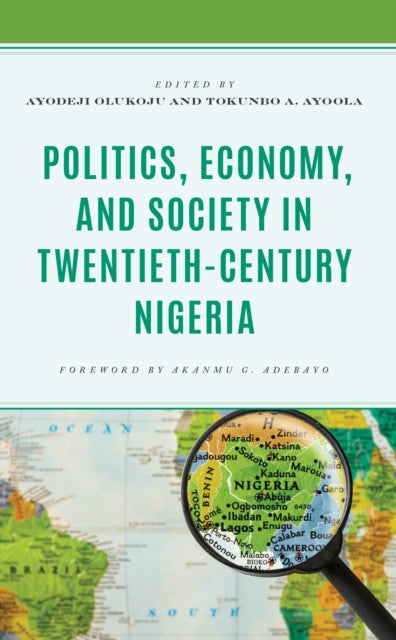
Politics, Economy, and Society in Twentieth-Century Nigeria
Politics, Economy, and Society in Twentieth-Century Nigeria
💎 Earn 504 Points (£5.04) on this item.
We can order this item for you. Delivery usually takes about 4 to 6 weeks.
This item is not held in our immediate stock. We will order it for you after checkout.
Estimated delivery: About 4 to 6 weeks
- Condition: Brand new
- UK Delivery times: Usually arrives within 2 - 3 working days
- UK Shipping: Fee starts at £2.39. Subject to product weight & dimension
Bulk ordering. Want 15 or more copies? Get a personalised quote and bigger discounts. Learn more about bulk orders.
Couldn't load pickup availability
- More about Politics, Economy, and Society in Twentieth-Century Nigeria
Politics, Economy, and Society in Twentieth-Century Nigeria explores key social, political, and economic issues in Nigeria since the colonial period, providing a panoramic view of diversity and engaging with pioneering scholarship in railway and social history. It highlights contemporary challenges such as poverty, unemployment, leadership and governance deficit, entrepreneurship, urbanization, and the underdevelopment of the agricultural and transport systems. Understanding the past helps to develop appropriate policies for contemporary challenges.
Format: Hardback
Length: 346 pages
Publication date: 15 October 2023
Publisher: Lexington Books
Politics, Economy, and Society in Twentieth-Century Nigeria, by Ayodeji Olukoju and Tokunbo A. Ayoola, is a comprehensive examination of key social, political, and economic issues in Nigeria since the colonial period. This book brings together writings on colonial, postcolonial, and contemporary history of Nigeria, providing a panoramic view of diversity, bridging gaps in Nigerian history, and engaging with pioneering scholarship in railway and social history in Nigeria by James Olawale Oyemakinde. The themes and perspectives discussed throughout this collection include contemporary challenges of poverty, unemployment, leadership and governance deficit, entrepreneurship, urbanization, and the underdevelopment of the agricultural and transport systems. Politics, Economy, and Society in Twentieth-Century Nigeria demonstrates that understanding the past helps to develop appropriate policies for contemporary challenges. As highlighted in this volume, it is important to appreciate the significance of context in historical explanation and in the application and adaptation of ideas across space and time.
The book begins with a historical overview of Nigeria's colonial period, which lasted from 1861 to 1960. This period was marked by the exploitation of Nigeria's natural resources by the British Empire, which led to the development of a colonial economy. The book then explores the postcolonial period, which began in 1960 and lasted until 1999. During this period, Nigeria experienced a period of political instability, economic growth, and social change. The book also examines the contemporary period, which began in 1999 and continues to the present. During this period, Nigeria has faced a number of challenges, including poverty, unemployment, leadership and governance deficit, entrepreneurship, urbanization, and the underdevelopment of the agricultural and transport systems.
One of the key themes of the book is the impact of colonialism on Nigeria's social, political, and economic development. The book argues that colonialism had a profound impact on Nigeria's society, leading to the development of a hierarchical and unequal society. The book also explores the ways in which colonialism has been resisted and challenged, including through the development of a nationalist movement and the struggle for independence.
Another key theme of the book is the impact of postcolonialism on Nigeria's social, political, and economic development. The book argues that postcolonialism has had a significant impact on Nigeria's society, leading to the development of a more democratic and inclusive society. The book also explores the ways in which postcolonialism has been resisted and challenged, including through the development of a civil society movement and the struggle for social justice.
The book also examines the role of leadership and governance in Nigeria's social, political, and economic development. The book argues that leadership and governance have been critical to Nigeria's development, but that they have been plagued by a number of challenges, including corruption, inefficiency, and lack of accountability. The book also explores the ways in which leadership and governance can be improved, including through the development of a more democratic and inclusive political system and the implementation of effective policies.
The book also examines the role of entrepreneurship in Nigeria's social, political, and economic development. The book argues that entrepreneurship has been critical to Nigeria's development, but that it has been plagued by a number of challenges, including lack of access to capital, lack of infrastructure, and lack of support from the government. The book also explores the ways in which entrepreneurship can be improved, including through the development of a more supportive business environment and the implementation of effective policies.
The book also examines the role of urbanization in Nigeria's social, political, and economic development. The book argues that urbanization has been critical to Nigeria's development, but that it has been plagued by a number of challenges, including overcrowding, poverty, and environmental degradation. The book also explores the ways in which urbanization can be improved, including through the development of more affordable housing, the improvement of public transportation, and the implementation of effective policies.
The book also examines the role of the agricultural and transport systems in Nigeria's social, political, and economic development. The book argues that the agricultural and transport systems have been critical to Nigeria's development, but that they have been plagued by a number of challenges, including poor infrastructure, low productivity, and lack of access to markets. The book also explores the ways in which the agricultural and transport systems can be improved, including through the development of more efficient infrastructure, the implementation of effective policies, and the promotion of sustainable agriculture.
In conclusion, Politics, Economy, and Society in Twentieth-Century Nigeria is a comprehensive examination of key social, political, and economic issues in Nigeria since the colonial period. The book brings together writings on colonial, postcolonial, and contemporary history of Nigeria, providing a panoramic view of diversity, bridging gaps in Nigerian history, and engaging with pioneering scholarship in railway and social history in Nigeria by James Olawale Oyemakinde. The themes and perspectives discussed throughout this collection include contemporary challenges of poverty, unemployment, leadership and governance deficit, entrepreneurship, urbanization, and the underdevelopment of the agricultural and transport systems. Politics, Economy, and Society in Twentieth-Century Nigeria demonstrates that understanding the past helps to develop appropriate policies for contemporary challenges. As highlighted in this volume, it is important to appreciate the significance of context in historical explanation and in the application and adaptation of ideas across space and time.
Dimension: 229 x 152 (mm)
ISBN-13: 9781666929966
UK and International shipping information
UK and International shipping information
UK Delivery and returns information:
- Delivery within 2 - 3 days when ordering in the UK.
- Shipping fee for UK customers from £2.39. Fully tracked shipping service available.
- Returns policy: Return within 30 days of receipt for full refund.
International deliveries:
Shulph Ink now ships to Australia, Belgium, Canada, France, Germany, Ireland, Italy, India, Luxembourg Saudi Arabia, Singapore, Spain, Netherlands, New Zealand, United Arab Emirates, United States of America.
- Delivery times: within 5 - 10 days for international orders.
- Shipping fee: charges vary for overseas orders. Only tracked services are available for most international orders. Some countries have untracked shipping options.
- Customs charges: If ordering to addresses outside the United Kingdom, you may or may not incur additional customs and duties fees during local delivery.