Jason Miller
Politics of Perception and the Aesthetics of Social Change
Politics of Perception and the Aesthetics of Social Change
💎 Earn 101 Points (£1.01) on this item.
YOU SAVE £4.77
- Condition: Brand new
- UK Delivery times: Usually arrives within 2 - 3 working days
- UK Shipping: Fee starts at £2.39. Subject to product weight & dimension
Bulk ordering. Want 15 or more copies? Get a personalised quote and bigger discounts. Learn more about bulk orders.
Couldn't load pickup availability
- More about Politics of Perception and the Aesthetics of Social Change
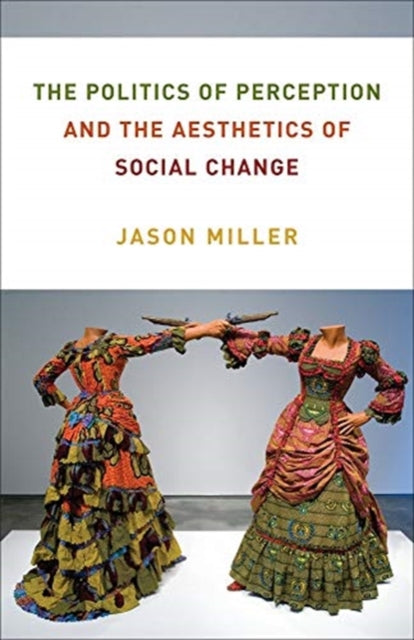
In recent decades, there has been a shift in emphasis on representation of identity in politics and art. Jason Miller argues that the aesthetic and political value of art is found in the reflexive self-awareness that artistic representation enables. He offers a timely response to questions such as how contemporary arts politics of perception contest liberal notions of deliberative politics, how the cultural identity of the artist relates to the representations of cultural identity in their work, and how we understand and evaluate identity-based art aesthetically.
Format: Paperback / softback
Length: 288 pages
Publication date: 31 August 2021
Publisher: Columbia University Press
In recent decades, a significant shift has occurred in the emphasis placed on identity representation in politics and art. The liberal ideals of universality and individuality have given way to a growing concern with the visibility and recognition of underrepresented groups. Modernist and postmodernist celebrations of disruption and subversion have faced challenges from the perspective that representation plays a crucial role in social change. Despite this convergence, political and aesthetic theory have paid limited attention to the increasingly central role of art in debates and struggles over cultural identity in the public sphere.
Jason Miller, in his book "Contesting Perception: Art and Politics in the Age of Identity," seeks to bridge the gap between Hegelian aesthetics and contemporary cultural politics. He argues that the aesthetic and political value of art lies in the reflexive self-awareness that artistic representation enables. By engaging with identity-based art, audiences are invited to consider their own perspectives and experiences in relation to those of others, potentially quite different or even inaccessible from their own.
One of the key insights of Miller's book is that contemporary arts politics of perception challenge liberal notions of deliberative politics. He suggests that identity-based art encourages its audiences to engage with complex and multifaceted issues, rather than relying on simplistic narratives or ideological positions. This calls for a more nuanced and empathetic understanding of different cultures and identities.
Furthermore, Miller explores the relationship between the cultural identity of the artist and the representations of cultural identity in their work. He argues that artists often use their work as a means to express and explore their own identities, as well as to challenge dominant narratives and stereotypes. Identity-based art, therefore, serves as a tool for self-reflection and social critique.
In evaluating identity-based art aesthetically, Miller offers a new conceptual framework that emphasizes the role of perception and interpretation. He suggests that identity-based art can be understood as a form of dialogue that engages with its audience on multiple levels. By challenging our assumptions and perceptions, art can create spaces for empathy, understanding, and social change.
Through a comprehensive discussion of a wide range of works of art and popular culture, Miller develops a rich and nuanced understanding of the role of art in shaping cultural identity. From classical plays like "Antigone" to contemporary films like "Do the Right Thing" and "The Wire," he demonstrates how art can be used to explore complex issues of race, gender, sexuality, and power.
In conclusion, "Contesting Perception: Art and Politics in the Age of Identity" by Jason Miller is a thought-provoking and insightful book that offers a fresh perspective on the relationship between art, politics, and cultural identity. By connecting Hegelian aesthetics with contemporary cultural politics, Miller provides a valuable contribution to the ongoing debate about the role of art in shaping our understanding of the world. His book challenges our assumptions and perceptions, encourages empathy and understanding, and provides a conceptual framework for evaluating identity-based art aesthetically.
Weight: 350g
Dimension: 140 x 215 x 18 (mm)
ISBN-13: 9780231201438
This item can be found in:
UK and International shipping information
UK and International shipping information
UK Delivery and returns information:
- Delivery within 2 - 3 days when ordering in the UK.
- Shipping fee for UK customers from £2.39. Fully tracked shipping service available.
- Returns policy: Return within 30 days of receipt for full refund.
International deliveries:
Shulph Ink now ships to Australia, Belgium, Canada, France, Germany, Ireland, Italy, India, Luxembourg Saudi Arabia, Singapore, Spain, Netherlands, New Zealand, United Arab Emirates, United States of America.
- Delivery times: within 5 - 10 days for international orders.
- Shipping fee: charges vary for overseas orders. Only tracked services are available for most international orders. Some countries have untracked shipping options.
- Customs charges: If ordering to addresses outside the United Kingdom, you may or may not incur additional customs and duties fees during local delivery.