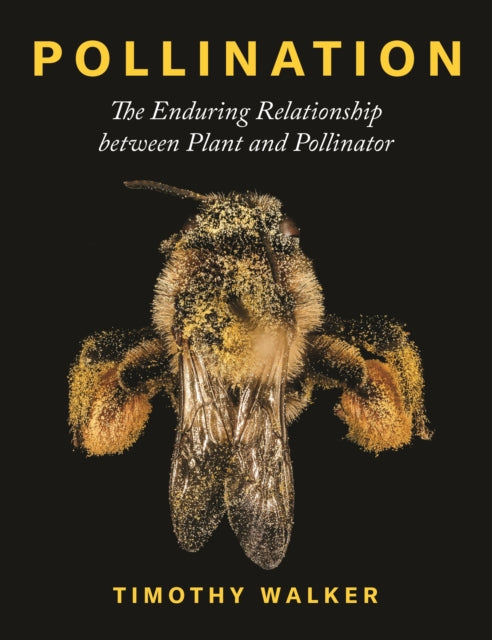
Pollination Timothy Walker
Pollination: The Enduring Relationship between Plant and Pollinator
Pollination: The Enduring Relationship between Plant and Pollinator
💎 Earn 100 Points (£1.00) on this item.
YOU SAVE £4.94
- Condition: Brand new
- UK Delivery times: Usually arrives within 2 - 3 working days
- UK Shipping: Fee starts at £2.39. Subject to product weight & dimension
Bulk ordering. Want 15 or more copies? Get a personalised quote and bigger discounts. Learn more about bulk orders.
Couldn't load pickup availability
- More about Pollination: The Enduring Relationship between Plant and Pollinator
Pollination is essential for the survival of most plants on Earth, and this book provides an unprecedented look at the wonders of pollination biology. It explores the many different tactics of plant reproduction, how plants entice pollinators using scents, colors, and shapes, and the important role of pollination in ecology, evolution, and agriculture.
Format: Hardback
Length: 224 pages
Publication date: 06 October 2020
Publisher: Princeton University Press
Pollination is a remarkable natural phenomenon that plays a crucial role in the survival of most plants on Earth. It involves the transfer of pollen from the male reproductive organ (anther) to the female reproductive organ (stigma) of a flower, which is necessary for the fertilization of seeds and the production of new plants. There are various mechanisms by which pollination occurs, and each plant species has its own unique reproductive strategy.
Wind pollination is one of the most common methods of pollination. When wind blows, pollen grains from the anthers of flowers are carried long distances, often over large bodies of water. This allows plants to reproduce across vast distances, expanding their range and increasing their chances of survival. Some plants, such as coconut palms and bamboo, have specialized structures called "pollination cones" that release pollen in large quantities when the wind blows.
Another method of pollination is insect pollination. Insects such as bees, butterflies, and beetles are attracted to flowers by their colors, scents, and shapes. They visit the flowers to collect nectar and pollen, which they then carry back to their hives or nests. This allows plants to reproduce and spread their seeds to new locations. Insect pollination is particularly important for crops such as fruits, vegetables, and nuts, as it ensures a high yield and quality of produce.
Bird pollination is another important method of pollination. Many birds, such as hummingbirds and birds of paradise, are attracted to flowers by their colors and scents. They visit the flowers to collect nectar and pollen, which they then carry back to their nests. This allows plants to reproduce and spread their seeds to new locations, particularly in areas where insects are not present.
Bat pollination is a unique method of pollination that occurs in certain plants, such as night-blooming flowers. Bats are attracted to the flowers by their sweet scent and fly to them at night to collect nectar and pollen. This allows the flowers to reproduce and spread their seeds before the bats return to their roosts.
In addition to these methods, some plants rely on other animals, such as lizards and bats, to pollinate their flowers. These animals visit the flowers to collect nectar and pollen, which they then carry back to their nests or roosts. This allows the plants to reproduce and spread their seeds to new locations.
Pollination is essential for the health of ecosystems and the survival of many plant species. It allows plants to reproduce and spread their seeds, which in turn creates new habitats and supports a diverse range of wildlife. Pollination also plays a crucial role in the production of food and other agricultural products, as many crops rely on insect pollination to produce a high yield and quality of produce.
However, pollination is facing several threats, including habitat loss, climate change, and the use of pesticides and herbicides. These threats can have a significant impact on the health of ecosystems and the survival of plant species. Conservation efforts are therefore essential to protect pollinators and promote healthy ecosystems.
One of the most effective ways to protect pollinators is to create and maintain habitats that are suitable for them. This includes planting a variety of flowers and plants that provide nectar and pollen throughout the growing season, providing water sources for pollinators, and reducing the use of pesticides and herbicides. Habitat management can also help to protect pollinators from predators, such as birds and mammals.
In addition to habitat management, species recovery programs are also important for protecting pollinators. These programs aim to restore populations of endangered plant species that rely on pollinators for reproduction. By restoring these habitats and promoting the growth of these species, we can help to ensure the survival of pollinators and the health of ecosystems.
Another important aspect of conservation is public education and awareness. By raising awareness about the importance of pollination and the threats that it faces, we can encourage individuals and communities to take action to protect pollinators. This can include planting native plants in gardens and parks, reducing the use of pesticides and herbicides, and supporting local conservation organizations.
In conclusion, pollination is a remarkable natural phenomenon that plays a crucial role in the survival of most plants on Earth. It involves the transfer of pollen from the male reproductive organ to the female reproductive organ of a flower, which is necessary for the fertilization of seeds and the production of new plants. There are various mechanisms by which pollination occurs, and each plant species has its own unique reproductive strategy. Pollination is essential for the health of ecosystems and the survival of many plant species, and it is facing several threats. Conservation efforts are therefore essential to protect pollinators and promote healthy ecosystems. By creating and maintaining habitats that are suitable for pollinators, implementing species recovery programs, and raising public awareness, we can help to ensure the survival of pollinators and the health of ecosystems for generations to come.
Weight: 952g
Dimension: 202 x 251 x 25 (mm)
ISBN-13: 9780691203751
UK and International shipping information
UK and International shipping information
UK Delivery and returns information:
- Delivery within 2 - 3 days when ordering in the UK.
- Shipping fee for UK customers from £2.39. Fully tracked shipping service available.
- Returns policy: Return within 30 days of receipt for full refund.
International deliveries:
Shulph Ink now ships to Australia, Belgium, Canada, France, Germany, Ireland, Italy, India, Luxembourg Saudi Arabia, Singapore, Spain, Netherlands, New Zealand, United Arab Emirates, United States of America.
- Delivery times: within 5 - 10 days for international orders.
- Shipping fee: charges vary for overseas orders. Only tracked services are available for most international orders. Some countries have untracked shipping options.
- Customs charges: If ordering to addresses outside the United Kingdom, you may or may not incur additional customs and duties fees during local delivery.