Shulph Ink
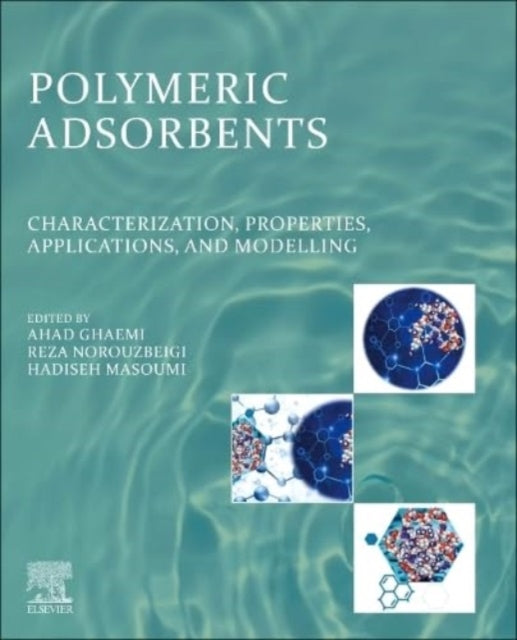
Polymeric Adsorbents: Characterization, Properties, Applications, and Modelling
Polymeric Adsorbents: Characterization, Properties, Applications, and Modelling
💎 Earn 853 Points (£8.53) on this item.
YOU SAVE £14.34
- Condition: Brand new
- UK Delivery times: Usually arrives within 2 - 3 working days
- UK Shipping: Fee starts at £2.39. Subject to product weight & dimension
Bulk ordering. Want 15 or more copies? Get a personalised quote and bigger discounts. Learn more about bulk orders.
Couldn't load pickup availability
- More about Polymeric Adsorbents: Characterization, Properties, Applications, and Modelling
Polymeric Adsorbents: Characterization, Properties, Applications, and Modelling is a comprehensive resource that provides detailed information on the types,properties,synthesis methods,functionalization,and applications of polymeric adsorbents,as well as guidance on modeling their behavior. It is a valuable resource for researchers and advanced students in polymer science, chemistry, materials science, engineering, environmental science, and engineering.
Format: Paperback / softback
Length: 500 pages
Publication date: 01 September 2023
Publisher: Elsevier - Health Sciences Division
Polymeric Adsorbents: Characterization, Properties, Applications, and Modelling is a comprehensive guide that delves into the world of polymeric adsorbents, providing detailed information on their various types, characteristics, and applications. This book serves as a valuable resource for researchers, advanced students, and professionals in polymer science, chemistry, materials science, engineering, environmental science, and engineering.
Chapter 1: Introduction
Polymeric adsorbents are materials that possess the ability to adsorb or bind molecules or ions from a gas or liquid phase onto their surface. These adsorbents are widely used in various industrial applications, such as gas separation, heavy metal removal, hazardous dye removal, and adsorption of antibiotics. The characterization, properties, applications, and modeling of polymeric adsorbents are crucial for understanding their behavior and designing efficient adsorbent systems.
Chapter 2: Types of Polymeric Adsorbents
Polymeric adsorbents can be classified into several types based on their chemical structure, morphology, and functional groups. Some common types of polymeric adsorbents include activated carbon, zeolites, polymeric beads, and polymer membranes. Each type of adsorbent has its unique characteristics, such as surface area, pore size, chemical reactivity, and adsorption capacity.
Chapter 3: Characterization of Polymeric Adsorbents
Characterization of polymeric adsorbents is essential for understanding their structure, properties, and behavior. Various techniques, such as X-ray diffraction (XRD), scanning electron microscopy (SEM), and thermogravimetric analysis (TGA), are used to analyze the structure, morphology, and chemical composition of polymeric adsorbents. These techniques help in identifying the functional groups present on the adsorbent surface, which in turn affects their adsorption properties.
Chapter 4: Physicochemical Properties of Polymeric Adsorbents
Physicochemical properties of polymeric adsorbents play a crucial role in determining their adsorption behavior. These properties include surface area, pore size, porosity, and chemical stability. Surface area is a key parameter that determines the amount of adsorbent available for adsorption, while pore size and porosity control the accessibility of adsorbent sites to the adsorbate. Chemical stability is important for maintaining the adsorbent's integrity during the adsorption process.
Chapter 5: Synthesis Methods of Polymeric Adsorbents
Synthesis methods of polymeric adsorbents are important for developing efficient and cost-effective adsorbent systems. These methods include bulk polymerization, solution polymerization, and cross-linking. Bulk polymerization involves the polymerization of monomers in a bulk solution, while solution polymerization involves the polymerization of monomers in a solution. Cross-linking involves the formation of chemical bonds between polymer chains to enhance the adsorbent's properties.
Chapter 6: Functionalization of Polymeric Adsorbents
Functionalization of polymeric adsorbents is a technique used to enhance their adsorption properties. This involves the introduction of functional groups onto the adsorbent surface, such as amino groups, carboxyl groups, and hydroxyl groups. Functionalization allows the adsorbent to bind specific adsorbates with high affinity and selectivity.
Chapter 7: Composites and Hybrid Materials of Polymeric Adsorbents
Composites and hybrid materials of polymeric adsorbents are materials that are composed of two or more different components. These materials can be designed to possess specific properties that are not found in individual components. For example, composite materials can be designed to have a high surface area and a high adsorption capacity, while hybrid materials can be designed to have a specific chemical reactivity.
Chapter 8: Key Application Areas of Polymeric Adsorbents
Polymeric adsorbents find applications in various industries, including gas separation, heavy metal removal, hazardous dye removal, and adsorption of antibiotics. Gas separation is a key application area where polymeric adsorbents are used to remove gases such as carbon dioxide, methane, and nitrogen oxide from air or gas streams. Heavy metal removal is another important application area where polymeric adsorbents are used to remove toxic metals such as lead, mercury, and arsenic from water or wastewater. Hazardous dye removal is another application area where polymeric adsorbents are used to remove harmful dyes from industrial effluents. Adsorption of antibiotics is a key application area where polymeric adsorbents are used to remove antibiotics from wastewater or pharmaceutical products.
Chapter 9: Modeling of Polymeric Adsorbent Behavior and Molecular Dynamic (MD) Simulation
Modeling of polymeric adsorbent behavior and molecular dynamic (MD) simulation are important tools for understanding the adsorption process at the molecular level. These tools allow researchers to simulate the interactions between adsorbent and adsorbate, which in turn helps in designing efficient adsorbent systems.
Chapter 10: Conclusion
In conclusion, Polymeric Adsorbents: Characterization, Properties, Applications, and Modelling is a comprehensive guide that provides detailed information on the various types of polymeric adsorbents, their characteristics, applications, and modeling. This book is a valuable resource for researchers, advanced students, and professionals in polymer science, chemistry, materials science, engineering, environmental science, and engineering. By understanding the behavior and properties of polymeric adsorbents, researchers can design efficient adsorbent systems that can be used in various industrial applications.
Dimension: 235 x 191 (mm)
ISBN-13: 9780323997461
This item can be found in:
UK and International shipping information
UK and International shipping information
UK Delivery and returns information:
- Delivery within 2 - 3 days when ordering in the UK.
- Shipping fee for UK customers from £2.39. Fully tracked shipping service available.
- Returns policy: Return within 30 days of receipt for full refund.
International deliveries:
Shulph Ink now ships to Australia, Belgium, Canada, France, Germany, Ireland, Italy, India, Luxembourg Saudi Arabia, Singapore, Spain, Netherlands, New Zealand, United Arab Emirates, United States of America.
- Delivery times: within 5 - 10 days for international orders.
- Shipping fee: charges vary for overseas orders. Only tracked services are available for most international orders. Some countries have untracked shipping options.
- Customs charges: If ordering to addresses outside the United Kingdom, you may or may not incur additional customs and duties fees during local delivery.